Daegu 2011: A Landmark Year for the IAAF World Championships in Athletics
From 27 August to 4 September 2011, the eyes of the sporting world were fixed on Daegu Stadium in South Korea. The 13th IAAF World Championships in Athletics brought together 1,848 athletes from 204 nations for a spectacular display of speed, strength, and endurance. Opened by President Lee Myung-bak, the event marked a significant moment for mainland Asia, which had never before hosted the World Championships in Athletics.
The competition was defined by extraordinary athletic feats, including a new world record and numerous national and area records. However, the legacy of the games was also shaped by significant post-championship developments regarding anti-doping measures and the subsequent reallocation of medals.

Key Facts
- Host City: Daegu, South Korea
- Total Athletes: 1,848
- Total Nations: 204
- Top Medal Nation: United States (28 medals)
- World Records Set: 1 (Men's 4 × 100 metres relay)
- Major Venue: Daegu Stadium
The Road to Daegu
The selection process for the 2011 championships began in early 2006. After nine countries expressed interest, four cities emerged as primary candidates: Brisbane, Daegu, Moscow, and Gothenburg. While Gothenburg eventually withdrew due to a lack of government financial support, the IAAF Council officially selected Daegu in March 2007.
The decision to award the games to Daegu was driven by the city's high-quality stadium facilities, its ability to attract large crowds, and what officials described as the city's "ambition and challenging spirit." Daegu had already established itself as a capable host through previous major events like the 2003 Summer Universiade and matches during the 2002 FIFA World Cup.
Athletic Highlights and Record-Breaking Performances
The championships saw intense competition across 47 different events. In the men's category, Jamaica emerged as a dominant force in sprinting. While the legendary Usain Bolt faced a disqualification in the 100m due to a false start, he secured a massive victory in the 200m. His compatriot, Yohan Blake, stepped into the spotlight to win the 100m title with a time of 9.92 seconds.
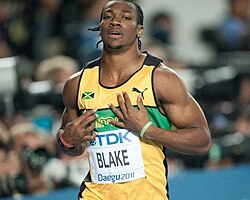
The pinnacle of the men's track events was the 4 × 100 metres relay, where the Jamaican team of Yohan Blake, Usain Bolt, Nesta Carter, and Michael Frater set a new world record with a time of 37.04 seconds.
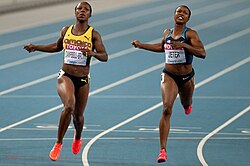
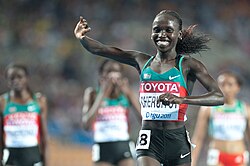
In the long-distance events, Kenya and Ethiopia showcased their prowess. David Rudisha claimed his first World Championship gold in the 800m, while Abel Kirui successfully defended his marathon title. The women's events saw incredible performances from Kenya, which swept all six available medals in their two featured events on the opening day.
Notable Individual Champions
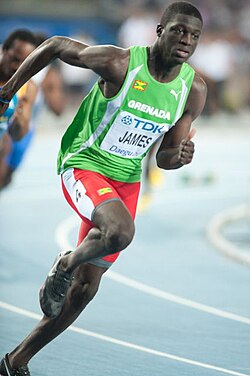
- Kirani James (Grenada): Men's 400m champion.
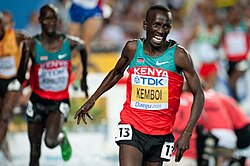
- Ezekiel Kemboi (Kenya): Defended his steeplechase title.
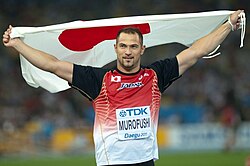
- Koji Murofushi (Japan): Winner of the men's hammer throw.
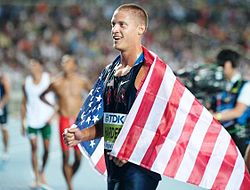
- Trey Hardee (USA): Decathlon champion.
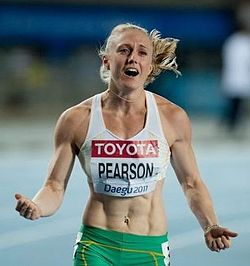
- Sally Pearson (Australia): Won the 100m hurdles in a championship record time.
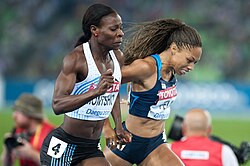
- Amantle Montsho (Botswana): Defeated Allyson Felix to secure a historic win for Botswana.
Medal Standings and Results Summary
The United States finished at the top of the medal table, particularly due to strong performances in the women's events. While Russia initially showed dominance in women's field events, the final standings were heavily impacted by later anti-doping investigations.
| Category | Leading Nation | Gold | Silver | Bronze |
|---|---|---|---|---|
| Overall Standings | United States | 12 | 9 | 7 |
| Men's Sprinting | Jamaica | - | - | - |
| Women's Long Distance | Kenya | - | - | - |
Anti-Doping and Reallocated Medals
The 2011 championships were significantly affected by subsequent anti-doping investigations. Following the retesting of stored samples and the use of biological passports, several athletes were stripped of their medals. The Russian team was particularly affected, losing eleven medals (including seven golds) in the years following the event.
These disqualifications led to the reallocation of several podium positions. For example, in the women's heptathlon, the disqualification of Tatyana Chernova resulted in Jessica Ennis-Hill being promoted to the gold medal position. Even the host nation, South Korea, saw a change in its record; Kim Hyun-sub was eventually promoted to a bronze medal in the 20 km walk following the disqualification of Russian athletes.
Frequently Asked Questions
Who was the most successful athlete in the men's events?
Yohan Blake and Usain Bolt were the most successful men's athletes, with both securing two gold medals during the championships.
Which nation topped the medal table?
The United States topped the medal standings with a total of 28 medals, consisting of 12 gold, 9 silver, and 7 bronze.
How did the doping cases affect the results?
Many medals were stripped following post-championship retests. This led to the reallocation of medals to other competitors, most notably affecting the Russian team and changing the final standings for several events.
What world record was set in Daegu?
A new world record was set in the men's 4 × 100 metres relay by the Jamaican team, with a time of 37.04 seconds.
Was this the first time the championships were held in Asia?
While the championships had been held in Japan previously, the 2011 event in Daegu was the first time the World Championships in Athletics were staged in mainland Asia.