Cycle Sport: The Diverse World of Competitive Cycling
Cycle sport is a dynamic competitive physical activity centered around the use of bicycles. From the high-speed banked curves of a velodrome to the rugged trails of the mountains, cycling encompasses a vast array of disciplines that test endurance, strength, and technical skill. While widely popular across the globe, the sport holds a particularly deep cultural significance in Europe, especially in nations such as Belgium, Denmark, France, Germany, Italy, the Netherlands, Spain, and Switzerland.
The sport is governed by several bodies depending on the discipline. The Union Cycliste Internationale (UCI) serves as the primary world governing body for international competitive cycling. Other specialized organizations include the International Human Powered Vehicle Association, which allows for more flexible vehicle designs, and the UltraMarathon Cycling Association, which oversees ultra-distance events.

Key Facts
- Olympic Status: Cycling has been a part of every Summer Olympic Games since 1896.
- First Race: The first recorded bicycle race took place on May 31, 1868, in Paris, France.
- Governing Body: The UCI was founded in 1900 to standardize international competition.
- Global Reach: While dominant in Europe, countries like Australia, Colombia, the United Kingdom, and the United States maintain high international standing.
The History of Competitive Cycling
The origins of bicycle racing date back to the 19th century. The first popular race occurred at the Parc de Saint-Cloud in Paris in 1868, a 1,200-meter event won by James Moore on a wooden bicycle featuring solid rubber tires. As the sport grew, the need for organization led to the creation of the International Cycling Association in 1892, which was later replaced by the Union Cycliste Internationale (UCI) on April 14, 1900.
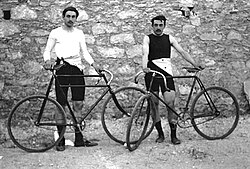
Cycling's integration into the Olympic Movement began at the 1896 Summer Olympics, cementing its status as a premier global athletic pursuit. In many regions, the sport has become a point of national identity and pride.
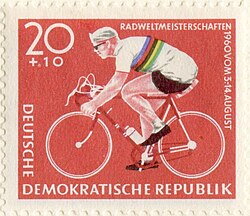
Bicycle Racing Disciplines
Road Bicycle Racing
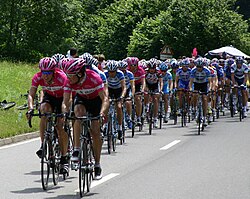
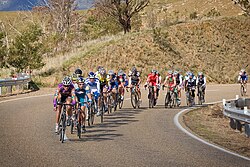
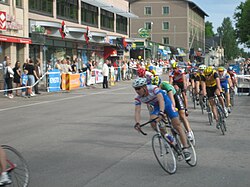
Road racing is one of the most visible forms of the sport, featuring both individual and team competitions. These events range from short, circuit-based criteriums (popular in North America) and Belgian kermesses to grueling one-day "Classics" like Milan–San Remo.
The pinnacle of road racing consists of the Grand Tours—the Tour de France, Giro d'Italia, and Vuelta a España—which are three-week stage races. Other notable events include the Tour de Suisse and the Tour of California. For those seeking extreme distances, the LOTOJA race in the US covers 206 miles from Utah to Wyoming.
Track Cycling
Track cycling takes place on velodromes (banked oval tracks), often indoors to avoid weather interference. This discipline has existed since 1870 and utilizes specialized bicycles that lack brakes or freewheels. Events include individual and team pursuits, sprints, and mass start races.
Cyclo-cross and Gravel Racing
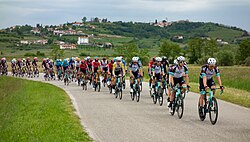
Cyclo-cross began as off-season training for road racers. These races occur in autumn and winter on 2–3 km courses that mix pavement, grass, and obstacles, often requiring riders to carry their bikes. Gravel racing is a 21st-century evolution, characterized by long distances (100 to 200 miles) and mass starts on varied terrain, ranging from smooth gravel to technical trails.
Off-Road and Specialized Racing
- Mountain Bike Racing: High-technicality racing divided into cross-country, enduro, downhill, and 4X (four-cross).
- BMX: Sprints on purpose-built dirt tracks featuring jumps and banked corners.
- Cycle Speedway: Racing on short outdoor dirt tracks measuring 70–90 meters.
- Motor-paced Racing: Using motorcycles to pace cyclists, including the Keirin, to achieve higher speeds.
Performance and Average Speeds
Cycling speeds vary drastically based on the environment, distance, and equipment. Indoor tracks yield the highest speeds due to controlled conditions. For example, François Pervis reached an average of 77.0 km/h over 200 meters in 2013. In contrast, long-distance endurance events see a significant drop in speed.
| Event/Distance | Athlete/Race | Average Speed |
|---|---|---|
| 200m (Flying Start) | François Pervis | 77.0 km/h (21.40 m/s) |
| 1km Time Trial | Chris Hoy (2004 Olympics) | 59 km/h (16.4 m/s) |
| 120km Classic | Cootamundra Annual Classic | 42 km/h (11.8 m/s) |
| 259km Road Race | Fabian Cancellara (Paris–Roubaix) | 39 km/h (10.9 m/s) |
| 818km Ultra-distance | Furnace Creek 508 | 30 km/h (8.3 m/s) |
| 4,800km Transcontinental | Race Across America (Record) | 21 km/h (5.7 m/s) |
| 2,350km Mountainous | Freedom Trail (South Africa) | 6.8 km/h (1.9 m/s) |
Non-Racing Cycling Disciplines
Beyond the finish line, cycling includes several skill-based and team-oriented sports:
- Mountain Bike Trials: A test of bike handling where riders navigate obstacles without "dabbing" (touching the ground with their feet).
- Freestyle BMX: An extreme sport focused on performing stunts.
- Artistic Cycling: A discipline similar to ballet or gymnastics where athletes perform choreographed exercises.
- Cycle Ball: Also known as radball, this is a football-like sport played on fixed-gear bicycles.
- Cycle Polo: A grass-based team sport combining horse polo elements with cycling.
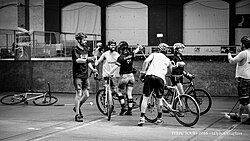
- Hardcourt Bike Polo: A fast-paced urban variation of cycle polo played on asphalt or concrete with mallets.
Frequently Asked Questions
What is the difference between the UCI and the International Human Powered Vehicle Association?
The UCI is the world governing body for standard competitive cycling and imposes strict regulations on equipment. The International Human Powered Vehicle Association governs human-powered vehicles with far fewer restrictions on design.
What are the "Grand Tours" in road cycling?
The Grand Tours are the three most prestigious multi-stage professional races: the Tour de France, the Giro d'Italia, and the Vuelta a España.
How does cyclo-cross differ from mountain bike racing?
Cyclo-cross is typically a winter sport for road racers, featuring short laps on mixed terrain with obstacles that require dismounting. Mountain bike racing is primarily off-road and focuses on technical riding across categories like cross-country, enduro, and downhill.
What is a criterium?
A criterium is a road race held on a short circuit, typically less than a mile in length. These races are often timed (e.g., 60 or 90 minutes) rather than based on a set distance and are highly popular in North America.
What is "dabbing" in mountain bike trials?
Dabbing occurs when a rider puts their foot down on the ground while navigating an obstacle. In trials competitions, the goal is to complete the course without dabbing to earn points for bike handling skills.