Curtis's Botanical Magazine: A Legacy of Botanical Illustration
Founded in the late 18th century, Curtis's Botanical Magazine stands as the most significant serial of botanical illustration ever produced. What began as a venture to bring exotic and ornamental plants to a wider audience has evolved into a globally cited authority for botanists, horticulturalists, and artists alike.
The Origins of a Botanical Masterpiece
The journal was launched on February 1, 1787, by William Curtis, an apothecary and botanist who served as the Praefectus Horti (Director) and demonstrator of plants at the Chelsea Physic Garden. Having previously published the critically acclaimed but commercially unsuccessful Flora Londinensis, Curtis envisioned a publication in octavo format that would make botanical knowledge and art accessible beyond the affluent elite.
The early issues focused on familiarizing readers with exotic and ornamental species. Each entry typically featured a page or two of text detailing the plant's history, growth characteristics, properties, and common names. To ensure scientific accuracy, the magazine utilized exploded details—magnified views of specific plant parts—and cross-sections to help general readers identify species correctly.
The Art and Evolution of Production
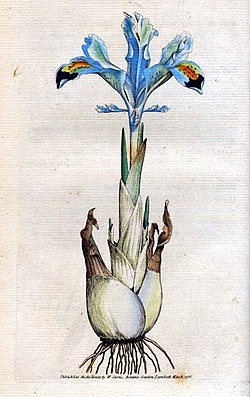
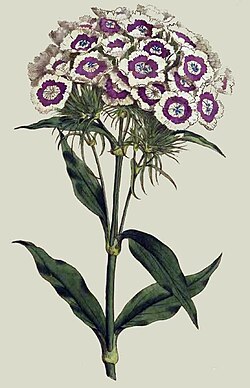
In its early years, the magazine relied on copper engravings. These prints were meticulously hand-colored by teams of up to thirty people to complement the descriptive text. While the first volume featured work primarily by Sydenham Edwards, James Sowerby provided the credit for the first plate, Iris persica, along with a dozen other contributions.
As the magazine grew, so did its circulation, sometimes reaching 3,000 copies per issue, with three plates per issue. The transition from hand-coloring to machine coloring eventually provided greater uniformity, although it initially lacked the fine detail of the manual process. Later, the publication adopted a photomechanical process to modernize production.
A Lineage of Editors and Illustrators
The magazine's longevity is a result of a succession of dedicated editors and artists who maintained its scientific rigor:
- William Curtis (1787–1800): The founder who completed the first 13 volumes.
- John Sims (1801–1826): Edited volumes 14–53 and renamed the publication.
- William Hooker (1827 onwards): A botanist and author of Exotic Botany who introduced the prolific artist Walter Hood Fitch, who served as the principal artist for forty years.
- Joseph Dalton Hooker: The Director of Kew Gardens (from 1865) and subsequent editor.
The Role of Women in Botanical Art
Following a dispute between Joseph Dalton Hooker and Walter Hood Fitch in 1877, Harriet Anne Hooker Thiselton-Dyer stepped in, producing nearly 100 illustrations between 1878 and 1880. She was followed by Matilda Smith, a cousin of Hooker, who became the lead illustrator from 1878 to 1923. Smith produced over 2,300 plates and became the first botanic artist of Kew and the second woman ever made an associate of the Linnean Society.
Other notable contributors included Augusta Innes Withers and Anne Henslow Barnard (active 1879–1894). Lilian Snelling took over as chief illustrator in 1921, producing over 830 plates by 1952. She was assisted from 1929 by Stella Ross-Craig, a botanist and illustrator who contributed 3,000 illustrations across various publications, including the magazine.
Key Facts
- Founded: February 1, 1787, by William Curtis.
- Primary Purpose: To document ornamental and exotic plants through text and illustration.
- Production Method: Transitioned from hand-colored copper engravings to machine coloring and eventually photomechanical processes.
- Major Contributors: Matilda Smith (2,300+ plates) and Lilian Snelling (830+ plates).
- Current Publisher: Royal Botanic Gardens, Kew.
- Standard Abbreviation: Curtis's Bot. Mag. or Botanical Magazine.
| Period | Editor/Lead Artist | Key Contribution/Note |
|---|---|---|
| 1787–1800 | William Curtis | Founder and first 13 volumes |
| 1801–1826 | John Sims | Edited volumes 14–53 |
| 1827–1860s | William Hooker / W.H. Fitch | Fitch served as principal artist for 40 years |
| 1878–1923 | Matilda Smith | Produced over 2,300 plates |
| 1921–1952 | Lilian Snelling | Produced over 830 paintings and plates |
Frequently Asked Questions
What is the scientific significance of Curtis's Botanical Magazine?
It is considered the premier journal for early botanical illustration and the most widely cited work of its kind due to the consistent quality and authority of its plates.
How were the illustrations created in the early volumes?
The first thirty volumes used copper engravings that were hand-colored by teams of up to thirty people.
Who was the most prolific artist for the magazine?
Matilda Smith was exceptionally prolific, drawing over 2,300 plates between 1878 and 1923.
Has the magazine ever changed its name?
Yes, it was known as The Kew Magazine from 1984 to 1994 before reverting to Curtis's Botanical Magazine in 1995.
What are "exploded details" in the context of the magazine?
Exploded details are magnified, detailed views of specific plant parts (sometimes including sections) used to help readers accurately identify species.