Currency Sign (¤): The History of the Generic Currency Symbol
In the world of digital typography and character encoding, most people are familiar with the dollar sign ($) or the euro (€). However, there exists a less common character known as the currency sign (¤). Designed as a universal placeholder, this symbol was created to represent any national currency when the specific symbol for that currency was unavailable or unknown.
The journey of the currency sign reflects the broader evolution of how computers handle text, moving from restrictive 7-bit systems to the expansive, global standard of Unicode.
The Early Era of 7-Bit Encoding
The currency sign was first encoded for computers in 1972. At the time, the industry relied on ASCII (American Standard Code for Information Interchange) and its international variant, ISO/IEC 646. Because these were 7-bit encodings, they were limited to only 96 printable characters and 32 control codes.
Italy proposed the currency sign as an alternative to the dollar sign at code point 36 (0x24). However, the proposal largely failed to gain traction because most national standards viewed the dollar sign as too important to replace. Despite this, the symbol found a home in the GSM default 7-bit encoding (specified in 3GPP TS 23.038 / GSM 03.38), where it remains at code point 0x24.
The Shift to 8-Bit Standards
The transition to 8-bit encoding and the introduction of ISO/IEC 8859 code pages changed the landscape. With more available space, major national currency symbols could finally be assigned their own unique code points, reducing the need for a generic placeholder.
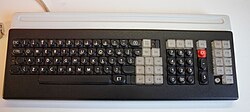
During the standardization of ISO 8859, the currency sign was placed at code point 0xA4 across the Latin, Arabic, and Hebrew character sets. Its adoption was inconsistent elsewhere; for example, while it appeared in early drafts of the Cyrillic set, it was eventually replaced by the section sign (§). Interestingly, in Soviet computer systems using variants of the KOI character set, the currency sign occupied the code point typically used by the ASCII dollar sign.
Modern Implementation and Unicode
As the digital world evolved, new currencies emerged. ISO Latin 9 attempted to reallocate code point 0xA4 from the currency sign to the euro sign (€). While this change was adopted by Apple and the Unix community, it failed to achieve widespread use due to the dominance of Microsoft's Windows-1252 code page, which placed the euro sign at 0x80.
Today, the Unicode standard has resolved these conflicts. Unicode provides a unique, device-independent code point for the currency sign as well as every other major currency symbol. Whether the symbol actually appears on a screen now depends entirely on the font designer's decision to include it.
Key Facts
- Purpose: Acts as a placeholder for any national currency symbol (e.g., $, £, ¥).
- Origin: First encoded in 1972 within ISO/IEC 646.
- Original Proposal: Suggested by Italy to replace the dollar sign at code point 0x24.
- GSM Usage: Used in GSM default 7-bit encoding at code point 0x24.
- ISO 8859: Located at code point 0xA4 in Latin, Arabic, and Hebrew sets.
- Modern Status: Assigned a unique, independent code point in Unicode.
| Standard/System | Code Point | Outcome/Status |
|---|---|---|
| ISO/IEC 646 (Italy) | 0x24 | Proposed replacement for $; largely unsuccessful. |
| GSM 7-bit | 0x24 | Successfully implemented. |
| ISO 8859 (Latin/Arabic/Hebrew) | 0xA4 | Standardized placement. |
| ISO Latin 9 | 0xA4 | Reallocated to the Euro sign (€). |
| Unicode | Unique | Device-independent; implementation depends on font. |
Frequently Asked Questions
What is the purpose of the currency sign (¤)?
The currency sign serves as a generic symbol to represent a national currency when the specific symbol for that currency is not available in the current character set.
Why did the original proposal to replace the dollar sign fail?
The proposal failed because most national standards considered the dollar sign too important to remove, and the 7-bit encoding limits of the time left very little room for additional characters.
How does the currency sign differ from the euro sign in ISO Latin 9?
In the ISO Latin 9 standard, the code point 0xA4—which originally belonged to the currency sign—was reassigned to the euro sign (€).
Is the currency sign still used today?
Yes, it is included in the Unicode standard, though its visibility depends on whether the specific font being used includes the character.
Which character set used the currency sign in place of the dollar sign in Soviet systems?
Soviet computer systems typically used variants of the KOI character set, which placed the currency sign at the code point used by the ASCII dollar sign.