Cultural Westerns: Global Adaptations of the Frontier Genre
The Western is more than just a reflection of the American frontier; it is a universal cinematic language. While the genre originated in the United States, its themes of lawlessness, justice, and the struggle between civilization and the wild have resonated globally. From the dusty plains of Spain to the steppes of the Caucasus and the outback of Australia, filmmakers have adapted the Western to fit their own cultural, political, and social landscapes.
These adaptations often blend traditional American tropes with local folklore, national dishes, and specific historical grievances, creating a diverse array of "Cultural Westerns" that redefine what it means to be a gunslinger or a pioneer.
Key Facts
- Spaghetti Westerns originated in Italy and introduced more violence and morally ambiguous protagonists than Hollywood classics.
- Osterns were Soviet-era Westerns that often replaced the American West with Eurasian frontiers or used Marxist ideals to subvert traditional narratives.
- Ramen Westerns is a term used for Western-style media set in Asia, often utilizing a play on words involving national cuisine.
- Dacoit Westerns merged Indian bandit films with Spaghetti Western conventions, popularized by the 1975 film Sholay.
- Charro Westerns have been a staple of Mexican cinema since the 1930s, focusing on rural horsemen and local cultural concerns.
The Foundation: Spaghetti Westerns
The global expansion of the genre was heavily influenced by the Spaghetti Western (or Italo-Western) movement of the 1960s and 1970s. These films, often shot in Almería, Spain, due to low costs and landscape similarities to the US Southwest, shifted the tone of the genre. Unlike the idealized heroes of early Hollywood, Spaghetti Western protagonists were often driven by revenge or greed.
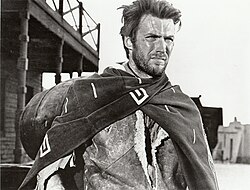
Director Sergio Leone was a pivotal figure in this movement. His Dollars Trilogy demythologized the traditional Sheriff and presented a more cynical view of the American Civil War. This era catapulted actors like Clint Eastwood, Charles Bronson, and Lee Van Cleef to international stardom.
Regional Variations in the Americas
Mexican Charro and Brazilian Westerns
In Mexico, Charro Westerns emerged in the 1930s, focusing on the charro (traditional horseman) and rural society. While initially distinct from Hollywood narratives, they converged more with Western tropes by the 1950s. Key authors include Alberto Mariscal, known for works such as El tunco Maclovio.
Brazil developed the Brazilian Western (or Feijoada Western), which adapts American conventions to a Brazilian context. A notable subgenre is the nordestern, set in the Sertão region of Northeastern Brazil, focusing on regional folklore and banditry.
The Andean Western
The Andean Western is an emerging genre primarily set in postcolonial Peru and other Andean South American countries. Derived from the Spaghetti Western, it typically focuses on bandit narratives. The first film recognized under this term was Pueblo Viejo (2015).
Westerns of the Asia-Pacific
The Australian "Meat Pie" Western
Set in the Australian Bush or Outback, the Australian Western borrows heavily from US traditions but explores themes of rough justice and the exploitation of Indigenous Australians. A recurring archetype is the Tracker. Notable examples range from The Man from Snowy River (1982) to the modern Mystery Road (2013) and the dystopian influence of the Mad Max franchise.
Chinese and Ramen Westerns
The Ramen Western is a broad term for Western-style media set in Asia, a name first used in the publicity for the film Tampopo. This includes Chinese Westerns like Let the Bullets Fly (2010) and Millionaires Express (1986).
Filipino Adobo Westerns
Also known as Adobo or Pancit Westerns, these films transpose the genre into a Filipino setting. They often maintain the American aesthetic while integrating socio-political themes, featuring heroes who fight against the landed elite or supernatural forces.
The Dacoit Western of India
India's contribution is the Dacoit Western (or Curry Western), which blends the conventions of Indian dacoit (bandit) films with Spaghetti Western styles. The landmark film Sholay (1975) defined this era. Other notable entries include the Tamil film Irumbukkottai Murattu Singam (2010) and the more recent Jigarthanda DoubleX (2023).
European and Soviet Interpretations
Euro-Westerns
Beyond Italy, Western Europe produced various adaptations. Germany created "sauerkraut Westerns" based on the novels of Karl May, most notably the Winnetou series. More recent examples include The Salvation and Brimstone.
The Ostern: Red Westerns and Easterns
In the Soviet Union and Socialist Eastern Europe, the Ostern emerged. These are split into two categories:
- Red Westerns: Set in the American West, these films subverted "manifest destiny" in favor of Marxist class consciousness, often portraying Native Americans sympathetically as oppressed people.
- Easterns: These replaced the American West with the steppes of the Caucasus, swapping cowboys and Indians for bandits and harems, as seen in White Sun of the Desert.
Greek Fasolada Westerns
Following the naming trend of national dishes, Greek Westerns are called fasolada Westerns (after bean soup). A prominent example is Blood on the Land (1966), which earned an Academy Award nomination for Best Foreign Language Film.
Summary of Global Western Genres
| Genre Name | Primary Region | Defining Characteristic | Example Film |
|---|---|---|---|
| Spaghetti Western | Italy/Spain | Violence, moral ambiguity, low budget | The Good, the Bad and the Ugly |
| Ostern | Soviet Union/E. Europe | Marxist ideals or Eurasian settings | White Sun of the Desert |
| Dacoit Western | India | Blend of bandit films and Italo-Westerns | Sholay |
| Meat Pie Western | Australia | Outback settings, Indigenous themes | The Proposition |
| Ramen Western | Asia | Western tropes in Asian settings | Tampopo |
| Charro Western | Mexico | Rural horsemen and Mexican society | El tunco Maclovio |
Frequently Asked Questions
What is the difference between a Red Western and an Eastern?
A Red Western is set in the American West but uses Marxist ideology to portray Native Americans as oppressed fighters. An Eastern replaces the American setting entirely with Eurasian landscapes, such as the Caucasus steppes.
Why are many of these genres named after food?
Following the "Spaghetti Western" naming convention, many cultures have used their national dishes (e.g., Ramen, Adobo, Fasolada, Feijoada) as a playful way to describe their local adaptation of the genre.
How did Spaghetti Westerns change the traditional Western hero?
They moved away from the idealized, morally upright heroes of early Hollywood, introducing protagonists who were often selfish, driven by money or revenge, and operated in a more violent world.
What is a "nordestern"?
A nordestern is a subgenre of the Brazilian Western specifically set in the Sertão region of Northeastern Brazil, focusing on local banditry and folklore.
Which Indian film is most associated with the Dacoit Western?
The 1975 film Sholay is the most famous example, as it successfully combined the conventions of Indian dacoit films with the style of Spaghetti Westerns.