COVID-19: Clinical Characteristics, Transmission, and Pathophysiology
Coronavirus disease 2019, commonly known as COVID-19, is an infectious disease caused by the SARS-CoV-2 virus. Since its emergence, it has evolved into a global health challenge, characterized by a wide spectrum of clinical presentations ranging from asymptomatic infections to severe, life-threatening respiratory distress.
Understanding the mechanics of how this virus interacts with the human body, how it spreads, and how medical science has responded is essential for managing public health. This article examines the biological, clinical, and preventative aspects of the disease based on established medical data.
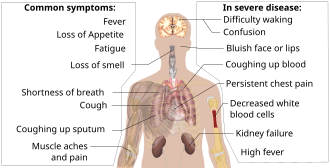
Key Facts
![Proportion of asymptomatic SARS-CoV-2 infection by age. About 44% of those infected with SARS-CoV-2 remained asymptomatic throughout the infection.[53]](/images/26/6b/266b9632cd1da2e3ca78973be3004653702ad071b6100c8ec43cd25e10627efd.jpg)
- Cause: SARS-CoV-2 virus.
- Typical Onset: 2–14 days after infection (commonly around 5 days).
- Common Symptoms: Fever, cough, fatigue, shortness of breath, vomiting, and loss of taste or smell.
- Asymptomatic Rate: Approximately 44% of infected individuals remain asymptomatic.
- Primary Prevention: Vaccination, face coverings, social distancing, and improved ventilation.
- Diagnostic Tools: RT-PCR testing, rapid antigen tests, and CT scans.
Virology and Transmission
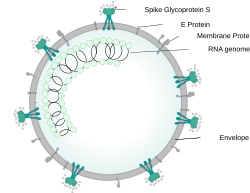
The disease is driven by the SARS-CoV-2 virion, a complex structure capable of hijacking host cells to replicate. The virus spreads primarily through respiratory droplets and aerosols when an infected person breathes, coughs, or speaks.
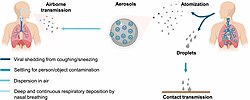
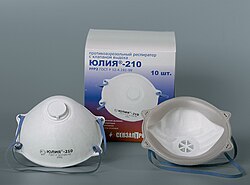
Effective containment relies on breaking the chain of transmission. Measures such as social distancing, wearing face masks, and ensuring proper indoor ventilation are critical. Without these containment measures, pathogens can spread exponentially throughout a population.
![Without pandemic containment measures – such as social distancing, vaccination, and face masks – pathogens can spread exponentially.[188] This graphic shows how early adoption of containment measures tends to protect wider swaths of the population.](/images/6f/40/6f4045e823e905fd7285a6cc23b3bc10b19757e439fb47e2f298cf4467e1d46b.gif)

Pathophysiology and Clinical Manifestations
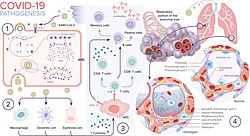
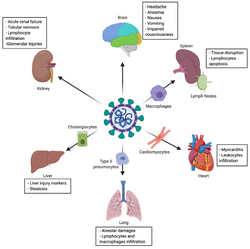
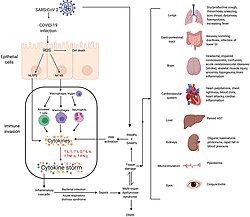
Once the virus enters the body, it can affect multiple organ systems. While the respiratory tract is the primary target, the virus exhibits tropism—the ability to infect specific cell types—across various tissues, including the nervous system, gastrointestinal tract, cardiovascular system, and kidneys.
The Immune Response and Cytokine Storm
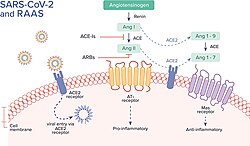
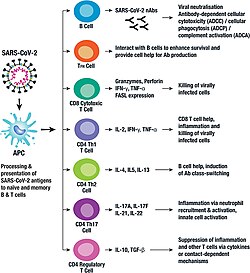
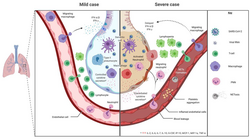
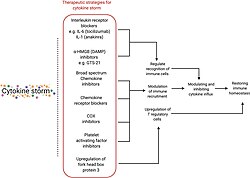
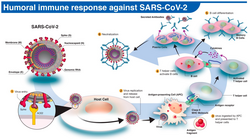
The body's immune response is a double-edged sword. While the adaptive immune response (involving antibodies and T-cells) is necessary to clear the virus, an overactive response can lead to a cytokine storm. This is a state of hyper-inflammation where the body releases excessive amounts of pro-inflammatory proteins, such as Tumor Necrosis Factor (TNF-α), which can cause systemic damage.
Diagnostic Imaging and Pathology
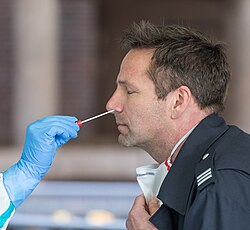
Clinicians use various methods to diagnose and monitor the progression of the disease. RT-PCR testing remains a gold standard for detecting viral genetic material, while CT scans are vital for visualizing lung involvement, such as lesions or pneumonia.
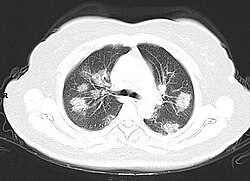
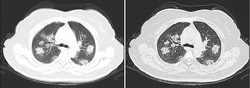
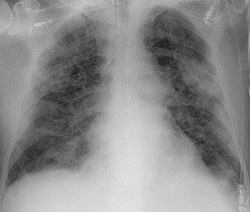
At the microscopic and macroscopic levels, severe cases may show lung consolidation, pulmonary edema, and even cardiac muscle cell necrosis during autopsy.
Mortality and Risk Factors
The Infection Fatality Rate (IFR)—the proportion of deaths among all infected individuals—varies significantly based on age and sex. Age is the most prominent risk factor; mortality rates increase sharply as individuals move into older age brackets.
![The red line shows the estimate of infection fatality rate (IFR), in percentage terms, as a function of age. The shaded region depicts the 95% confidence interval for that estimate. Markers denotes specific observations used in the meta-analysis.[347]](/images/69/fc/69fc0c373efc1dbf6daed984df745a9762ec81d55adc7d1d9ff8bdefbf92d4ab.png)
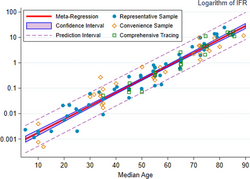
| Age Group | Total IFR (%) | Male IFR (%) | Female IFR (%) |
|---|---|---|---|
| 0–34 | 0.001 | 0.001 | 0.001 |
| 35–44 | 0.005 | 0.007 | 0.004 |
| 45–54 | 0.02 | 0.03 | 0.01 |
| 55–64 | 0.05 | 0.06 | 0.03 |
| 65–74 | 0.2 | 0.2 | 0.1 |
| 75–84 | 0.7 | 1.0 | 0.5 |
| 85+ | 1.9 | 2.7 | 1.3 |
Prevention and Treatment Strategies
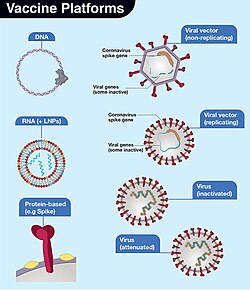
Vaccination has been a cornerstone of global prevention efforts. Different vaccine candidates utilize various technologies to stimulate immunity. Data indicates that vaccinated individuals, particularly those receiving boosters, experience significantly lower death rates compared to the unvaccinated.
![Death rates for unvaccinated Americans substantially exceeded those who were vaccinated, with bivalent boosters further reducing the death rate.[199]](/images/65/b9/65b9e1e65b6340c98b9867c7a6d6fab59d3598f0ad4f3e94611ed46b79319847.webp)
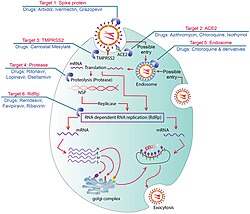
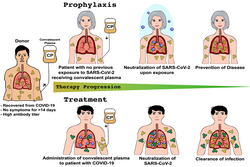
Treatment approaches have evolved to include symptomatic support, antiviral drugs, and strategies to manage the cytokine storm. Researchers have also explored convalescent plasma therapy, which uses antibodies from recovered patients to help others fight the infection.

Frequently Asked Questions
How long does the incubation period last?
The usual onset of symptoms occurs between 2 and 14 days after infection, with a typical period of approximately 5 days.
Can I have COVID-19 without feeling sick?
Yes. Approximately 44% of people infected with SARS-CoV-2 remain asymptomatic throughout their infection.
What are the most effective ways to prevent spread?
Prevention includes vaccination, wearing face masks, practicing regular hand-washing, ensuring good indoor ventilation, and maintaining social distancing.
How does age affect the severity of the disease?
Age is a major factor in disease severity. The infection fatality rate increases significantly with age, with the highest risks observed in individuals aged 75 and older.
What is a cytokine storm?
A cytokine storm is an uncontrolled immune response where the body releases too many signaling proteins (cytokines), potentially leading to widespread inflammation and organ damage.