COVAX: The Global Initiative for Equitable COVID-19 Vaccine Access
In the face of the global COVID-19 pandemic, the need for a coordinated, fair approach to medical resources became a matter of international urgency. COVAX (COVID-19 Vaccines Global Access) emerged as a landmark worldwide initiative designed to ensure equitable access to COVID-19 tests, therapies, and vaccines. By coordinating international resources, the program aimed to prevent a divide where only wealthy nations could protect their populations.
COVAX functioned as one of the four pillars of the Access to COVID-19 Tools Accelerator, an initiative launched in April 2020 by the World Health Organization (WHO), the European Commission, and the government of France. The program was directed by a powerful coalition including the GAVI vaccine alliance, the Coalition for Epidemic Preparedness Innovations (CEPI), and the WHO, with UNICEF serving as the primary delivery partner.
Key Facts
- Core Mission: To provide equitable access to COVID-19 vaccines, tests, and therapies for low-to-middle-income countries.
- Leadership: Directed by GAVI, CEPI, and the WHO, with UNICEF as the key delivery partner.
- Global Participation: By October 19, 2020, 184 countries had joined the initiative.
- Scale of Impact: As of April 2022, more than 1.4 billion vaccine doses had been delivered globally.
- Major Recipients: Bangladesh, Pakistan, and Indonesia were among the largest recipients of doses.
The Mechanics of Global Delivery
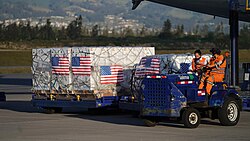
UNICEF played a critical role in the success of COVAX, leveraging its position as the world's largest single vaccine buyer. Beyond simple procurement, UNICEF managed the complex logistics required for in-country delivery and helped prepare nations for the arrival of medical supplies. This included ensuring country readiness to handle the specialized storage and administration of vaccines.
The distribution process utilized diverse methods to reach even the most isolated populations. For example, in Ghana, Zipline drones were used to transport vaccines to remote areas that were underserved by traditional logistics networks.
Challenges and Vaccine Shortages
While the initiative was ambitious, it faced significant hurdles in meeting its delivery timelines. Although COVAX aimed to provide 100 million doses by the end of March 2021, this milestone was not reached until July 6, 2021. By mid-August 2021, the program had delivered 200 million doses to nearly 140 countries, falling short of the initial 600 million dose projection.
Experts attribute these shortages to two primary factors:
- Vaccine Nationalism: The tendency of wealthier nations to secure doses for their own populations first.
- Supply Diversion: The diversion of 400 million Oxford–AstraZeneca doses, produced by the Serum Institute of India (SII), for domestic use within India.
Distribution Milestones and Recipients
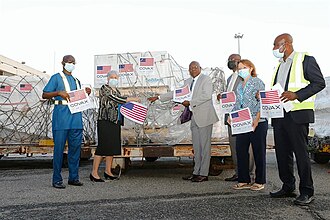
The rollout began in earnest in February 2021. Ghana made history on February 24, 2021, as the first country to receive vaccines through the program, receiving 600,000 doses of the Oxford–AstraZeneca vaccine. Shortly after, on March 5, 2021, Moldova became the first European country to receive doses via COVAX.
Summary of Vaccine Distribution Data
| Participant Country | Mechanism | AstraZeneca SII Doses | Pfizer–BioNTech Doses | Total Doses |
|---|---|---|---|---|
| India | AMC | 97,164,000 | 0 | 97,164,000 |
| Pakistan | AMC | 17,160,000 | 0 | 17,160,000 |
| Nigeria | AMC | 16,008,000 | 0 | 16,008,000 |
| Indonesia | AMC | 0 | 13,708,800 | 13,708,800 |
| Bangladesh | AMC | 12,792,000 | 0 | 12,792,000 |
*AMC refers to the Advance Market Commitment; SFP refers to the Solidarity Response Fund.
Frequently Asked Questions
What was the primary goal of COVAX?
The primary goal was to ensure equitable access to COVID-19 vaccines, specifically targeting low-to-middle-income countries to prevent global health inequality.
Which organizations led the COVAX initiative?
The initiative was directed by the GAVI vaccine alliance, the Coalition for Epidemic Preparedness Innovations (CEPI), and the World Health Organization (WHO).
Who was the first country to receive vaccines through COVAX?
Ghana was the first country to receive vaccines through the program, receiving 600,000 doses of the Oxford–AstraZeneca vaccine on February 24, 2021.
Why did COVAX face delays in vaccine delivery?
Delays were largely caused by "vaccine nationalism" from wealthier nations and the diversion of 400 million doses from the Serum Institute of India for domestic use in India.
How many doses were delivered by COVAX?
As of April 2022, the initiative had successfully delivered more than 1.4 billion doses to countries worldwide.