Countryside Access Rights in the United Kingdom
Navigating the landscapes of the United Kingdom involves understanding a complex patchwork of legal rights and traditions. From the rugged highlands of Scotland to the rolling hills of England and Wales, the ability to walk across the land varies significantly depending on the region and the legal status of the path.
Key Facts
- England and Wales: Access is primarily based on defined public rights of way and specific "Open Country" designations.
- Scotland: Operates under a presumption of universal access, provided the user acts responsibly.
- Northern Ireland: Has the most restricted access, relying heavily on landowner goodwill and public land management.
- National Trails: There are 15 National Trails in England and Wales and 29 Great Trails in Scotland.
- Legal Framework: Key legislation includes the Countryside and Rights of Way Act 2000 (England/Wales) and the Land Reform (Scotland) Act 2003.
Access in England and Wales
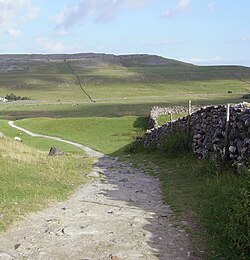
In England and Wales, the public possesses a legally protected right to "pass and repass" on specific routes. These public rights of way—which include footpaths and bridleways—are treated as public highways under the law, granting them the same protections as major trunk roads, even when they cross private land.
While most of these routes are regulated by the Countryside and Rights of Way Act 2000, some walkers use permissive paths. Unlike public rights of way, permissive paths are routes where the landowner has granted permission for public access without a legal obligation to do so.
The Right to Roam
The concept of the "right to roam"—the ability to access uncultivated private land—was a long-standing campaign for walkers, highlighted by the mass trespass of Kinder Scout in 1932. This movement led to the National Parks and Access to the Countryside Act 1949, which introduced designated "Open Country." Later, the Countryside and Rights of Way Act 2000 expanded this by granting a conditional right to access most areas of uncultivated land.
The London Exception
Definitive maps of public rights of way exist for nearly all of England and Wales. However, the City of London and 12 Inner London boroughs were not covered by the 2000 Act. In 2010, the Ramblers launched the "Putting London on the Map" campaign to secure the same legal protections for the capital's paths as those found elsewhere in the country.
Access in Scotland
Scotland follows a traditional presumption of universal access, which was formally codified in the Land Reform (Scotland) Act 2003. This law grants everyone the right to be on most land and inland water for recreation, education, or travel, provided they act responsibly.
This system is based on shared responsibilities: users must follow the Scottish Outdoor Access Code, while landowners must respect the interests of those exercising their access rights.
Scope and Limitations
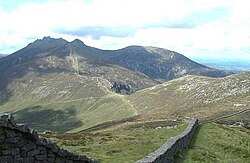
Responsible access is permitted across most uncultivated land, including mountains, moorlands, and forests. In agricultural areas, access is allowed in fields where crops are not sown or where animals are grazing; however, access is restricted to the margins of fields with growing crops.
Access rights do not extend to buildings, plants, or machinery. To ensure privacy, the land immediately surrounding a dwelling (such as a house or static caravan) is excluded. The exact size of this excluded area is determined by courts; for example, in Gloag v. Perth and Kinross Council, 5.7 hectares were excluded, while in Snowie v Stirling Council, 5.3 hectares were permitted.
Defined Routes
Beyond general access, the public can use any defined route that has been passed unhindered for at least 20 years. Notably, unlike in England and Wales, Scottish local authorities are not required to signpost or maintain these public rights of way.
Access in Northern Ireland
Access in Northern Ireland is more restricted than in the rest of the UK. There are very few public rights of way, meaning walkers often rely on the goodwill of private landowners. For instance, permission was specifically obtained from landowners for the Ulster Way and other Waymarked Ways.
Publicly accessible land is primarily managed by the Forest Service, Water Service, the National Trust, and the Woodland Trust. While Northern Ireland shares the same legal concepts of land ownership as England, it maintains its own court structure and specific access legislation.
Long-Distance Footpaths
Long-distance paths are created by linking public rights of way and permissive paths into continuous routes. These are typically waymarked, though hikers are advised to carry maps and, in high moorland areas, a compass.
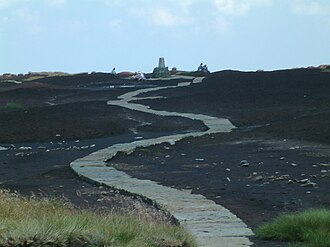
The first of these was the Pennine Way, proposed by Tom Stephenson in 1935 and opened in 1965. Other notable routes include the South Downs Way and Offa's Dyke Path. While accommodation is often available, some remote sections require camping. Water availability varies; for example, the Ridgeway lacks water on high downland paths, though some taps are provided.
| Region | Primary Legal Basis | General Access Right | Maintenance/Signposting |
|---|---|---|---|
| England & Wales | CRoW Act 2000 | Conditional (Open Country) | Required for public rights of way |
| Scotland | Land Reform (Scotland) Act 2003 | Universal (Responsible Access) | Not required by local authorities |
| Northern Ireland | Specific NI Legislation | Very Restricted / Landowner Permission | Varies by land manager |
Frequently Asked Questions
What is the difference between a public right of way and a permissive path?
A public right of way is a legally protected highway that the public has a right to use. A permissive path is a route where the landowner allows public access by choice, but no legal right to pass exists.
Can I walk anywhere in Scotland?
You have a right to be on most land and inland water for recreation or education, provided you act responsibly. However, this does not apply to buildings, machinery, or the private land immediately surrounding a home to ensure privacy.
What are National Trails?
National Trails are long-distance paths in England and Wales that receive government financial support. There are 15 such trails, including the Pennine Way and the South Downs Way.
How is access handled in Northern Ireland?
Access is more restricted than in the rest of the UK. Much of the walking is possible through the goodwill of landowners or by using land managed by the National Trust, Woodland Trust, or government services.
What happens if a public footpath crosses a field with crops?
In England and Wales, the law specifies the rights and obligations of farmers who cultivate crops in fields crossed by public footpaths to balance agricultural needs with public access.