Cotton: The Global History and Science of a Staple Fiber
Cotton is a soft, fluffy staple fiber that grows within a boll—a protective case—surrounding the seeds of plants from the genus Gossypium. Belonging to the mallow family (Malvaceae), these plants produce a fiber that is almost entirely pure cellulose, occasionally containing trace amounts of waxes, fats, pectins, and water. In nature, the cotton boll serves a vital biological purpose: facilitating the dispersal of seeds.
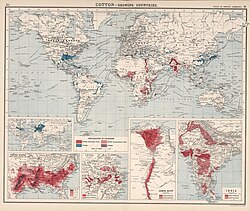
As a shrub native to tropical and subtropical regions, cotton has established roots across the Americas, Africa (including Egypt), and India. While the greatest diversity of wild cotton species is found in Mexico, significant populations also exist in Australia and Africa. Because it was independently domesticated in both the Old and New Worlds, cotton holds a unique place in human agricultural history.
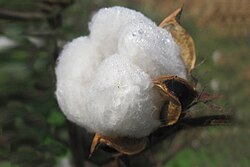
Key Facts
- Biological Composition: Approximately 91% cellulose.
- Primary Species: Four commercially grown species, including Gossypium barbadense.
- Global Production: China, India, and the United States are the leading producers.
- Historical Impact: The invention of the cotton gin revolutionized production costs and widespread use.
- Physical Properties: High luster and good dimensional stability with high resistance to most organic solvents.
The Evolution of Cotton Use
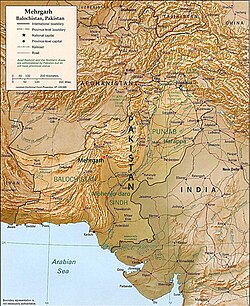
The use of cotton for textiles dates back to prehistoric times. Archaeological evidence shows Gossypium barbadense was present in the Nanchoc District of Peru as early as the 7th–6th millennia BC. Similarly, fragments of cotton thread used to secure copper beads have been discovered at Mehrgarh in present-day Pakistan, dating to the sixth millennium BC.
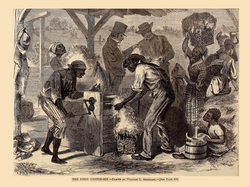
While cotton has been cultivated since antiquity, it was the invention of the cotton gin—a machine designed to separate seeds from fiber—that drastically lowered production costs. This technological leap transformed cotton into the most widely used natural fiber for clothing in the modern era.
Commercially Grown Species
Modern commerce relies on four primary domesticated species:
- Gossypium barbadense: Known as extra-long staple cotton, it is native to tropical South America and accounts for over 5% of world production.
- Gossypium arboreum: Known as tree cotton, native to India and Pakistan (less than 2% of production).
- Gossypium herbaceum: Known as Levant cotton, native to southern Africa and the Arabian Peninsula (less than 2% of production).
Global Production and Trade
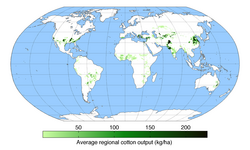
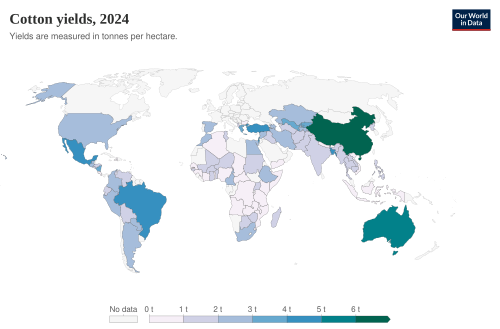
In 2022, global cotton production reached approximately 69.7 million tonnes. The market is dominated by a few key players, with China leading the sector.
| Country | Production (Tonnes) | Approximate Share |
|---|---|---|
| China | 18,121,818 | 26% |
| India | 14,990,000 | 22% |
| United States | 8,468,691 | 12% |
| Brazil | 6,422,030 | - |
| Uzbekistan | 3,500,680 | - |
In India, production is concentrated in states with tropical wet and dry climates, specifically Maharashtra, Gujarat, Andhra Pradesh, and Madhya Pradesh.

Scientific Properties and Cultivation
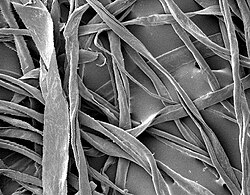
Cotton fibers possess specific physical characteristics that make them ideal for textiles. They are typically 2.2 cm to 3.3 cm in length and exhibit a fairly uniform width of 12–20 micrometers. The fiber is known for its high luster and its ability to absorb moisture, with a saturation point between 15% and 25%.
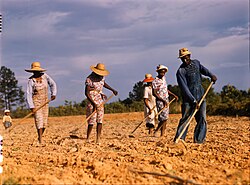
Cultivation involves managing various environmental factors. For example, the optimal temperature range for mold development is between 25 and 35 °C. To prevent deterioration, damaged cotton is sometimes stored at temperatures below 0 °C, which stops the rotting process.
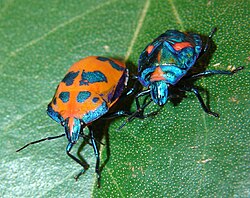
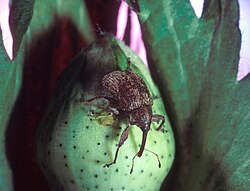
Modern agriculture also utilizes genetic modification (GM). Between 1996 and 2011, approximately 62% of GM cotton was engineered for insect resistance, 24% was a stacked product, and 14% was herbicide-resistant (such as resistance to glyphosate).
Harvesting and Industrial Processing
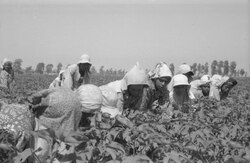
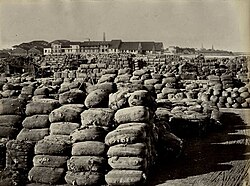
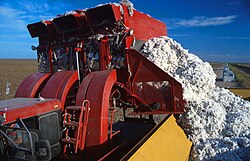
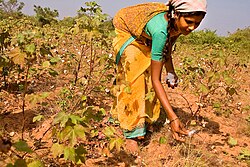
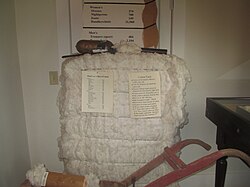
The transition from field to fabric involves several intensive stages. After harvesting, cotton may be processed into various forms. In modern large-scale operations, cotton is often offloaded into module builders to create large, manageable units for transport.
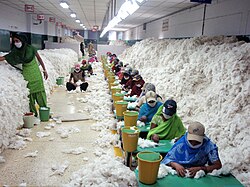
Once at the processing facility, workers must carefully sort through the fiber to remove contaminants. This is a critical step in maintaining textile quality.
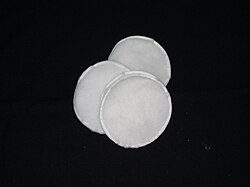
Beyond clothing, cotton has diverse applications. It is used to create medical supplies such as balls, swabs, and pads for cosmetic application and wound care.


Frequently Asked Questions
What are the main types of commercial cotton?
The four main commercially grown species are Gossypium barbadense (extra-long staple), Gossypium arboreum (tree cotton), Gossypium herbaceum (Levant cotton), and Gossypium hirsutum.
How does cotton react to heat?
Cotton has a glow temperature of 205 °C and a fire point of 210 °C. Its autoignition temperature ranges between 360–425 °C, though oily cotton may autoignite at a lower temperature of 120 °C.
Why is the cotton gin important?
The cotton gin was a pivotal invention that lowered the cost of production by efficiently separating seeds from the fiber, allowing for the widespread industrial use of cotton textiles.
What is the chemical makeup of a cotton fiber?
A typical cotton fiber is composed of approximately 91% cellulose, 7.85% water, 0.55% protoplasm and pectins, 0.40% waxes and fatty substances, and 0.20% mineral salts.
Which countries produce the most cotton?
As of 2022, China is the largest producer, followed by India and the United States.