Corniche Beirut: The Iconic Waterfront Promenade of Lebanon
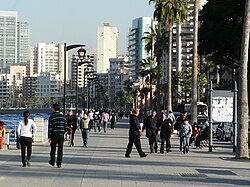
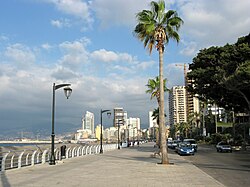
The Corniche Beirut is a stunning seaside promenade located in the Central District of Beirut, Lebanon. This waterfront esplanade serves as a scenic gateway to the city, offering breathtaking views of the Mediterranean Sea to the west and the towering summits of Mount Lebanon to the east. Lined with elegant palm trees, the promenade is a blend of natural beauty and urban history.
The foundations of the Corniche lie in the Avenue des Français, a road constructed during the Mandate for Syria and the Lebanon. This historic route extended from the old town along the seafront, establishing the framework for the modern leisure space enjoyed by residents and visitors today.
Key Facts
- Total Length: 4.8 kilometers (3.0 miles).
- Location: Central District of Beirut, Lebanon.
- Key Landmarks: Saint George Bay, Place Rafic Hariri, and Raouché.
- Notable Art: Ceramic benches and a Mega Chessboard by Lena Kelekian.
- Historical Markers: Palm tree trunks bearing bullet holes from the Lebanese Civil War.
Geography and Route
Spanning 4.8 kilometers (3.0 mi), the Corniche encircles the Beirut promontory. The route begins at Saint George Bay on the city's northern coast, winding westward into Place Rafic Hariri. From there, it continues through Avenue de Paris and the famous Raouché area, eventually passing through Avenue General de Gaulle before concluding at Rafic Hariri Avenue.
Public Life and Local Culture
The Corniche is a vibrant hub for outdoor activity, serving as a primary destination for joggers, bikers, and walkers. The atmosphere is further enriched by push cart vendors who sell a variety of local drinks and snacks to passersby.
The area also reflects the complex history of the city; several palm trees lining the promenade remain pockmarked with bullet holes, serving as silent reminders of the Lebanese Civil War. For those seeking luxury, the promenade is overlooked by prestigious establishments, including the Phoenicia InterContinental Hotel and Le Vendôme Intercontinental Hotel.
Modernization and Artistic Enhancements
Over the last two decades, the Corniche has undergone several updates to improve its aesthetics and safety. In 2001, Lebanese artist Lena Kelekian redesigned the promenade's seating by replacing 76 cement benches with new ones adorned with colorful cut ceramics. Kelekian also installed a Mega Chessboard on the widest section of the sidewalk along Avenue de Paris.
Safety upgrades were implemented in the summer of 2007 when the original blue railings, which had suffered from severe rusting, were replaced. The new aluminum railings were specifically modified to discourage thrill-seekers from diving off the edge into the sea.
| Feature | Details |
|---|---|
| Length | 4.8 km (3.0 mi) |
| Primary Views | Mediterranean Sea & Mount Lebanon |
| Key Artist | Lena Kelekian (Ceramic benches & Chessboard) |
| Major Hotels | Phoenicia InterContinental, Le Vendôme Intercontinental |
| Historical Origin | Avenue des Français (Mandate period) |
Frequently Asked Questions
How long is the Corniche Beirut?
The promenade is 4.8 kilometers (approximately 3.0 miles) long.
What activities are popular on the Corniche?
It is a common destination for walking, jogging, and biking, as well as enjoying local snacks and drinks from push cart vendors.
Who designed the colorful benches on the promenade?
The ceramic-covered benches and the Mega Chessboard on Avenue de Paris were designed by Lebanese artist Lena Kelekian.
What historical evidence of the Lebanese Civil War can be seen there?
Some of the palm tree trunks along the Corniche still feature bullet holes from the conflict.
Why were the railings replaced in 2007?
The original blue railings were replaced due to severe rusting; the new aluminum railings were designed to prevent people from diving off into the water.