Corfu Architecture: A Legacy of Venetian and British Influence
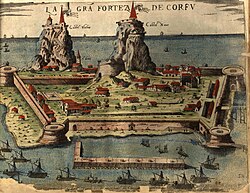
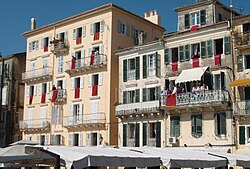
The architectural landscape of Corfu is a living chronicle of its complex history, reflecting the successive influences of Venetian, British, and Greek administrations. From the imposing fortifications that define its perimeter to the elegant Neoclassical facades of its residential streets, the city serves as a quintessential example of a fortified maritime city.
The urban fabric is characterized by a blend of eras. While the city's layout remains rooted in its military past, much of the visible architecture dates from the British protectorate. According to evaluations by ICOMOS (the International Council on Monuments and Sites), approximately 70% of the buildings constructed before the 20th century originate from the British period.
Key Facts
- World Heritage Status: The Old Town of Corfu is inscribed on the World Heritage List based on ICOMOS evaluations.
- British Influence: Roughly 70% of pre-20th-century structures date back to the British era.
- Fortified Design: The city is recognized as a prime example of a fortified maritime city due to its Venetian fortifications.
- Modern Changes: Significant portions of the Old Town were destroyed during German blitzes in World War II and rebuilt in the 1960s and 1970s.
Palaces and Civic Landmarks
Corfu is home to several structures that highlight the grandeur of its former rulers. The Palace of St. Michael and St. George, completed in 1815 by Sir Thomas Maitland, stands as a massive edifice constructed from white Maltese stone.
Beyond the city center, near Gastouri, lies the Achilleion. Built in the Pompeian style for Empress Elizabeth of Austria, this palace was later acquired in 1907 by the German Emperor, William II.
The city also retains houses from the Venetian period, which still bear traces of their former splendor, contributing to the unique aesthetic of the urban center.
Religious and Cultural Institutions
Faith and education have left a permanent mark on the city's skyline. Corfu features thirty-seven Greek churches, with three standing out as particularly significant:
- The Cathedral: Dedicated to Our Lady of the Cave.
- St. Spiridon's: Home to the tomb of the island's patron saint.
- St. Jason and St. Sosipater: A suburban church regarded as the oldest on the island.
The city serves as the ecclesiastical seat for both a Greek and a Roman Catholic archbishop. Culturally, it hosts a gymnasium, a theatre, and an agricultural and industrial society. The local library and museum are housed in the former buildings of the university, which was founded in 1823 by Frederick North, the 5th Earl of Guilford, though it was disestablished when the British protectorate ended.
Architectural Summary
| Category | Notable Site/Entity | Key Detail |
|---|---|---|
| Palaces | Palace of St. Michael and St. George | Built 1815; white Maltese stone |
| Palaces | Achilleion | Pompeian style; built for Empress Elizabeth |
| Religious | St. Spiridon's | Contains the patron saint's tomb |
| Religious | St. Jason and St. Sosipater | Reputedly the island's oldest church |
| Civic | University Buildings | Founded 1823; now library and museum |
| Urbanism | Venetian Fortifications | Defines the maritime city structure |
Frequently Asked Questions
Why is the Old Town of Corfu a World Heritage site?
It was inscribed on the World Heritage List following an ICOMOS evaluation that recognized the city as a quintessential example of a fortified maritime city, specifically noting its Venetian fortifications and layout.
Which period influenced most of the pre-20th century buildings?
The British period had the most significant impact, with ICOMOS experts noting that about 70% of the buildings from before 1900 date from this era.
What happened to the architecture during World War II?
German blitzes during World War II destroyed whole blocks of the Old Town. These areas were subsequently replaced by new constructions during the 1960s and 1970s.
Who founded the university in Corfu?
The university was founded in 1823 by Frederick North, the 5th Earl of Guilford, who also served as its first chancellor in 1824.
What is the architectural style of the Achilleion?
The Achilleion is built in the Pompeian style.