Copa Macaya: The Dawn of Competitive Football in Spain
Before the establishment of modern leagues and national cups, the early 20th century saw the birth of organized football in Spain. At the heart of this evolution was the Copa Macaya (officially the Hispania Athletic Club Tournament–Alfonso Macaya Cup), a pioneering competition that transitioned the sport from friendly matches to a structured championship format. Running from 1900 to 1903, it served as a critical precursor to the Catalan football championship and is regarded by some historians as Spain's first national championship.
The tournament was the brainchild of Alfonso Macaya, the honorary president of Hispania AC, who sought to create a league-style competition open to all clubs across Spain. While the vision was national, the reality was regional; due to withdrawals from Madrid and the Balearic Islands, the competition primarily featured Catalan teams. This era marked the first time clubs founded around 1899 and 1900 moved beyond exhibition games to compete for a formal title.
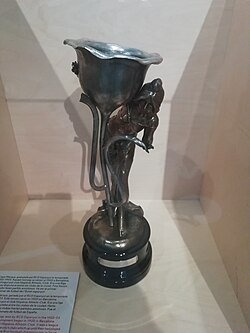
Key Facts
- Founder: Organized by Hispania Athletic Club and promoted by Alfonso Macaya.
- Timeline: Active from 1900 until 1903.
- Significance: One of the first football championships on the Iberian Peninsula.
- Champions: Won by Hispania AC (1901), FC Barcelona (1902), and Club Espanyol (1903).
- Legacy: Directly led to the creation of the Campionat de Catalunya (Catalan Championship).
The Trophy and the Tournament Format
To incentivize the clubs, Alfonso Macaya commissioned a silver trophy from a master goldsmith in London. Interestingly, the rules of the time dictated that the silver cup was not awarded to the winner of a single edition, but rather to the club that could win the tournament three times to claim permanent ownership. For the annual winners, a more traditional, less artistic trophy was provided.
The First Edition (1900–1901)
The inaugural season culminated on April 14, 1901, at the Muntaner. In a tense finale, Hispania AC secured the title after a 1–1 draw with FC Barcelona. The match was marred by controversy when the referee disallowed a second goal for Barcelona, sparking protests from both Barça and Espanyol. Despite the friction, Hispania AC became the first Spanish club to win an official title, led by captain Gustavo Green. Meanwhile, Barcelona's Joan Gamper emerged as a dominant force, scoring 31 goals.
The Rise of FC Barcelona (1901–1902)
The second season saw a shift in power. FC Barcelona dominated the competition, conceding only two goals across eight matches. Their superiority was highlighted in a 15–0 victory over Català SC, where Udo Steinberg scored six goals and both Joan Gamper and Arthur Leask recorded hat-tricks. This victory marked the first piece of silverware in FC Barcelona's history.
The Final Edition and the Split (1902–1903)
By 1902, Hispania AC was in decline. The third edition began with conflict when FC Barcelona was forced to withdraw after a 2–0 win over Hispania was declared invalid due to the use of an ineligible player. In response, Barcelona organized their own rival competition, the Copa Barcelona.
The Copa Macaya concluded with Club Espanyol defeating Hispania AC 3–1 in a playoff on April 12, 1903. Notably, Gustavo Green achieved the rare feat of winning all three editions of the Copa Macaya, though he did so playing for three different clubs: Hispania, Barcelona, and Espanyol.
The End of an Era and the Legacy of the Cup
As Hispania AC dissolved in late 1903, a dispute arose over who should keep the permanent silver trophy, as three different clubs had won the three editions. A deciding championship was planned for November 1903, but with Hispania gone and Club Espanyol having won all their seasonal matches against Barcelona, the trophy was awarded to Club Espanyol.
The vacuum left by the Copa Macaya was filled by the Catalan Football Federation, which began organizing the Campionat de Catalunya from 1903–04 onwards. The Copa Macaya is now recognized as the foundational step for competitive football in the region.
| Edition | Winner | Key Performer | Note |
|---|---|---|---|
| 1900–01 | Hispania AC | Gustavo Green | First official title for a Spanish club |
| 1901–02 | FC Barcelona | Joan Gamper | First silverware for FC Barcelona |
| 1902–03 | Club Espanyol | Gustavo Green | Final edition of the tournament |
Frequently Asked Questions
Was the Copa Macaya a national tournament?
While Alfonso Macaya intended it to be a national championship open to all Spanish clubs—specifically inviting teams from Madrid and the Balearic Islands—most non-Catalan teams withdrew. Consequently, it was contested primarily by clubs from Catalonia.
Who was the most successful player in the tournament?
Joan Gamper was the most prolific scorer, netting a total of 71 goals across the competitions. However, Gustavo Green is notable for winning the trophy in all three editions with three different teams.
Why did FC Barcelona withdraw from the final edition?
Barcelona withdrew from the 1902–03 Copa Macaya after a victory over Hispania AC was voided because Barcelona had fielded an ineligible player. This led them to create their own tournament, the Copa Barcelona.
What happened to the physical Copa Macaya trophy?
Because no single team won three consecutive titles to claim permanent ownership, the trophy was eventually awarded to Club Espanyol in November 1903 based on their seasonal performance against the other remaining champions.
How did the Copa Macaya influence future Spanish football?
It proved the viability of a league format over friendly matches and served as the direct predecessor to the Campionat de Catalunya, the most important competition in the region during the early 20th century.