Conoco: The Evolution of an American Petroleum Giant
Conoco, originally known as the Continental Oil Company, stands as a cornerstone of the American petroleum landscape. From its humble beginnings in the late 19th century to its current status as a prominent brand under the Phillips 66 Company, Conoco's journey reflects the broader history of the global energy industry, marked by massive mergers, legal battles, and economic shifts.
Today, Conoco operates as a major fuel brand, particularly dominant in the Midwestern United States, including states like Texas, Colorado, Montana, Missouri, and Oklahoma. While it has expanded its reach into Eastern Pennsylvania, it maintains a strategic absence in regions such as California and Florida.
Key Facts
- Founded: November 25, 1875, in Ogden, Utah, by Isaac Elder Blake.
- Original Name: Continental Oil and Transportation Company.
- Standard Oil Connection: A subsidiary of the Standard Oil "oil trust" from 1884 until 1911.
- Major Mergers: Acquired by Marland Oil in 1929; merged with Phillips Petroleum in 2002 to form ConocoPhillips.
- Current Ownership: Owned by Phillips 66 Company since 2012.
- Headquarters: Westchase neighborhood of Houston, Texas.
The Early Years and the Standard Oil Era
The company began as the Continental Oil and Transportation Company, focusing on the distribution of petroleum and by-products like benzene and kerosene. This was during the early era of commercial oil extraction, following Edwin Drake's first successful well in Pennsylvania in 1859.
In 1884, the company was absorbed by the Standard Oil Company. However, this relationship ended in 1911 when the United States Supreme Court ruled that Standard Oil was an illegal monopoly. This anti-trust decision forced the decoupling of the entity, spinning Continental Oil back into an independent company.
Growth, Expansion, and the Marland Acquisition
A pivotal shift occurred in 1929 when the Marland Oil Company, founded by pioneer E. W. Marland, acquired Continental Oil. The merger moved the company's headquarters to Ponca City, Oklahoma. Recognizing the stronger national recognition of the Continental and Conoco names, Marland Oil rebranded itself, though it kept Marland's red triangle logo until 1970.
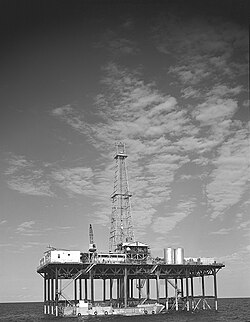
Under the leadership of presidents like Dan Moran and later Leonard F. McCollum, Conoco navigated the hardships of the Great Depression and became a critical supplier for the U.S. Armed Forces and Allied powers during World War II. By the post-war era, the company transitioned from a regional player into a global corporation.
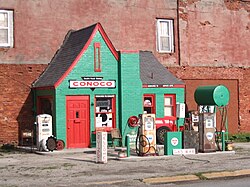
Corporate Turbulence and the "White Knight"
The 1970s brought significant challenges, specifically the energy crisis triggered by the 1973–1974 Arab oil embargo. By 1981, Conoco found itself at the center of a fierce corporate takeover battle. Both the Mobil Corporation and Seagram attempted to acquire the company.
To avoid these hostile takeovers, CEO Ralph Bailey brought in the DuPont company as a white knight—a friendly investor that acquires a company to prevent it from being taken over by an unfriendly bidder. DuPont acquired Conoco for US$1.5 billion, which was the largest merger in U.S. history at that time. This partnership lasted until 1999, when DuPont fully divested its interest, leading to one of the largest IPOs (Initial Public Offerings) in history in 1998.
The Path to ConocoPhillips and Phillips 66
In 2002, Conoco merged with the Phillips Petroleum Company to create ConocoPhillips. This new entity managed both upstream (exploration and production) and downstream (refining and marketing) operations. However, in 2012, ConocoPhillips divested its downstream assets, spinning them off into the separate Phillips 66 Company.
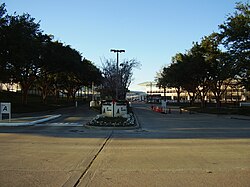
As a result, the Conoco brand now exists as a retail fuel and convenience store brand owned by Phillips 66, continuing a legacy that spans nearly 150 years.
Corporate Summary
| Period | Entity Name | Status/Ownership |
|---|---|---|
| 1875–1911 | Continental Oil and Transportation Co. | Founded by Isaac Elder Blake; later Standard Oil subsidiary |
| 1911–1929 | Continental Oil Company | Independent after Standard Oil breakup |
| 1929–1981 | Continental Oil / Conoco | Merged with Marland Oil Company |
| 1981–1999 | Conoco, Inc. | Subsidiary of DuPont |
| 2002–2012 | ConocoPhillips | Merged with Phillips Petroleum |
| 2012–Present | Conoco (Brand) | Owned by Phillips 66 Company |
Frequently Asked Questions
Who founded Conoco?
Conoco was founded by Isaac Elder Blake on November 25, 1875, in Ogden, Utah, originally as the Continental Oil and Transportation Company.
What is the relationship between Conoco and Standard Oil?
Continental Oil was a subsidiary of the Standard Oil "oil trust" from 1884 until 1911, when the U.S. Supreme Court ordered the breakup of the monopoly.
Why did DuPont acquire Conoco in 1981?
DuPont acted as a "white knight" to protect Conoco from hostile takeover attempts by the Mobil Corporation and Seagram.
Is Conoco still an independent company?
No. While it was an independent company for various periods, it is currently a brand owned and operated by the Phillips 66 Company.
Where is the Conoco historical museum located?
The official Conoco historical museum is located in Ponca City, Oklahoma, near the preserved Marland Grand Home.