Confession Across Religious and Secular Traditions
Confession is the act of acknowledging sinful thoughts and actions. Across various cultures and faiths, it serves as a vital mechanism for repentance—the sincere regret for one's wrongs—and acts as a necessary precursor to penance and atonement. Whether performed privately to a deity or publicly before a religious authority or congregation, the goal is typically reconciliation, forgiveness, and spiritual healing.
While the methods vary, most traditions view confession as a path toward restored relationships and moral accountability.
Key Facts
- Catholicism: Confession is a formal sacrament where a priest acts in persona Christi (in the person of Christ) to grant absolution.
- Orthodoxy: Penitents typically confess to a spiritual father.
- Protestantism: Practices range from private absolution (Lutheran/Anglican) to communal confession in worship (Reformed/Methodist).
- Islam: Sins are confessed directly to God through prayer without an intermediary.
- Judaism: Includes private confession to wronged parties and communal confession on holy days like Yom Kippur.
- Hinduism: Confession is part of Prāyaścitta, a broader system of penance.
- Secular: The Twelve-Step Program of Alcoholics Anonymous utilizes confession in its Fifth Step for recovery.
Confession in Christianity
Latin Catholicism
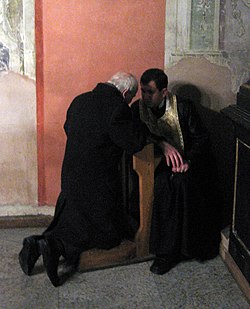
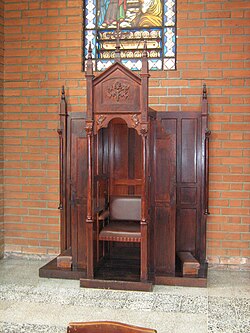
In the Catholic Church, the sacrament of confession is designed to heal the soul and regain the grace of God lost through sin. While a "perfect act of contrition" (sorrow based on love for God rather than fear of punishment) can remove eternal punishment for mortal sins, Catholics are required to confess mortal sins to a priest at the earliest opportunity.
The theological basis for this practice is rooted in the New Testament, specifically John 20:22–23 and Matthew 18:18, which describe the power to "bind" and "loose." The priest exercises jurisdiction over the penitent to provide formal absolution.

Eastern and Oriental Orthodoxy
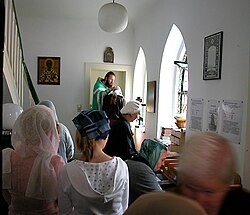
In Eastern Orthodox, Oriental Orthodox, and Eastern Rite Catholic traditions, the practice is centered on the relationship between the penitent and a spiritual father, who provides guidance and hears the confession of sins.
Lutheranism and Anglicanism
Lutherans view confession and absolution as biblical mandates, citing James 5:16 and John 20:22–23. They maintain both corporate and private forms of confession.

Anglicanism also provides for private confession and absolution. While auricular confession (confessing in the ear of a priest) became more widely accepted in the late 20th century, it has historically been provided for in the Book of Common Prayer.
Reformed and Methodist Traditions
Reformed, Presbyterian, and Congregationalist traditions generally emphasize that sincere confession made directly to God—either privately or publicly in church—is sufficient for forgiveness. While they do not require a priest for absolution, they do not disapprove of seeking private counsel or comfort from a minister.
Methodism emphasizes communal support. Historically, this occurred in "class meetings" where members shared temptations and confessed faults. In the United Methodist Church, the "office of the keys" (the authority to pronounce forgiveness) is seen as belonging to all baptized persons.

Confession in Other World Religions
Islam and Judaism
In Islam, there is no intermediary between the believer and the Creator; sins are confessed directly to God through prayer. In Judaism, confession is both a private matter—requiring the penitent to seek forgiveness from those they have wronged—and a communal event, most notably during the holy day of Yom Kippur.
Hinduism
Within Hinduism, confession is integrated into Prāyaścitta, a comprehensive practice of penance and atonement used to rectify spiritual imbalances caused by wrong actions.
Secular Application: Alcoholics Anonymous
Confession also exists outside of religious frameworks. In the Twelve-Step Program of Alcoholics Anonymous, the Fifth Step involves admitting one's wrongs. This process is viewed as essential for obtaining the strength and forgiveness necessary for recovery from addiction.
Summary of Confession Practices
| Tradition | Primary Method | Intermediary | Key Focus |
|---|---|---|---|
| Catholicism | Sacramental Confession | Priest | Healing and Grace |
| Orthodoxy | Spiritual Guidance | Spiritual Father | Spiritual Healing |
| Lutheranism | Private/Corporate | Optional/Minister | Absolution |
| Reformed | Direct/Communal | None (Direct to God) | Sincere Repentance |
| Islam | Prayer | None | Direct Divine Forgiveness |
| Judaism | Private/Communal | Wronged Party/God | Atonement (Yom Kippur) |
| Hinduism | Prāyaścitta | Varies | Penance and Atonement |
| AA (Secular) | Fifth Step | Peer/Sponsor | Recovery and Accountability |

Frequently Asked Questions
What is the difference between confession and penance?
Confession is the act of acknowledging and admitting one's sins, while penance refers to the actions taken to show repentance and make amends for those sins.
Do all Christians believe you must confess to a priest?
No. While Catholics and some Orthodox and Anglicans utilize priestly confession, Reformed and Methodist traditions emphasize confessing directly to God or within a communal worship setting.
How does confession work in Islam?
In Islam, confession is a direct interaction between the individual and God. There is no requirement or practice of confessing sins to another human being to receive divine forgiveness.
What is the purpose of the Fifth Step in Alcoholics Anonymous?
The Fifth Step is designed to help the individual gain forgiveness and strength by admitting the exact nature of their wrongs, which is considered vital for the recovery process.
What is Prāyaścitta in Hinduism?
Prāyaścitta is a broader practice of penance and atonement that includes confession as a means of correcting spiritual errors and seeking purification.