Computers: The Evolution of Computing Hardware and Software
A computer is a programmable machine designed to automatically execute sequences of arithmetic or logical operations, a process known as computation. While early versions were rare and massive, modern digital electronic computers are ubiquitous, powering everything from simple household appliances like microwave ovens to the global infrastructure of the Internet.
A complete computer system typically encompasses the physical hardware, the operating system, the software applications, and any peripheral equipment required for full operation. These systems can exist as standalone devices or as linked groups, such as computer clusters or networks.
Key Facts
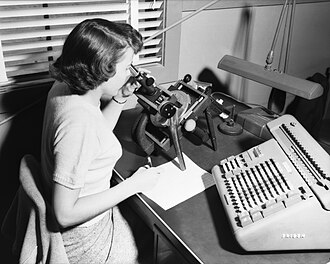
- Versatility: Computers range from single-purpose microcontrollers in key fobs to massive supercomputers.
- Core Architecture: Most modern computers follow the stored-program model, often referred to as the von Neumann architecture.
- Hardware Evolution: Computing has progressed through four primary generations: mechanical, vacuum tubes, discrete transistors, and VLSI integrated circuits.
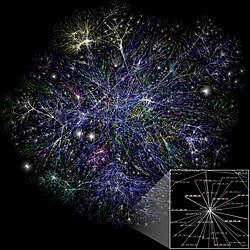
- Connectivity: The Internet serves as a global network linking billions of computers and users.
The History of Computing
Pre-20th Century Foundations
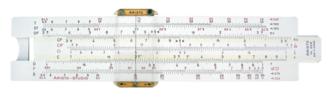
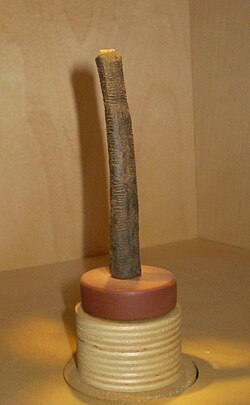
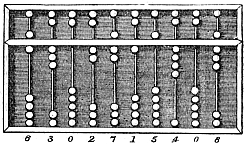
Long before electronic circuits, humans used manual tools for calculation. Early examples include the Ishango bone from prehistoric Africa and the Chinese suanpan (abacus).
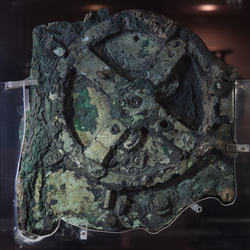
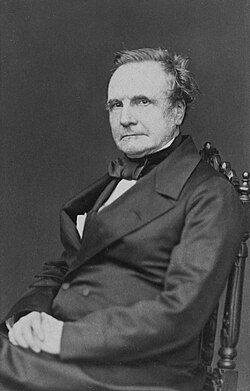
Ancient Greece saw the creation of the Antikythera mechanism, an early analog computing device used for astronomical calculations. Later, pioneers like Charles Babbage designed the Difference Engine and the Analytical Engine, laying the theoretical groundwork for programmable machines.
The Rise of Electromechanical and Analog Machines
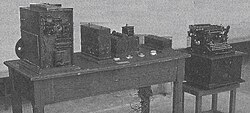
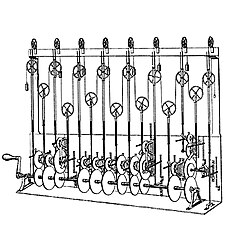
In the early 20th century, computing transitioned toward electromechanical systems. Leonardo Torres Quevedo developed electro-mechanical calculators, and Sir William Thomson designed tide-predicting machines. By the 1930s and 40s, Konrad Zuse created the Z3, the first fully automatic digital electromechanical computer.
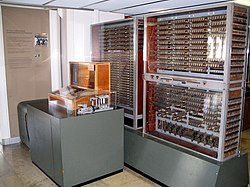
![Konrad Zuse, inventor of the modern computer[41][42]](/images/3c/12/3c127cbbe6dc9477f2229d1c588f6935239a6639e39ea33144992978c8657448.jpg)
The Digital Revolution: Vacuum Tubes to Transistors
The shift to electronic digital circuits began with vacuum tubes. The Colossus was used during World War II to break German ciphers, while the ENIAC became the first electronic, Turing-complete device, primarily used for ballistics calculations.
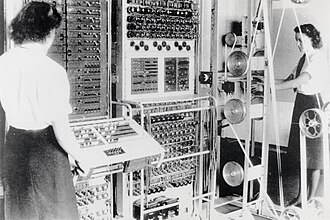
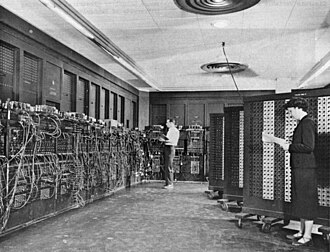
A pivotal moment occurred with the Manchester Baby, the first electronic stored-program computer, which allowed instructions to be kept in electronic memory rather than being hard-wired.
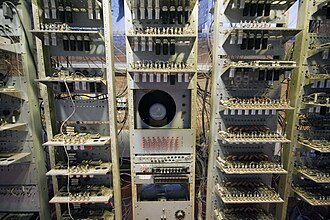
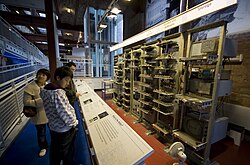
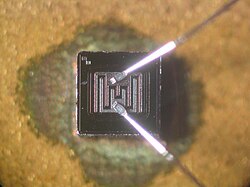
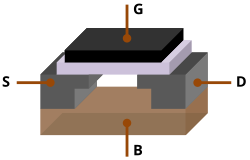
The invention of the transistor (such as the Bipolar Junction Transistor) replaced bulky vacuum tubes, leading to smaller, more reliable machines. This was followed by the development of the MOSFET (Metal-Oxide-Semiconductor Field-Effect Transistor), which enabled the creation of integrated circuits (ICs).
Modern Computing and Microprocessors
Integrated circuits allowed thousands of transistors to be etched onto a single silicon chip. By the early 1970s, the microprocessor emerged, integrating the functions of a Central Processing Unit (CPU) onto one chip, such as the MOS 6502.
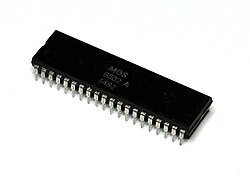
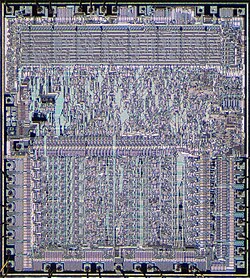
This miniaturization led to the explosion of personal computers, laptops, and eventually mobile devices like smartphones and wearables.
Computer Classifications and Architecture
Classification by Architecture
- Analog Computers: Use continuous physical phenomena to model problems.
- Digital Computers: Use discrete values (binary) to perform calculations.
- Hybrid Computers: Combine both analog and digital features.
- Instruction Sets: Divided into Complex Instruction Set Computer (CISC) and Reduced Instruction Set Computer (RISC).
Classification by Size and Purpose
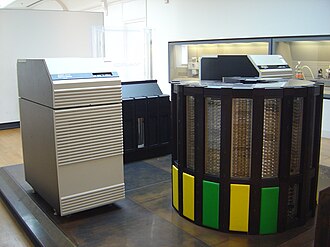
Computers are categorized by their scale and intended use, from the massive supercomputer used for complex simulations to the microcontroller embedded in a microwave.
| Category | Examples | Primary Use |
|---|---|---|
| Enterprise | Mainframes, Servers, Blade Servers | Data processing, hosting, networking |
| Personal | Desktops, Laptops, All-in-one PCs | General purpose, gaming, office work |
| Mobile | Smartphones, Tablets, Smartwatches | Portability, communication, light apps |
| Embedded | PLCs, System-on-Chip (SoC), Microcontrollers | Control systems, specific hardware tasks |
Hardware and Software Components
Hardware Infrastructure
Hardware consists of the physical components. The CPU (Central Processing Unit) acts as the brain, containing the Arithmetic Logic Unit (ALU) and the control unit. Memory is divided into RAM (Random-Access Memory) for temporary data and ROM (Read-Only Memory) for permanent instructions.
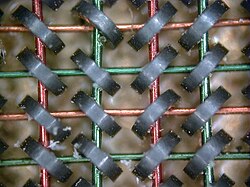
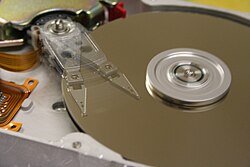
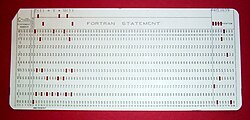
Peripherals allow interaction with the system. Input devices include keyboards and mice, while output devices include monitors and printers. Storage has evolved from punched cards and magnetic-core memory to modern hard disk drives.
Software and Programming
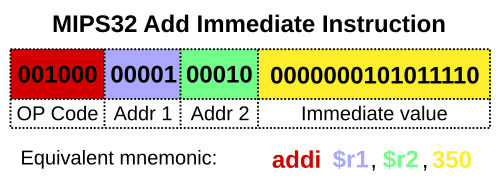
Software provides the instructions for the hardware. This includes system software (like Windows, macOS, and Linux) and application software (such as web browsers, office suites, and games).
Programs are written in various languages:
- Assembly Languages: Low-level (e.g., x86, ARM).
- High-Level Languages: More abstract (e.g., Java, C++, Python, Fortran).
- Scripting Languages: Used for automation (e.g., JavaScript, Ruby, PHP).
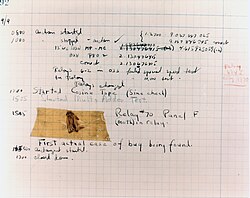
Errors in these programs are known as bugs, a term famously illustrated by a physical moth found in the Harvard Mark II computer.
The Future of Computing
Beyond traditional silicon-based electronics, researchers are developing unconventional computers. These include quantum computers, which use quantum mechanics to solve problems faster than classical machines, as well as DNA, optical, and chemical computing.
Frequently Asked Questions
What is the difference between hardware and software?
Hardware refers to the physical, tangible components of a computer, such as the CPU, RAM, and monitor. Software refers to the intangible sets of instructions, programs, and operating systems that tell the hardware how to function.
What is the von Neumann architecture?
Also known as the stored-program architecture, it is a design where the computer's program instructions and the data it operates on are stored in the same electronic memory.
What is a microprocessor?
A microprocessor is an integrated circuit that contains all the functions of a central processing unit (CPU) on a single chip, enabling the creation of small, powerful computers.
What are embedded computers?
Embedded computers are single-purpose systems designed to perform a specific task within a larger device, such as the control system in a microwave oven or a car's engine control unit.
How did the first "computer bug" get its name?
The term became famous when an actual moth was found trapped in a relay of the Harvard Mark II computer, causing the system to malfunction.