Communications in Argentina: Evolution of Media and Infrastructure
The landscape of communication in Argentina is a complex tapestry of rapid technological advancement and a long, intertwined history with political power. From the early days of radio—where Argentina was a global pioneer—to the modern era of high-speed broadband and digital discourse, the way Argentines connect and consume information has mirrored the country's social and political shifts.
Key Facts
- Radio Pioneer: Argentina launched one of the world's first radio broadcasts on August 27, 1920.
- Postal Reach: Correo Argentino provides nationwide access via over 5,000 post offices.
- Mobile Dominance: By December 2007, the number of mobile units (40 million) exceeded the total population.
- Cable Penetration: Cable television reaches at least 78% of households, one of the highest rates globally.
- Internet Growth: As of 2011, approximately 27 million people (two-thirds of the population) were internet users.
Government and the Media
The relationship between the Argentine state and communication providers has historically been characterized by a tension between perceived objectivity and political influence. While early press outlets aimed for objectivity, scholars note that covert arrangements often existed between political authorities and media providers.
During the democratic period of Juan Perón (1946–1955), radio and cinema became central to government strategy, and television emerged as a significant new medium. This shifted toward extreme centralization during the military dictatorship (1976–1983), a period marked by severe censorship, the closure of media organizations, and the repression of journalists.
The return to democracy in 1983 under Raúl Alfonsín promoted media pluralism, though institutional reforms lagged. By the 1990s, under Carlos Menem, television and radio became powerful tools for shaping public opinion, often highlighting corruption scandals. In the 2000s, the administrations of Néstor Kirchner and Cristina Fernández de Kirchner challenged the concentration of media power, leading to the 2009 Audiovisual Services Law (Ley de medios), which sought to restrict the number of licenses per proprietor to ensure a more diverse range of voices.
More recently, the administration of Mauricio Macri (2015–2019) saw a surge in digital media platforms, empowering individuals to participate more actively in public discourse through the internet.
Postal and Telecommunications Infrastructure
The national postal service, Correo Argentino, was established in 1826. After a period of privatization in 1997, it was partly re-nationalized in 2003. The system uses a specific postal code format consisting of a province-identifying letter, a four-digit number, and three additional letters to pinpoint locations within cities.
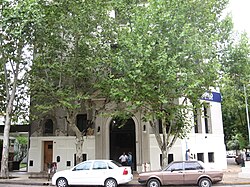
The telephone network, initially developed by ITT and later managed by the state enterprise ENTel, provided some of the widest access in Latin America before its 1990 privatization. While landlines remain in use, there has been a massive shift toward mobile telephony. As of January 2010, the country recorded 9.2 million landlines compared to 50 million cellular phones.
International connectivity is maintained through satellite earth stations and a domestic fiber optic ring connecting major cities at 2.5 Gbit/s. Local routing utilizes 10 Gbit/s fiber optic links or microwave links, though the latter can be unreliable in certain weather conditions in smaller towns.
Internet and Digital Access
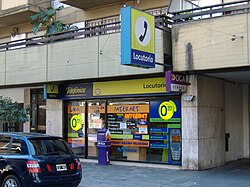
Internet adoption in Argentina grew rapidly, reaching an estimated 27 million users by 2011. The country uses the .ar top-level domain. Access is provided through a mix of monthly-paid connections and providers with commercial agreements with telephone companies.
Broadband access, primarily via ADSL (Asymmetric Digital Subscriber Line), saw a dramatic increase between 2005 and 2010, growing from under 800,000 networks to over 5 million. Wireless and satellite networks also expanded, totaling over 1.5 million by March 2011. Access is heavily concentrated in urban centers, with the city and province of Buenos Aires accounting for the majority of residential users.
Digital Rights and Censorship
Argentina has a complex history with online content. A 1997 presidential declaration guaranteed internet content the same constitutional protections as free speech. However, this has led to legal battles, including cases where the courts refused to block sites selling Nazi memorabilia. Conversely, the state has intervened in other areas; for example, in 2011, a judge ordered ISPs to block the site LeakyMails, which published documents regarding government corruption.
Broadcasting: Radio and Television
Argentina holds a prestigious place in radio history. On August 27, 1920, a team of medical students broadcast Richard Wagner's Parsifal from the Teatro Coliseo in Buenos Aires, marking one of the first radio broadcasts in the world. The 1930s are remembered as the "golden age" of Argentine radio.

Today, the radio landscape consists of 260 AM stations (focused on news and sports) and 1,150 FM stations (focused on music and youth programming). Television began in 1951 with the state-owned Channel 7, pioneered by engineer Jaime Yankelevich. Color broadcasting became widespread after 1978. Argentina now boasts one of the world's highest cable television penetration rates, reaching at least 78% of households.
Communication Summary
| Service | Key Entity/Metric | Notable Detail |
|---|---|---|
| Postal | Correo Argentino | Over 5,000 offices nationwide |
| Telephone | Mobile vs Landline | 50M mobile / 9.2M landlines (2010) |
| Internet | .ar Domain | 27 million users (2011) |
| Radio | AM/FM Stations | 260 AM and 1,150 FM stations |
| Television | Cable TV | 78% household penetration |
Frequently Asked Questions
When did radio broadcasting begin in Argentina?
Radio broadcasting began on August 27, 1920, with a broadcast of Richard Wagner's Parsifal in Buenos Aires, making Argentina one of the first countries in the world to adopt the medium.
What is the Ley de medios?
The Ley de medios, or the 2009 Audiovisual Services Law, was introduced to promote media pluralism by restricting the number of broadcasting licenses a single proprietor could own, aiming to reduce the influence of large media conglomerates.
How is the Argentine postal code structured?
The expanded postal code format includes a letter identifying the province, followed by a four-digit number and three additional letters to provide specific location details within a city.
What is the state of internet access in Argentina?
As of 2011, about two-thirds of the population (27 million people) used the internet, with a strong preference for broadband (ADSL) over dial-up, particularly in the Buenos Aires, Córdoba, and Santa Fe regions.
How prevalent is cable television in Argentina?
Cable television is extremely common in Argentina, with a penetration rate of at least 78% of households, ranking it as the third-widest in the world.