Comechingón People: History and Culture of Argentina's Indigenous Highlands
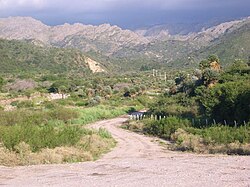
The Comechingón are an indigenous group native to the central highlands of Argentina, specifically within the provinces of Córdoba and San Luis. Known for their unique architectural adaptations and distinct physical characteristics, they represent a significant chapter in the pre-Columbian history of the Southern Cone.
The term "Comechingón" is actually a derivation of kamichingan, a pejorative term meaning "cave dwellers" used by the neighboring Sanavirón tribe. Despite this label, the Comechingón developed a sophisticated sedentary society that balanced agriculture with the natural resources of their mountainous environment.
Key Facts
- Location: Primarily the provinces of Córdoba and San Luis, Argentina.
- Social Structure: Divided into two main groups: the Henia (North) and Kamiare (South).
- Lifestyle: Sedentary farmers who also gathered wild fruits and raised livestock.
- Architecture: Built communal stone houses partially buried underground to protect against winter weather.
- Current Population: Approximately 27,509 people (2022 Census).
Cultural and Social Organization
The Comechingón were not a single monolithic entity but were divided into two primary linguistic and cultural groups, each further subdivided into roughly a dozen tribes.
The Kamiare (South)
Located mainly in the north of San Luis Province, the Kamiare included several distinct groups:
- Saleta: Situated in the western Sierra de Comechingones and Villa de Merlo.
- Nogolma: Located west of the Saletas in the Valle de Conlara.
- Michilingüe: The most prominent group within San Luis, located south and west of the others.
The Henia (North)
The Henia inhabited the Sierras of the Córdoba Province and consisted of various tribes, including:
- Mogas: Based in the Sierras de Ambargasta.
- Caminigas: Located south of the Mogas.
- Gualas (or Guachas): Situated south of the Caminigas.
- Chine: Located west of the Gualas.
- Sitón: Found in the Valle de Punilla and eastern Sierra Chica.
- Aluleta: Located in the western Sierra Chica, Valle de Paravachasca, and southern Valle de Punilla.
- Naure: Inhabiting the southern and central Valle de Traslasierra.
- Macaclita: Spanning from the Valle de Calamuchita to Río Cuarto.
Distinctive Characteristics and Legacy
The Comechingón exhibited several traits that differentiated them from other Amerindian groups. Historically, they were noted for a more Caucasian appearance, including the presence of beards and, in some cases, greenish eyes. Their culture was heavily influenced by the civilizations of the Andes.
To survive the harsh winters characterized by wind and snow, they constructed communal stone houses that were half-buried in the earth. This architectural choice provided essential thermal insulation.
While their original language was lost due to Spanish colonial policies—which favored the use of Quechua (an indigenous language transplanted from Upper Peru)—the Comechingón left behind a lasting legacy. This includes a rich collection of pictography and abstract petroglyphs (rock carvings). Additionally, their influence persists in the modern Spanish dialect of Córdoba, specifically through a characteristic vowel extension.
| Category | Details |
|---|---|
| Population (2022) | c. 27,509 |
| Primary Regions | Córdoba and San Luis, Argentina |
| Main Divisions | Henia (North) and Kamiare (South) |
| Economic Activity | Agriculture, gathering, and animal husbandry |
| Religion | Catholicism (Modern) |
| Languages | Comechingón (extinct), Spanish |
Frequently Asked Questions
What does the name "Comechingón" mean?
The name is a deformation of kamichingan, a term used by the Sanavirón tribe that translates to "cave dwellers." It was originally used as a pejorative description.
How did the Comechingón adapt to their environment?
They built communal stone houses that were partially buried in the ground to protect themselves from the cold, wind, and snow of the winter months.
Why was the Comechingón language lost?
The language disappeared because Spanish colonial policies promoted the use of Quechua, an indigenous language brought from Upper Peru, over the native Comechingón tongue.
What is the current population of Comechingón descendants?
According to the 2022 census, there are approximately 27,509 people. A previous 2010 census recorded 34,546 self-identified descendants.
What cultural influence do they have on modern Argentina?
Beyond their archaeological petroglyphs, they contributed to the linguistic patterns of the region, specifically the vowel extension found in the Spanish spoken by inhabitants of Córdoba and San Luis.