Columbine High School Massacre
On the morning of April 20, 1999, the community of Columbine, Colorado, was shattered by one of the most infamous acts of violence in American history. Between 11:19 a.m. and 12:08 p.m., two students at Columbine High School carried out a meticulously planned attack involving firearms and explosives, resulting in a tragedy that would fundamentally change police tactics and the national conversation on school safety.
Key Facts
- Date: April 20, 1999
- Location: Columbine High School, Columbine, Colorado, U.S.
- Perpetrators: Eric Harris (18) and Dylan Klebold (17)
- Total Fatalities: 16 (including the two perpetrators)
- Total Injured: 23
- Primary Weapons: Shotguns, carbines, pistols, and a vast array of improvised bombs
The Perpetrators and Their Arsenal
The attack was carried out by Eric Harris and Dylan Klebold. The duo utilized a combination of firearms and a massive quantity of explosives designed to cause maximum casualties and structural damage.
Firearms Used
- Eric Harris: A 9mm Hi-Point 995 carbine and a sawed-off 12-gauge Savage 67H pump-action shotgun.
- Dylan Klebold: A 9mm Intratec TEC-9 Mini pistol and a sawed-off 12-gauge Stevens 311D double-barreled shotgun.
Explosives and Other Weapons
The perpetrators brought an extensive array of bombs to the school, including 48 CO2 cartridge bombs, 27 pipe bombs, 11 1.5-gallon propane bombs, and 7 gas or napalm bombs. They also deployed larger 20-pound and 25-pound propane bombs, including two intended as car bombs. Both carried knives, though they remained unused. In total, 188 rounds of ammunition were fired during the massacre.
Timeline of the Attack
The massacre unfolded over the course of approximately 50 minutes, moving from the exterior of the school into the heart of the campus.
The Initial Assault (11:19 a.m. – 11:28 a.m.)
The shooting began at 11:19 a.m. Harris killed Rachel Scott and Daniel Rohrbough outside the west entrance. Shortly after, police arrived, leading to shootouts at the West Entrance. During the chaos, Coach William David Sanders guided more than 100 students out of the cafeteria to safety, though he was later shot in a hallway adjacent to the library and died of blood loss in a science classroom.
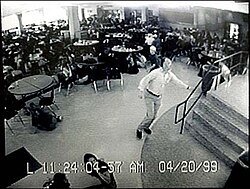
The Library Massacre (11:29 a.m. – 11:36 a.m.)
The most lethal phase of the attack occurred in the school library. Harris and Klebold entered the room and systematically targeted students. Ten people were killed in the library, including Steven Curnow, Cassie Bernall, Isaiah Shoels, Matthew Kechter, Lauren Townsend, John Tomlin, Kelly Fleming, Daniel Mauser, and Corey DePooter.
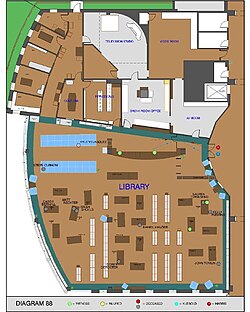
The Conclusion (11:37 a.m. – 12:08 p.m.)
Following the library massacre, the perpetrators moved through the school before returning to the library. At 12:08 p.m., both Eric Harris and Dylan Klebold committed suicide via self-inflicted gunshot wounds.
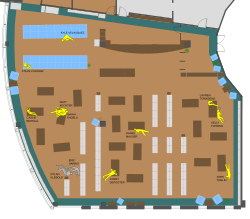
During the SWAT response, officers encountered a student in a window, and the crisis eventually ended with the discovery of the bodies and the neutralization of the remaining bomb threats.
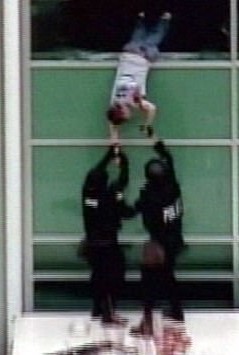
Casualty Summary
| Perpetrator | Fatalities Caused | Injuries Caused |
|---|---|---|
| Eric Harris | 9 | 13 |
| Dylan Klebold | 5 | 10 |
| Total | 14 (plus 2 suicides) | 23 |
Motive and Investigation
The motives behind the attack remain a subject of dispute. The FBI concluded that Harris suffered from psychopathy and Klebold from depression, with both driven by a desire for infamy. Conversely, media speculation often pointed toward revenge for bullying, social rejection, or personal ideology.
Legal action followed the tragedy, with Mark Manes and Philip Duran convicted for supplying weapons to minors. Manes received 6 years of imprisonment, while Duran received 4.5 years. Multiple lawsuits were also filed against the perpetrators' families and the weapon suppliers.
Frequently Asked Questions
Who provided the weapons to Harris and Klebold?
Mark Manes and Philip Duran were the suppliers. They were convicted of supplying a handgun to a minor and possession of an illegally sawed-off shotgun.
What was the FBI's conclusion regarding the motive?
The FBI attributed the massacre to a combination of psychopathy in Eric Harris and depression in Dylan Klebold, coupled with a shared desire for notoriety.
How many bombs were used in the attack?
The perpetrators used a wide variety of explosives, including 48 CO2 cartridge bombs, 27 pipe bombs, 11 1.5-gallon propane bombs, 7 gas/napalm bombs, and several larger propane bombs, including car bombs.
What was the total death toll of the massacre?
A total of 16 people died: 14 victims and the two perpetrators.
How did the police response evolve after the event?
The massacre led to significant changes in police tactics for active shooter situations, moving away from the perimeter-containment strategy used at the time toward more immediate intervention.