Color Quantization: Transforming High-Density Images to 8-Bit Color
When converting a true color 24-bit image—which contains millions of colors—into a more compact 8-bit format, a specialized process called color quantization is required. At its core, color quantization is the method of creating a color map for a less color-dense image derived from a more dense source.
Key Facts
- Color quantization reduces the number of colors in an image to fit a specific bit depth.
- A standard 8-bit image supports a maximum of 256 colors.
- The 3-3-2 method allocates bits based on human visual sensitivity.
- Palettes allow 256 indexes to point to a larger color space for better accuracy.
- The median cut algorithm is generally more accurate than the popularity algorithm.
The Basics of 8-Bit Color Allocation
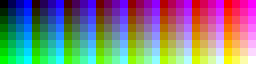
The most straightforward approach to quantization is the direct assignment of bits to the primary color channels: red, green, and blue. In a 3-3-2 8-bit color image, 3 bits are assigned to red, 3 bits to green, and 2 bits to blue. This specific distribution is used because the human eye is naturally less sensitive to blue light.
Limitations of Simple Quantization
While simple, this method is often sub-optimal. Because it uses fixed groupings, it can be inefficient at spreading colors evenly and may misrepresent the original image's visual data.
Advanced Quantization via Color Palettes
To achieve higher fidelity, developers use a palette. Instead of fixed bit assignments, a palette uses 256 possible indexes, where each index points to a specific color chosen from a much larger color space (for example, selecting 256 colors from a pool of 4,096).
Since the color map only needs to accurately represent the original image rather than include every possible hue, any arbitrary color can be assigned to the 256 available indexes to best match the source material.
Common Palette Generation Algorithms
There are several popular methods for creating these optimized color maps:
- Popularity Algorithm: This method identifies the 256 most frequently occurring colors in the image and uses them to build the map.
- Median Cut Algorithm: A more precise approach that sorts and divides colors to find the median of various color groups, resulting in a more representative final color map.
Comparison of Quantization Methods
| Method | Mechanism | Accuracy |
|---|---|---|
| 3-3-2 Fixed Bit | Fixed bits (3 Red, 3 Green, 2 Blue) | Low |
| Popularity Algorithm | Selects 256 most common colors | Medium |
| Median Cut Algorithm | Divides color groups by median | High |
Frequently Asked Questions
What is color quantization?
Color quantization is the process of reducing the number of distinct colors in an image, creating a color map to represent a high-density image in a lower-density format.
Why does the 3-3-2 method use fewer bits for blue?
The 3-3-2 method assigns only 2 bits to blue because the human eye is less sensitive to blue light compared to red and green.
How does a color palette improve image quality?
A palette allows the 256 available indexes to point to any color within a larger color space, ensuring the most representative colors are chosen rather than relying on a fixed mathematical distribution.
What is the difference between the popularity and median cut algorithms?
The popularity algorithm simply picks the most common colors, while the median cut algorithm sorts and divides color groups to find medians, leading to a more accurate representation of the original image.