Colombian National Anthem: The History and Evolution of a Patriotic Symbol
The national anthem of Colombia is more than just a musical composition; it is a sonic tapestry woven from the country's struggle for independence and its quest for a unified identity. From early celebratory dances on battlefields to the formal legislative decrees of the 20th century, the journey to the current anthem involved numerous composers, failed competitions, and a persistent desire to capture the spirit of the Republic.
Key Facts
- Lyrics: Written by former President Rafael Núñez.
- Music: Composed by Italian musician Oreste Síndici.
- Official Adoption: Formalized by Law 33 on October 18, 1920.
- Premiere: First performed on November 11, 1887, celebrating the independence of Cartagena.
- Official Version: The 1933 transcription by José Rozo Contreras is the legally recognized score.
Early Patriotic Efforts and Failed Anthems
Long before a single official anthem was adopted, Colombia expressed its patriotism through various musical forms. In 1819, following the triumph at the Battle of Boyacá, the contradanzas (a type of ballroom dance) titled "La vencedora" and "La libertadora" were performed to celebrate the patriot victory.
![The contradanza The victor was performed on the field of the Battle of Boyacá.[8]](/images/b1/9d/b19d8e0d97799e2449126e7d85f26b21c88a5212c2f945f4e330886835c16b91.jpg)
As the nation evolved from the independence of 1810 through the dissolution of Gran Colombia in 1831, several attempts were made to create a formal national song. In 1836, Francisco Villalba composed a popular patriotic song for the Republic of New Granada. Later, in 1847, Henry Price—founder of the Philharmonic Society of Bogotá—set music to verses by Santiago Pérez, though the resulting "Canción nacional" was criticized for being too simple.
Other attempts included the 1849 "Oda al 20 de julio" by José Caicedo Rojas and José Joaquín Guarín, which was deemed too complex for the general public. Even formal government competitions failed; a 1881 contest was declared void because the jury felt none of the entries aroused sufficient enthusiasm. A subsequent 1883 competition for the centennial of Simón Bolívar's birth awarded prizes to Daniel Figueroa and Cayetano Fajardo, but the jury noted these were merely "patriotic songs" rather than true national anthems.
The Composition of the National Anthem
The turning point came in 1887 when theatre director José Domingo Torres approached Oreste Síndici, an Italian composer and professor at the National Academy of Music. Torres wanted a song to celebrate the independence of Cartagena, the first Colombian city to break from Spanish rule in 1811.
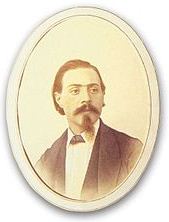
Torres requested that Síndici set music to a poem titled "Himno Patriótico," written by Rafael Núñez. Núñez had originally written the poem in 1850 while serving as secretary of government for the Province of Cartagena, later refining it in 1883.
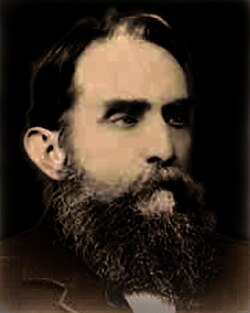
Though Síndici initially refused, he was eventually persuaded by his wife, Justina Jannaut. He retreated to his estate, "El Prado" in Nilo, Cundinamarca, using a Dolt Graziano Tubi harmonium to compose the score in E-flat major with a tempo di marcia (march tempo). The melody premiered informally under a tamarind tree on July 24, 1887, before its official debut on November 11, 1887, performed by a children's choir at the Teatro de Variedades.
Official Recognition and Distribution
The song's impact was immediate. President Núñez invited Síndici to present the work officially on December 6, 1887, at the Palacio de San Carlos. By 1890, the anthem was being performed internationally in cities such as Rome, Mexico City, Lima, Caracas, and Curaçao. The first phonographic recording was captured in New York City in July 1910 by the group La Lira Antioqueña.
Legal Adoption and Modern Variations
While widely accepted by the public, the anthem was not legally official until August 9, 1920, when representative Sergio Burbano presented a bill to the Chamber. This resulted in Law 33 of October 18, 1920, sanctioned by President Marco Fidel Suárez, which officially adopted the anthem and recognized the artistic rights of Síndici's heirs.
Throughout the 20th century, the anthem adapted to historical events. During the border conflict with Peru (1932–1934), soldiers added a transitory stanza emphasizing sacrifice for the motherland. To ensure musical consistency, the government issued Decree 1963 in 1946, designating the 1933 transcriptions by José Rozo Contreras as the official version.
| Year | Event/Milestone | Key Figure(s) |
|---|---|---|
| 1850 | Original "Himno Patriótico" poem written | Rafael Núñez |
| 1887 | Musical composition and premiere | Oreste Síndici |
| 1910 | First phonographic recording in NYC | La Lira Antioqueña |
| 1920 | Official adoption via Law 33 | President Marco Fidel Suárez |
| 1946 | Official score standardized via Decree 1963 | José Rozo Contreras |
Frequently Asked Questions
Who wrote the lyrics and music of the Colombian National Anthem?
The lyrics were written by former President Rafael Núñez, based on a poem he composed in 1850. The music was composed by the Italian musician Oreste Síndici in 1887.
When did the anthem become official?
Although it was popular for decades, it was officially adopted by the Colombian government on October 18, 1920, through Law 33.
Why was the 1933 version by José Rozo Contreras chosen as the official score?
In 1946, a commission of experts determined that Rozo Contreras's transcriptions for symphony orchestra were the most faithful to Oreste Síndici's original compositions.
Are there different language versions of the anthem?
Yes. Under the government of Belisario Betancur, residents of San Andrés were authorized to sing the anthem in English, and indigenous peoples were permitted to sing it in their own native languages.
What are the current laws regarding the broadcasting of the anthem?
Law 198 of 1995 mandates that the anthem be broadcast on all national radio and television stations at 6:00 a.m. and 6:00 p.m., as well as during official presidential addresses and other state events.