Cocopah History: From the Patayan Culture to Modern Sovereignty
The Cocopah people possess a rich and complex history deeply intertwined with the geography of the Colorado River and the Gulf of California. From their prehistoric roots as part of a widespread desert culture to their navigation of colonial borders and revolutionary conflicts, the Cocopah have maintained a resilient presence in the borderlands of present-day Arizona, California, and Baja California.
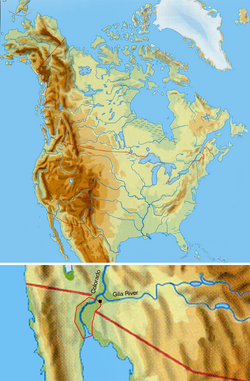
Precontact Era and the Patayan Culture
Long before European arrival, the ancestors of the Cocopah were part of what archaeologists call the Patayan culture. This term describes prehistoric Native American societies that inhabited the region between 700 and 1550 A.D. Their territory stretched from modern-day Arizona west to Lake Cahuilla in California and south into Baja California.
The Patayan peoples, who are likely the ancestors of the Cocopah and other Yuman-speaking tribes, settled in diverse environments including the Lower Colorado River Valley, the Gila River area, and the uplands reaching toward the Grand Canyon. To survive in this arid landscape, they utilized a combination of floodplain agriculture—farming the fertile soil deposited by river floods—and a heavy reliance on hunting and gathering.
European Contact and the Mexican Cession
The first significant encounter between the Cocopah and Europeans and Africans likely occurred in 1540, when Spanish explorer Hernando de Alarcón sailed into the Colorado River delta. By 1605, the Cocopah were explicitly identified by name during the expedition of Juan de Oñate.
The geopolitical landscape shifted dramatically following the Mexican-American War. Through the Mexican Cession, established by the Treaty of Guadalupe Hidalgo, Cocopah ancestral lands were split between the United States and Mexico. This division created a fragmented territory for the tribe during a period of intense American westward expansion.
Conflict and Commerce in the 19th Century
The 1840s and the 1849 California Gold Rush brought a surge of migrants through the Grand Canyon region and the mouth of the Colorado River. Recognizing the strategic value of these river crossings, the U.S. Army established Camp Independence in 1850 to secure the route through Cocopah territory.
While the military presence brought tension, it also created economic opportunities. Many tribes along the river, including the Cocopah, entered the profitable ferry business, providing essential transport for travelers.
The Tax Revolt and the Yuma War
Political tensions peaked in 1851 when the Cocopah joined Garra's Tax Revolt. Led by the Cupeño and supported by the Quechan and Kumeyaay, the Cocopah participated in a siege of Camp Independence. However, the alliance collapsed due to internal disputes with the Quechan regarding the distribution of confiscated sheep.
This instability led into the Yuma War. Initially allied with the Quechan against the U.S., the Cocopah eventually shifted their allegiance. After making peace with the U.S. government, the Cocopah allied with the Paipai and Halyikwamai to fight the Quechan. In May 1853, the Cocopah besieged three Quechan villages, prompting a retaliatory raid by the Mohave (allies of the Quechan). The conflict only subsided when the U.S. threatened to intervene on behalf of the Cocopah.
The Mexican Revolution and the Magonistas
In the early 20th century, the Cocopah became involved in the Mexican Revolution. Under the leadership of Camilo Jiménez, the tribal leader in the Mexicali Valley, the Cocopah supported the Magonistas—revolutionaries fighting against imperialism and the privatization of land.
Joined by the Paipai, Kiliwa, and Kumeyaay, the Cocopah provided logistical support and smuggled U.S. arms into Mexico with the help of the Industrial Workers of the World (IWW). On January 29, these forces captured Mexicali. Jiménez subsequently led a campaign from El Rosario to Ensenada, raiding towns and Chinese-Mexican businesses. This period of resistance ended when Mexican forces defeated the Cocopah, and the Colorado River Land Company subsequently forced them off their land.
The Modern Era
The mid-20th century marked a turn toward formal political organization. In 1964, the Cocopah Tribe of Arizona ratified its first constitution and established a five-person Tribal Council within the Cocopah Indian Reservation.
Throughout the late 1970s and 1980s, the tribe focused on rebuilding and growth. This era saw the acquisition of additional land, the construction of housing, the installation of essential utilities, and the development of infrastructure to foster long-term economic stability.
Key Facts
- Ancestry: Descended from the Patayan culture (700–1550 A.D.).
- Geography: Traditional lands span Arizona, California, and Baja California.
- First Contact: Likely occurred in 1540 with Hernando de Alarcón.
- Political Shift: Lands were divided by the Treaty of Guadalupe Hidalgo.
- Revolutionary Role: Allied with Magonistas during the Mexican Revolution to fight land privatization.
- Governance: Established a formal constitution and Tribal Council in 1964.
| Era | Key Characteristics | Major Events/Groups |
|---|---|---|
| Precontact | Floodplain agriculture, hunting, and gathering | Patayan Culture |
| Early Contact | Spanish exploration and naming | Hernando de Alarcón, Juan de Oñate |
| 19th Century | Border disputes and military conflict | Mexican Cession, Yuma War, Camp Independence |
| Revolutionary | Anti-imperialist struggle | Magonistas, Camilo Jiménez |
| Modern | Constitutional government and development | Tribal Council (1964), Infrastructure growth |
Frequently Asked Questions
Who were the Patayan people?
The Patayan were prehistoric Native American cultures inhabiting parts of Arizona, California, and Baja California between 700 and 1550 A.D. They are considered the ancestors of the Cocopah and other Yuman-speaking tribes.
How did the Mexican Cession affect the Cocopah?
The Mexican Cession, resulting from the Treaty of Guadalupe Hidalgo after the Mexican-American War, split the traditional Cocopah lands between the United States and Mexico.
What was the Cocopah's role in the Mexican Revolution?
Under leader Camilo Jiménez, the Cocopah allied with the Magonistas to fight against imperialism and land privatization, capturing Mexicali and smuggling arms into Mexico.
What was the significance of Camp Independence?
Established by the U.S. Army in 1850, Camp Independence was intended to protect the entry route through Cocopah territories during the era of westward expansion.
When did the Cocopah Tribe of Arizona form its current government?
The tribe ratified its first constitution and formed a five-person Tribal Council in 1964.