Coca: Botany, Varieties, and Chemical Composition of Erythroxylum coca
The coca plant (Erythroxylum coca) is a flowering species within the Erythroxylaceae family. Primarily found in Colombia, it is one of two cultivated species of coca known for its unique botanical properties and chemical makeup. Resembling a blackthorn bush, this plant plays a significant role in both botanical study and regional agriculture.
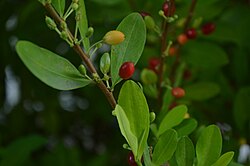
Physically, the plant reaches heights of 2 to 3 meters (7 to 10 feet). Its straight branches support thin, opaque, oval green leaves that taper at the ends. A distinguishing feature of the leaf is an areolated portion—a textured area—bounded by two longitudinal curved lines on either side of the midrib, which is most visible on the underside.
Key Facts
- Scientific Name: Erythroxylum coca.
- Optimal Soil: Highly acidic environments, ideally pH 3.5.
- Physical Traits: 2–3m height, yellowish-white flowers, and red berries.
- Key Alkaloids: Contains both tropane-type (e.g., cocaine) and pyrrolidine-type (e.g., nicotine) alkaloids.
- Cultivation: E. coca is more resistant to the herbicide glyphosate than E. novogranatense.
Botanical Characteristics and Growth Requirements
Floral and Fruit Structure
The flowers of the coca plant are small and grow in clusters on short stalks. Each flower features a corolla of five yellowish-white petals, heart-shaped anthers, and a pistil consisting of three carpels that form a three-chambered ovary. Once matured, these flowers produce red berries.
Soil and Environmental Needs
Unlike its relative, Erythroxylum novogranatense, Erythroxylum coca requires strictly acidic soil and water. For the plant to thrive, pH levels must remain below 5.5, with an optimal value of 3.5. If the pH reaches 6.5 or higher, the plant suffers from chlorosis (yellowing of leaf tissue due to lack of chlorophyll) and leaf distortion.
Taxonomy and Varieties
Within the genus Erythroxylum, four specific taxa are recognized for producing cocaine-rich leaves:
- Erythroxylum coca var. coca
- Erythroxylum coca var. ipadu
- Erythroxylum novogranatense var. novogranatense
- Erythroxylum novogranatense var. truxillense
Amazonian Coca (E. coca var. ipadu)
Erythroxylum coca var. ipadu, commonly known as Amazonian coca, is a close relative of E. coca var. coca. Unlike the Andean variety, Amazonian coca does not survive as a wild or feral plant and is often considered a distinct cultivar rather than a taxonomic variety due to a lack of genetic isolation.
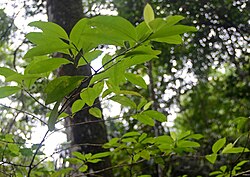
The propagation of Amazonian coca differs significantly from other species. While most are grown from seeds, E. coca var. ipadu rarely produces seeds and is instead propagated via stem cuttings. This makes it ideal for the shifting agriculture of semi-nomadic Amazonian peoples, as entire plantations can be created from a single clone. However, these plants are generally weaker, losing vigor after a few years and becoming susceptible to insects and disease, a process accelerated by overharvesting.
Preparation also differs: the leaves are fire-toasted, pulverized, and then mixed with plant ashes, which provide the alkaline admixture necessary for chewing.
Chemical Composition: Coca Alkaloids
The coca plant contains various alkaloids, which are naturally occurring organic nitrogen compounds. These are categorized into two primary types: tropane and pyrrolidine.
| Tropane-type Alkaloids | Pyrrolidine-type Alkaloids |
|---|---|
| Cocaine | Cuscohygrine |
| Benzoylecgonine | Dihydrocuscohygrine |
| Ecgonine | Hygrine |
| Ecgonidine | Nicotine |
| Tropacocaine | |
| Truxilline | |
| Hydroxytropacocaine | |
| Methylecgonine cinnamate |
Frequently Asked Questions
What is the ideal soil pH for Erythroxylum coca?
The optimal soil and water pH for Erythroxylum coca is 3.5. It requires highly acidic conditions and will experience leaf distortion and chlorosis if the pH rises to 6.5 or above.
How does Amazonian coca differ from Andean coca in propagation?
While Andean coca is typically propagated through seeds, Amazonian coca (E. coca var. ipadu) rarely produces seeds and is propagated through stem cuttings.
What are the two main types of alkaloids found in coca?
The alkaloids in the coca plant are predominantly categorized as either tropane-type (such as cocaine and ecgonine) or pyrrolidine-type (such as nicotine and hygrine).
Which coca species is more resistant to glyphosate?
Erythroxylum coca exhibits greater resistance to the herbicide glyphosate compared to Erythroxylum novogranatense.
How is Amazonian coca prepared for use?
Amazonian coca leaves are fire-toasted to dry them, pulverized into a powder, and then combined with plant ashes to create an alkaline mixture for chewing.