Club Atlético Provincial: A Legacy of Sport in Rosario
Located in the heart of Rosario, Santa Fe, Club Atlético Provincial (also known as Provincial de Rosario) stands as one of Argentina's most enduring and versatile sports institutions. Founded over a century ago, the club has evolved from a modest gathering of football enthusiasts into a massive multi-sport complex serving thousands of members.
Key Facts
- Founded: May 25, 1903.
- Location: Rosario, Argentina.
- Membership: Over 3,000 members.
- Primary Colors: Red and White.
- Notable Achievement: Winner of the Torneo Regional del Centro in 2009.
- Olympic Success: Silver medal in Triple Jump (1924) via member Luis Brunetto.
The History of Provincial de Rosario
At the dawn of the 20th century, football was sweeping across Argentina. In Rosario, the sport's popularity grew as enthusiasts gathered in public parks for informal matches. Driven by this passion, young players from the Salta and Oroño neighborhoods sought to establish their own formal organization. With the support of the director of the Banco Español's Rosario branch, Club Atlético Provincial was officially founded on May 25, 1903.
While the club began exclusively as a football entity, it quickly expanded its horizons to promote a broader athletic culture. An athletics section was added in 1910, followed by tennis in 1920 and basketball in 1923.
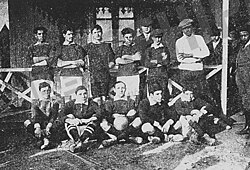
A pivotal moment occurred in the 1930s when football became professional in Argentina. In a move to preserve the spirit of the game, CAP chose to remain amateur, meaning players are not paid a salary for their participation. Consequently, football is now played at the club on a recreational level.
Competitive Success and International Reach
Despite the amateur status of its football wing, most other sports at CAP are pursued with high competitive intensity. The club's commitment to excellence was highlighted early on by Luis Brunetto, who represented Argentina in the Triple Jump at the 1924 Summer Olympics, securing a silver medal.
In the modern era, the club is most recognized for its rugby union team. While competing against powerhouse clubs like Duendes and Jockey Club de Rosario, Provincial has maintained a strong presence in the Unión de Rugby de Rosario. The club achieved a significant milestone by winning the Torneo Regional del Centro in 2009 and continues to be one of five Rosario clubs competing in the inter-provincial Torneo del Litoral.
Facilities and Infrastructure
Club Atlético Provincial is one of the largest clubs in Argentina, operating across four distinct locations in Rosario to accommodate its diverse activities:
- Sede Central (Headquarters): Located in Parque de la Independencia, featuring gyms, swimming pools, and fields for rugby, hockey, and tennis.
- Estadio Cura: Dedicated to football fields, swimming pools, and general recreation.
- Predio Gral. Lagos: Featuring rugby and football fields alongside recreational areas.
- Predio Tanti: A dedicated camping area for members.
A crown jewel of their infrastructure is the Estadio Salvador Bonilla. Built in 1982 for the second South American Games, this indoor stadium is a versatile venue that hosted the FIRS Inline Hockey World Championships in 2015.
Sports and Activities Overview
The club offers an extensive array of disciplines, ranging from traditional team sports to individual martial arts and wellness activities.
| Category | Details / Disciplines |
|---|---|
| Team Sports | Rugby union, Football, Futsal, Basketball, Field hockey, Volleyball, Water polo |
| Individual & Combat | Athletics, Tennis, Judo, Taekwondo, Wrestling, Boxing |
| Aquatics & Wellness | Swimming, Water aerobics, Gymnastics, Yoga |
| Traditional Games | Basque pelota, Bocce |
| Administration | Chairman: Sebastián Franco |
Frequently Asked Questions
When was Club Atlético Provincial founded?
The club was founded on May 25, 1903, in the city of Rosario, Argentina.
Why is football played at a recreational level at the club?
When football turned professional in Argentina during the 1930s, Club Atlético Provincial decided to remain an amateur institution.
What is the club's most prominent sport today?
Today, the club is most widely known for its rugby union team, which competes in the Torneo del Litoral.
What is the significance of Estadio Salvador Bonilla?
Built in 1982 for the second South American Games, it is the club's indoor stadium and hosted the FIRS Inline Hockey World Championships in 2015.
Who is the most successful Olympic athlete associated with the club?
Luis Brunetto is a notable alumnus who won a silver medal in the Triple Jump for Argentina at the 1924 Summer Olympics.