Clematis virginiana: The Resilient North American Native Vine
In the diverse landscapes of North America, from the shores of Newfoundland to the Gulf of Mexico, one vigorous climber stands out for its adaptability and unique beauty: Clematis virginiana. Known by a variety of colorful common names—including virgin's bower, traveller's joy, and wild hops—this member of the Ranunculaceae (buttercup) family is a testament to the strength of native flora.
While its many names can be confusing—some, like "devil's hair," are often applied to unrelated parasitic plants—Clematis virginiana holds a distinct place in its ecosystem. Whether it is twisting through a forest edge or scaling a fence row, this vine is a vital component of the natural habitats it inhabits.
Key Facts
- Scientific Name: Clematis virginiana
- Family: Ranunculaceae (Buttercup family)
- Native Range: North America (Newfoundland to southern Manitoba, down to the Gulf of Mexico)
- Growth Habit: Aggressive climbing vine (3–6 m / 10–20 ft)
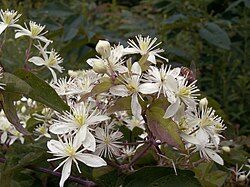
- Flower Type: Small, dull white, faintly sweet-scented flowers
- Ecological Role: Larval host for the clematis clearwing moth
Botanical Description and Growth Habits
Clematis virginiana is an aggressively growing vine that utilizes its leafstalks to twist and climb toward the light. It can reach impressive heights of 3 to 6 meters (10 to 20 feet). The plant features opposite, pinnately compound leaves that are trifoliate, meaning they are composed of three leaflets, and are characterized by coarse, unequal teeth along their margins.
From July to September, the vine produces small, dull white flowers measuring between 13 and 19 mm in width. These blooms carry a faint, sweet fragrance. Interestingly, the species can be dioecious, a botanical term meaning that individual plants are either male (staminate) or female (pistillate). Male plants often produce slightly more showy flowers but do not produce seeds.
Seed Production and Fruit
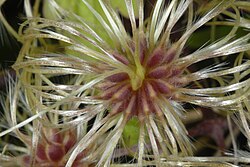
As the season progresses into late August and through November, the plant develops its distinctive fruit. The dry fruit is an achene—a small, one-seeded fruit—which features long, silvery-gray feathery plumes. These plumes, often referred to as "Old man's beard," assist in seed dispersal.
Habitat and Cultivation
This species is remarkably adaptable to various environmental conditions. It thrives in settings ranging from full sun to light shade and can grow in diverse soil types, from sandy to clay. It is comfortable in both dry and draining wet soils, and can tolerate a wide pH range from 6.0 to 8.5 (acidic to alkaline). You will typically find it growing along woods edges, moist slopes, fence rows, thickets, and streambanks.
For gardeners, Clematis virginiana is suited for USDA hardiness zones 3 to 8. While not as common in standard garden centers as its relative, Clematis terniflora (Sweet Autumn Clematis), it is available through specialty and native plant nurseries. It is important to note that C. terniflora can become invasive in the native habitats of C. virginiana due to its propensity for self-sprouting.
Ecological Importance
Beyond its aesthetic and structural presence, Clematis virginiana plays a crucial role in local ecology. It serves as a larval host for the clematis clearwing moth (Alcathoe caudata), providing essential sustenance for the development of this specific moth species.
Summary of Clematis virginiana Characteristics
| Feature | Details |
|---|---|
| Growth Height | 3–6 m (10–20 ft) |
| Flower Color | Dull white |
| Flowering Period | July to September |
| Soil pH Range | 6.0 to 8.5 |
| Hardiness Zones | USDA 3 to 8 |
| Root System | Deep, sparse, and fibrous |
Frequently Asked Questions
Is Clematis virginiana easy to transplant?
No, it can be difficult to transplant because the plant possesses a deep but sparse, fibrous root system.
How does it differ from Sweet Autumn Clematis?
While similar, Clematis terniflora (Sweet Autumn Clematis) typically has heavier leaf coverage, a stronger aroma, and prefers more shade. It can also become invasive in areas where C. virginiana is native.
What are the common names for this plant?
It is known by many names, including virgin's bower, traveller's joy, wild hops, woodbine, and devil's darning needles.
Does it attract wildlife?
Yes, it is a vital host plant for the larvae of the clematis clearwing moth.
What kind of light does it need?
The vine is adaptable and can grow in conditions ranging from full sun to light full shade.