City Manager: The Role and Evolution of Municipal Administration
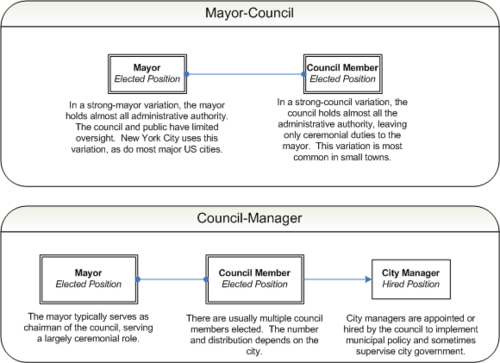
In the structure of a council–manager form of city government, the city manager serves as the primary administrative official. Depending on the municipality, this individual may also be referred to as the Chief Executive Officer (CEO) or Chief Administrative Officer (CAO). Unlike elected politicians, the city manager is an appointed professional tasked with the practical execution of city policies.
While the terms are often used interchangeably, a "city manager" typically possesses more independent authority and discretion—codified in a city charter or law—compared to a CAO, whose duties may be assigned on a varying basis by a superior, such as a mayor.
Key Facts
- Primary Goal: To maximize operational efficiency and provide high-quality services at the lowest possible cost.
- Appointment: Appointed by the city council rather than elected by the public.
- Professional Standard: Many managers adhere to the ICMA Code of Ethics, established in 1924.
- Education: A Master's in Public Administration (MPA) is currently the preferred qualification.
- Origins: The first city manager position was established in Staunton, Virginia, in 1908.
Responsibilities and Powers
As the top appointed official, the city manager oversees the day-to-day administrative operations of the municipality. Their role is designed to bridge the gap between political decision-making and professional execution.
Administrative Oversight
The city manager supervises all city departments and staff through department heads. This includes full oversight of personnel management, including recruitment, disciplining, suspensions, and dismissals.
Financial and Technical Leadership
One of the most critical functions is the preparation, monitoring, and execution of the city budget. Each year, the manager submits a proposed budget package to the council, providing various options and recommendations for approval. Additionally, they serve as the main technical advisor to the council regarding overall governmental operations.
Public Relations and Governance
City managers often handle public relations by meeting with businesses, citizen groups, and other stakeholders, though the presence of a mayor may shift these duties. While they attend all council meetings to provide expertise, they do not possess voting rights.
The Evolution of the Profession
Historical Origins
The city manager model emerged to remove municipal governance from the influence of political parties, placing it instead in the hands of neutral outside experts—originally often business managers or engineers. Following the first appointment in Staunton, Virginia (1908), other cities like Sumter, South Carolina (1912) and Dayton, Ohio (1914) adopted the model. Dayton, in particular, became a national standard after hiring a non-political manager to handle the bureaucracy following a devastating flood in 1913.
By 1930, 200 American cities had adopted this form of government. The model also gained traction in Europe, particularly among smaller cities in the Netherlands. By 1940, the system was in place in cities that would later become major hubs, including Austin, Dallas, Charlotte, and San Diego.
Professional Profile and Education
The educational requirements for the role have shifted significantly over the last century. In the early 20th century, most managers were engineers. Today, the profession is dominated by those with advanced degrees in public administration or business.
| Year | High School or Less | Some College (No Degree) | Bachelor's Degree | MPA Degree | Other Graduate Degree |
|---|---|---|---|---|---|
| 1935 | 42% | 21% | 35% | — | 2% |
| 1964 | 14% | 22% | 41% | 18% | 5% |
| 1984 | 2% | 10% | 30% | 44% | 58% |
| 2012 | 1% | 6% | 23% | — | 27% |
Current data indicates that more than 60% of professionals in the field hold an MPA, MBA, or related higher-level degree. The average tenure for a manager is now 7–8 years, with longer tenures typically found in larger communities.
Ethics and Professional Standards
Members of the International City/County Management Association (ICMA) are bound by a rigid code of ethics first established in 1924. While updated seven times (most recently in 1998) to reflect evolving duties, the core principles remain unchanged. These include maintaining political neutrality, exercising independence to do what is right, serving the public equitably, and maintaining integrity in both personal and professional matters.
Frequently Asked Questions
What is the difference between a city manager and a mayor?
In a council-manager system, the mayor is typically an elected political leader, while the city manager is an appointed professional. The manager handles the day-to-day administrative operations and technical execution, whereas the council and mayor set the overall policy and legislative direction.
Does a city manager have the power to vote on city laws?
No. While the city manager attends council meetings to provide technical advice and administrative updates, they do not have voting rights.
What is the typical educational background for a city manager?
While early managers were often engineers, the modern preference is a Master's degree in Public Administration (MPA) or a Master of Business Administration (MBA), combined with several years of experience as a department head or assistant city manager.
Why was the city manager position created?
The position was created to professionalize city government by removing it from the control of political parties and placing it under the direction of a neutral expert focused on efficiency and cost-effective service delivery.
What is the ICMA?
The International City/County Management Association (ICMA) is a professional and educational organization for appointed managers, administrators, and assistants in local government worldwide, known for enforcing a strict code of ethics.