Mexican cinemaGolden Age of Mexican cinemaNuevo Cine MexicanoCantinflasLuis Buñuel

Cinema of Mexico: From Silent Films to Global Recognition

Cinema of Mexico: From Silent Films to Global Recognition

The Cinema of Mexico is a rich tapestry of artistic expression, evolving from early silent experiments to a powerhouse of global influence. From the sweeping dramas of its Golden Age to the cutting-edge narratives of the 21st century, Mexican film has consistently mirrored the nation's political upheavals, cultural identity, and social struggles.

Key Facts
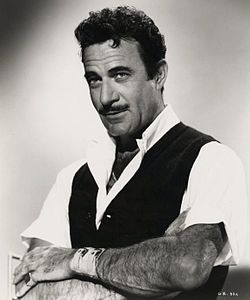
Gilbert Roland starred in The Torch, a remake of Enamorada. The film is also known as Bandit General in the United Kingdom.
  • Global Reach: Cinépolis is the largest cineplex chain in Latin America and the fourth largest worldwide.
  • Golden Age: During the 1940s, Mexico became the world's largest producer of Spanish-language films.
  • Industry Scale: As of 2012, Mexico operated 5,303 screens with 228 million total admissions.
  • Modern Success: The film Roma (2018) achieved ten Oscar nominations, marking a milestone for 21st-century Mexican production.
  • Pioneering Women: Mimí Derba was Mexico's first female director and founder of Azteca Studios.

The Early Years: Silent Films and Revolution (1896–1936)

The dawn of Mexican cinema was marked by the Porfiriato era and the subsequent turmoil of the Mexican Revolution. Early pioneers like Salvador Toscano laid the groundwork for a visual medium that would soon capture the nation's soul.
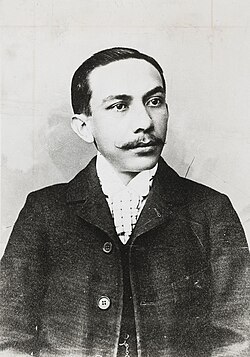
Salvador Toscano, Mexico's first filmmaker
: Salvador Toscano, Mexico's first filmmaker

By 1912, early narratives began to emerge, as seen in works like El aniversario del fallecimiento de la suegra de Enhart.
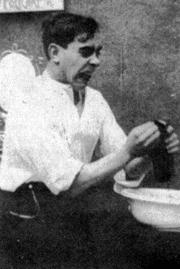
Scene from El aniversario del fallecimiento de la suegra de Enhart (The Anniversary of the Death of Enhart's Mother-in-Law)(1912)
: Scene from El aniversario del fallecimiento de la suegra de Enhart (The Anniversary of the Death of Enhart's Mother-in-Law)(1912)

In 1917, former vaudeville star Mimí Derba founded Azteca Studios, producing influential films such as En defensa Propia (1921). Despite this, the 1920s saw a production slump due to political instability and the rise of the American film industry. This led many Mexican stars, including Ramón Novarro, Dolores del Río, and Lupe Vélez, to seek fame in Hollywood.
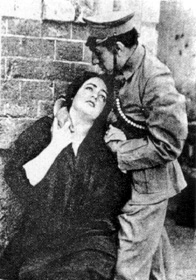
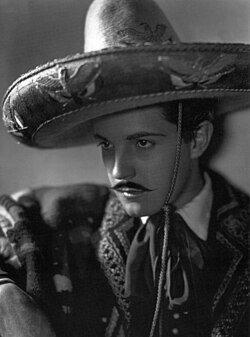
Mimí Derba with Eduardo Arozamena, in La soñadora (1917).
: Mimí Derba with Eduardo Arozamena, in La soñadora (1917).

Image of Ramón Novarro.
: Image of Ramón Novarro.

Lupe Vélez, Mexican silent film actress. La Zanduga was the first Spanish-speaking movie Lupe Velez started in.
: Lupe Vélez, Mexican silent film actress. La Zanduga was the first Spanish-speaking movie Lupe Velez started in.

The transition to sound brought new opportunities. Santa became Mexico's first "talkie," while the 1930s saw a surge in quality inspired by the visit of Sergei Eisenstein, influencing directors like Emilio Fernández and cinematographer Gabriel Figueroa.

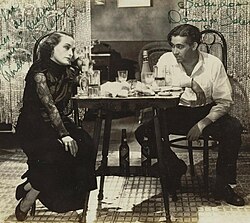
Lupita Tovar, in the film Santa. Mexico's first talkie movie.
: Lupita Tovar, in the film Santa. Mexico's first talkie movie.

Andrea Palma and Domingo Soler, in La mujer del puerto (1934).
: Andrea Palma and Domingo Soler, in La mujer del puerto (1934).

The Golden Age of Mexican Cinema (1936–1956)

The 1940s marked the Golden Age, a period where Mexico dominated the Latin American market. During World War II, production tripled, and Mexico became the primary producer of Spanish-language cinema globally, partly because fascist governments in Spain and Argentina limited competition.

The era was defined by the legendary Mario Moreno, known as Cantinflas, who earned the title of the "Mexican Charlie Chaplin." His comedic genius made him a household name across Spain and Latin America.
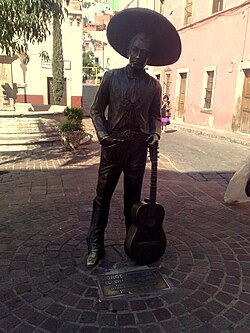
Jorge Negrete helped formulate the charro film genre. Negrete was one of the founders, and the most important leaders, of the Mexican Actors Association, succeeding Cantinflas as its chairman.
: Jorge Negrete helped formulate the charro film genre. Negrete was one of the founders, and the most important leaders, of the Mexican Actors Association, succeeding Cantinflas as its chairman.

Dramatic acting also flourished. Sara García became known as the "grandmother of Mexico," while Dolores del Río returned from Hollywood to collaborate with Emilio Fernández. This era also welcomed the surrealist influence of Luis Buñuel, whose films like Los Olvidados (1950) explored the harsh realities of poverty in Mexico City.
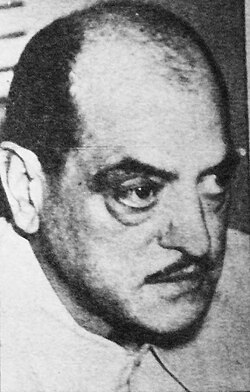
Luis Buñuel
Luis Buñuel
: Luis Buñuel

Cult Cinema and Transition (1960s–1980s)

Following the Golden Age, the industry shifted toward genre films. The 1960s and 70s saw the rise of Luchador films (featuring professional wrestlers like El Santo) and Ficheras films. Despite the shift toward cult cinema, artistic achievements continued; Animas Trujano (1961) received an Academy Award nomination for Best Foreign Language Film.
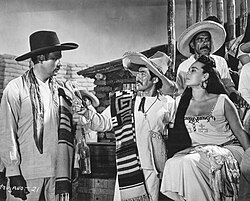
The Important Man Japanese actor Toshiro Mifune with Flor Silvestre in Animas Trujano. The film revolves around a festival of mayordomía in the Mexican Oaxaca state, which revolves around on something like the idea of "king for a day".
: The Important Man Japanese actor Toshiro Mifune with Flor Silvestre in Animas Trujano. The film revolves around a festival of mayordomía in the Mexican Oaxaca state, which revolves around on something like the idea of "king for a day".

The period also saw the emergence of the "cabrito western," with actors like Mario Almada becoming icons of the genre. Almada, known as "El Justiciero del Cine Mexicano," was honored with a Golden Ariel for his career in 2013.

Mario Almada, actor Mexicano western cabrito western. In 2013, he received the Golden Ariel for his career. Known as "El Justiciero del Cine Mexicano" (The Mexican Film Justice Men)
: Mario Almada, actor Mexicano western cabrito western. In 2013, he received the Golden Ariel for his career. Known as "El Justiciero del Cine Mexicano" (The Mexican Film Justice Men)

Nuevo Cine Mexicano: The Modern Era

After a period of decline, government sponsorship in the 1990s helped birth Nuevo Cine Mexicano (New Mexican Cinema). This movement shifted the focus toward contemporary social issues and high production values, propelling Mexican directors to the global stage.

Directors such as Alejandro González Iñárritu (Amores perros, Biutiful) and Alfonso Cuarón (Y tu mamá también) redefined the industry. This era has been characterized by a strong presence at the Academy Awards, with stars like Salma Hayek, Lupita Nyong'o, and Yalitza Aparicio gaining international acclaim.

Achieving ten nominations at the ninety-first edition of the Oscar Awards, Roma of 2018, starring Yalitza Aparicio, Marina de Tavira and Jorge Antonio Guerrero became one of the most important film productions in Mexico in the 21st century.
: Achieving ten nominations at the ninety-first edition of the Oscar Awards, Roma of 2018, starring Yalitza Aparicio, Marina de Tavira and Jorge Antonio Guerrero became one of the most important film productions in Mexico in the 21st century.

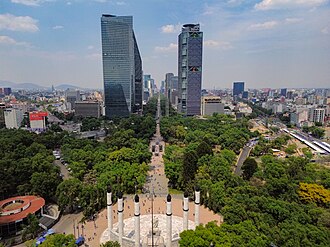
Today, Mexico remains a hub of cinematic excellence. Mexico City is home to Cuarón, Iñárritu, and cinematographer Emmanuel Lubezki, while Guadalajara is the home of Guillermo del Toro and hosts the prestigious Guadalajara International Film Festival.
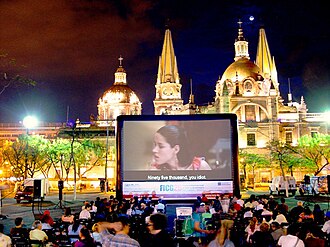
Guadalajara International Film Festival
: Guadalajara International Film Festival

Mexico City is the home of directors Alfonso Cuarón and Alejandro González Iñárritu, as well as cinematographer Emmanuel Lubezki
: Mexico City is the home of directors Alfonso Cuarón and Alejandro González Iñárritu, as well as cinematographer Emmanuel Lubezki

Guadalajara hosts Guadalajara International Film Festival and is the home of Guillermo del Toro
: Guadalajara hosts Guadalajara International Film Festival and is the home of Guillermo del Toro

Industry Statistics and Infrastructure

The modern Mexican film landscape is supported by massive infrastructure, including the Cineteca Nacional (National Film Library) and a vast network of theaters.
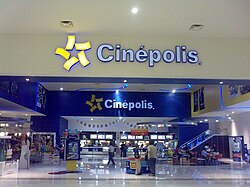
Cinépolis is the biggest cineplex chain in Mexico. It is also the largest chain in Latin America and the fourth largest in the world
: Cinépolis is the biggest cineplex chain in Mexico. It is also the largest chain in Latin America and the fourth largest in the world

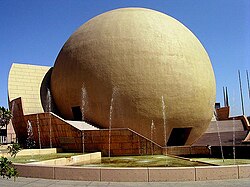
Outside of the IMAX dome at the Tijuana Cultural Center in Tijuana, Baja California, Mexico
: Outside of the IMAX dome at the Tijuana Cultural Center in Tijuana, Baja California, Mexico

Mexican Cinema Industry Data (2011-2012)
Metric Value
Total Screens (2012) 5,303
Total Admissions (2012) 228,000,000
Gross Box Office (2012) $779 million
National Film Market Share (Box Office) 4.62% ($36 million)
Feature Films Produced (2011) 73 (51 Fictional, 16 Documentary, 6 Animated)

Frequently Asked Questions

What was the Golden Age of Mexican cinema?

The Golden Age occurred primarily during the 1940s and 50s. During this time, Mexico was the world's leading producer of Spanish-language films, creating a distinct national identity through cinema and producing global stars like Cantinflas.

Who was the first female director in Mexico?

Mimí Derba was the first female director in Mexico. She founded Azteca Studios in 1917 and had a successful career transitioning from vaudeville to film.

What is Nuevo Cine Mexicano?

Nuevo Cine Mexicano (New Mexican Cinema) is a movement that began in the 1990s, supported by government sponsorship. It is characterized by a modern approach to storytelling and has produced internationally acclaimed directors like Alfonso Cuarón and Alejandro González Iñárritu.

Which Mexican film chain is the largest in Latin America?

Cinépolis is the largest cineplex chain in Mexico and Latin America, and it ranks as the fourth largest cinema chain in the world.

Who are some of the most successful Mexican actors in Hollywood?

Historically, stars like Lupe Vélez, Dolores del Río, and Ramón Novarro were prominent. In the contemporary era, Salma Hayek, Diego Luna, Gael García Bernal, and Lupita Nyong'o have achieved significant international success.

References

  1. "Infraestructura de exhibición y festivales" (PDF). Instituto Mexicano de Cinematografía. Retrieved 13 November 2013.[permanent dead link]
  2. "Table 6: Share of Top 3 distributors (Excel)". UNESCO Institute for Statistics. Archived from the original on 24 December 2018. Retrieved 5 November 2013.
  3. "Table 1: Feature Film Production – Genre/Method of Shooting". UNESCO Institute for Statistics. Archived from the original on 24 December 2018. Retrieved 5 November 2013.
  4. "Exhibición y distribución" (PDF). Instituto Mexicano de Cinematografía. Retrieved 13 November 2013.[permanent dead link]
  5. Foster, Virginia Ramos; Mora, Carl J. (1983). "Mexican Cinema. Reflections of a Society. 1896-1980". Chasqui. 12 (2/3): 85. doi:10.2307/29739828. ISSN 0145-8973.