Chulalongkorn University Symbols and Traditions
Chulalongkorn University is steeped in history and royal heritage, reflected in the symbols and attire that define its identity. From the royal emblem that graces its documents to the specific flora found on campus, these traditions connect current students to the university's origins as the Royal Pages School.
The Phra Kiao Emblem
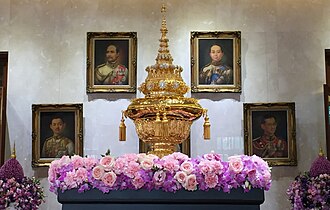
The central symbol of the university is the Phra Kiao, a traditional Thai coronet that serves as royal headgear for young princes and princesses. Originally the personal emblem of King Chulalongkorn, it was authorized for use by the Royal Pages School and remained the official emblem as the institution transitioned into a university.
Today, the Phra Kiao is a ubiquitous symbol of the institution. It appears on formal transcripts and official correspondence, is featured on university souvenirs, and is a mandatory element of student uniforms.
Student Uniforms
Uniforms are a requirement for undergraduate students when attending classes, taking examinations, or conducting official university business. While the current designs have evolved, they were originally adapted from the attire worn by the heirs of King Chulalongkorn.
Undergraduate Attire
- Male Students: The standard uniform consists of a plain white shirt (long or short-sleeved) paired with black or dark blue trousers. First-year students must wear a dark blue necktie featuring an engraved Phra Kiao. Upperclassmen may opt for a black tie with a silver Phra Kiao pin, depending on their faculty.
- Female Students: The uniform includes a short-sleeved blouse with a fold along the spine and metal buttons. A small Phra Kiao emblem is pinned to the right breast. This is paired with a black or dark blue pleated skirt. While various black, white, or brown shoes are permitted, first-year students are required to wear white leather shoes.
Graduate and Formal Attire
Graduate students follow a more relaxed dress code: men wear collared or polo shirts with dark trousers, and women wear plain blouses with long skirts. However, a formal version of the original university uniform is still maintained and is typically reserved for graduates and student leaders.
Academic Dress
The university's academic regalia is based on the khrui, a traditional Thai gown made from a very fine mesh. Historically, the khrui was reserved for royal family members, ministers, and pre-ordination monks. While the gown is open-fronted and calf-length—similar to British academic dress—it omits the cap and hood.
The gowns are distinguished by felt strips and gold ribbons that indicate the wearer's status:
- Bachelors and Masters: These gowns feature black felt strips.
- Doctors: These gowns use scarlet felt strips, a color scheme mirroring the University of Oxford.
- University Officers: Lecturers, council members, the vice-chancellor, and the chancellor wear gowns with pink strips and gold thread.
- The Visitor to the University: A specially designed gown with yellow facing is reserved exclusively for the King of Thailand.
The use of the traditional Thai gown over Western styles was authorized by Vajiravudh and formally enacted into regulation by Prajadhipok in 1930.
The Significance of Rain Trees
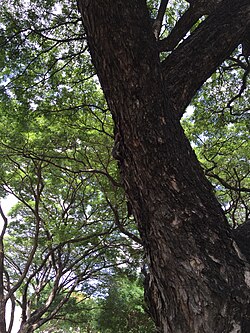
The campus is well-known for its Rain Trees, which serve as a metaphor for the student journey. The fresh green leaves at the start of a term symbolize the naivete of freshmen. As the season progresses, the trees produce slimy pods and shed leaves, making the ground slippery. This serves as a symbolic warning for students to prepare for exams; those who walk carefully (study hard) pass, while those who are heedless slip (fail).
Between 1937 and 1957, many of these trees were removed to make room for campus expansion. Recognizing this loss, King Bhumibol Adulyadej planted five trees from Hua Hin in front of the university auditorium on January 15, 1962, designating them as an "eternal memorial."
Key Facts
- Phra Kiao: A royal Thai coronet used as the university's official emblem.
- Khrui: The traditional fine-mesh gown used for academic dress.
- Uniform Influence: Chulalongkorn's uniforms have served as templates for many other Thai universities.
- Color Coding: Black felt strips denote Bachelors/Masters, scarlet denotes Doctors, and pink denotes University Officers.
- Royal Memorial: Five Rain Trees were planted by King Bhumibol Adulyadej in 1962.
| Wearer Status | Felt Strip Color | Additional Detail |
|---|---|---|
| Bachelor / Master | Black | Faculty-colored cord or ribbon |
| Doctor | Scarlet | Faculty-colored ribbon |
| University Officer | Pink | Gold thread center |
| Visitor (The King) | Yellow | Special design |
Frequently Asked Questions
What is the Phra Kiao?
The Phra Kiao is a Thai coronet, a type of royal headgear for young princes and princesses, which serves as the official emblem of Chulalongkorn University.
Are uniforms mandatory for all students?
Undergraduate students are required to wear uniforms when studying, taking exams, or contacting the university. Graduate students have a more flexible dress code involving collared shirts or blouses.
How does the academic dress differ from Western gowns?
The university uses the khrui, a traditional Thai mesh gown. Unlike Western academic dress, it does not include a cap or hood.
What is the symbolic meaning of the Rain Trees?
The Rain Trees represent the student lifecycle, with their green leaves symbolizing freshmen and their slippery fallen pods serving as a reminder to prepare diligently for examinations.
Who authorized the use of the traditional Thai gown for graduation?
The use of the traditional gown was authorized by Vajiravudh and the regulation was officially enacted in 1930 by Prajadhipok.