The Vibrant World of Chromium: Properties, Uses, and Chemistry
Chromium is a versatile, silvery metallic element that plays a vital role in modern industry and nature. Known for its ability to create intense colors in various chemical compounds, its name is derived from the Greek word chroma, meaning "color." From the gleaming finish on a motorcycle to the essential components of stainless steel, chromium is a fundamental building block of our physical world.

Key Facts
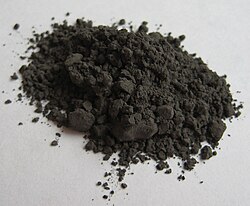
- Atomic Number: 24
- Appearance: Silvery metallic
- Primary Uses: Stainless steel production, decorative plating, and pigments.
- Hardness: 8.5 on the Mohs scale.
- Discovery: Isolated by Louis Nicolas Vauquelin in the late 1790s.
Physical and Atomic Properties
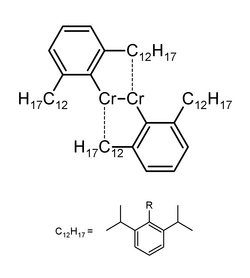
Chromium is a transition metal located in group 6 of the periodic table. In its pure state at standard temperature and pressure, it exists as a solid with a body-centered cubic (bcc) crystal structure. This structure contributes to its high density and significant hardness.
One of chromium's most striking physical characteristics is its high melting point of 2180 K (1907 °C), making it highly resistant to heat. It also possesses a high Young's modulus of 279 GPa, reflecting its structural stiffness. In terms of magnetism, chromium exhibits antiferromagnetic properties, specifically characterized by a spin-density-wave (SDW) state.
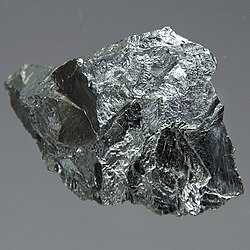
Chemical Versatility
Chromium is chemically diverse, capable of exhibiting a wide range of oxidation states, from −4 to +6. This flexibility allows it to form a vast array of compounds, which are often categorized by the oxidation state of the chromium atom:
- Chromium(III): Often found in stable compounds like anhydrous chromium(III) chloride (CrCl3).
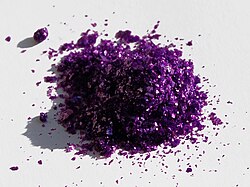
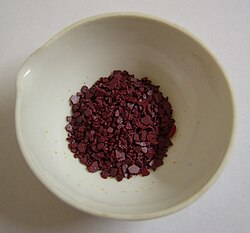
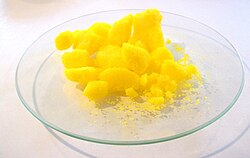
- Chromium(VI): Highly oxidized forms such as chromium(VI) oxide or sodium chromate (Na2CrO4), which are known for their intense colors.
![The Pourbaix diagram for chromium in pure water, perchloric acid, or sodium hydroxide[26][27]](/images/25/ec/25ec98d6dedd34b742fcfa7ce50df68b390116b87fb9a4556725d1e6dfbb28cd.png)
Natural Occurrence and Production
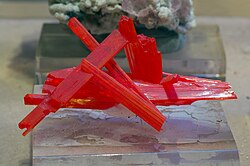
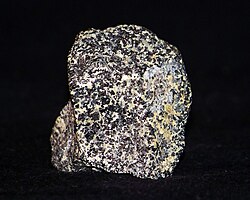
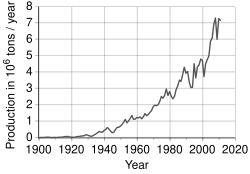
Chromium is a primordial element found naturally in the Earth's crust. It is most commonly extracted from chromite ore. The industrial production process typically involves converting chromite ore into sodium chromate, which is then processed into chromium(III) oxide and finally reduced to metallic chromium using aluminum.
Global production is concentrated in specific regions. South Africa is the leading producer, followed by countries like Turkey, Kazakhstan, and India. The global demand is driven largely by the metallurgical industry.
![Chromium ore output in 2002[65]](/images/01/38/013856c6920fc7d60738cd92b36b1b2194987218e1ece14635344a6fb3000dbb.webp)
Summary of Chromium Data
| Property | Value/Description |
|---|---|
| Atomic Weight (Ar) | 51.9961 ± 0.0006 |
| Melting Point | 2180 K (1907 °C) |
| Boiling Point | 2944 K (2671 °C) |
| Density (at 20°C) | 7.192 g/cm³ |
| Mohs Hardness | 8.5 |
| Electronegativity | 1.66 (Pauling scale) |
Industrial and Natural Applications
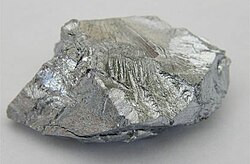
The applications of chromium are as varied as its chemical states. In metallurgy, it is most famously used to create stainless steel. By adding chromium to iron, the resulting alloy gains significant resistance to corrosion and oxidation. For example, high-quality cutlery often uses "Cromargan 18/10," which contains 18% chromium.

Beyond steel, chromium is used for decorative plating. This process applies a thin layer of chromium over other metals to provide a shiny, protective, and hard surface, commonly seen on automotive parts.

In the realm of gemstones, chromium is responsible for the brilliant red color of rubies. This occurs when trace amounts of chromium are present within the corundum crystal structure.
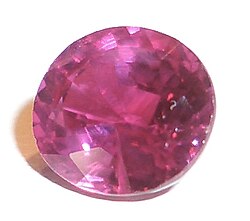
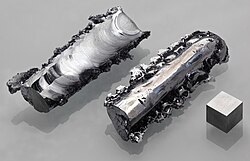
Chromium also finds specialized uses in high-tech fields, such as in the production of ruby lasers and in advanced refining processes to produce large, high-purity crystals.

Frequently Asked Questions
What is the difference between Chromium(III) and Chromium(VI)?
Chromium(III) is a common, more stable oxidation state often used in various industrial and biological contexts. Chromium(VI) is a highly oxidized state that produces intense colors but is also associated with higher toxicity and environmental concerns.
How is chromium used in stainless steel?
Chromium is added to iron to create stainless steel. It reacts with oxygen to form a thin, invisible, and protective layer of chromium oxide on the surface, which prevents further corrosion and rusting.
Is chromium a necessary nutrient for humans?
Chromium is considered a trace element that plays a role in biological processes. However, research into its specific dietary requirements and its effects on health, such as glucose tolerance, continues to be a subject of scientific study.
Where is most of the world's chromium produced?
South Africa is the world's largest producer of chromium, holding significant reserves and production capacity, followed by Turkey and Kazakhstan.
Why is chromium used for plating?
Chromium is used for plating because it is extremely hard, resistant to corrosion, and provides a highly reflective, aesthetic "chrome" finish to various objects.