Christian Rock: The Evolution of Faith and Sound
Christian rock is a diverse musical genre that blends the energy and instrumentation of rock music with lyrics centered on the Christian faith. Emerging from a complex relationship between religious tradition and modern pop culture, it has evolved from a controversial experiment into a global industry with numerous subgenres, including Christian alternative rock, Christian metal, and Christian punk.
While it shares roots with rock and roll, its journey has been marked by a tension between the desire to reach youth through contemporary sounds and the concerns of conservative church establishments regarding the perceived influence of secular culture.
Key Facts
- Origins: Emerged in the late 1960s in the United States.
- Early Pioneers: The Crusaders and Mind Garage are among the earliest recorded acts.
- Key Label: Tooth & Nail Records was pivotal in legitimizing the genre in the 1990s and 2000s.
- Mainstream Crossover: Artists like Stryper and Jars of Clay helped bridge the gap between church communities and mainstream charts.
- Global Reach: The genre expanded from the US to the wider Western world, aided by the rise of music streaming.
The Early Conflict: Rock vs. Tradition (1950s–1960s)
In the 1950s, traditional and fundamentalist Christians generally viewed rock music with suspicion. While early rock was often influenced by gospel and country, its delivery—characterized by loud guitar riffs, hypnotic rhythms, and impassioned vocals—was seen as a threat to the ecclesiastical atmosphere of the church. Harvard professor Archibald Davison noted that traditional Christian music avoided strong pulses and emotionalism, making the raw energy of rock and roll feel anathema to conservative establishments, particularly in the American South.
The controversy intensified with figures like Elvis Presley. Although Presley released the gospel album Peace in the Valley in 1957, his suggestive stage presence made him a polarizing figure among religious leaders.
By the 1960s, the divide widened as rock became the soundtrack of the counterculture. The Beatles sparked outrage in 1966 when John Lennon remarked that the band was "more popular than Jesus now," leading to record burnings across the US. As the era progressed, the rise of psychedelic rock, drug-related lyrics, and songs like The Rolling Stones' "Sympathy for the Devil" (1968) further alienated the church, with some accusing musicians of using backmasking (the recording technique of hiding messages in reverse) for Satanic purposes.
The Birth and Development of Christian Rock (1960s–1980s)
Despite the opposition, some musicians sought to reclaim the rock sound for faith. In 1965, 16-year-old Isabel Baker released the rockabilly praise LP I Like God's Style. By 1966, The Crusaders released Make a Joyful Noise with Drums and Guitars, which many historians consider one of the first true gospel rock records. Similarly, Mind Garage recorded Electric Liturgy in 1969.
The movement was not limited to the US. In Yugoslavia, the band Žeteoci (The Harvesters) was formed in 1966 by theology students. They performed beat music with religious lyrics, becoming a pioneering force in the Yugoslav rock scene before the members became priests in 1971.
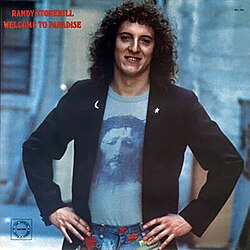
The 1970s saw the rise of influential figures like Randy Stonehill, who released Born Twice in 1971, and Mylon LeFevre. The genre also gained visibility through mainstream artists; Bob Dylan's conversion to Christianity led to the Grammy-winning single "Gotta Serve Somebody" and several successful tours between 1979 and 1981. Arlo Guthrie also contributed to the movement with his Christian folk-rock album Outlasting the Blues.
By the 1980s, Christian rock began to integrate into the broader Contemporary Christian Music (CCM) industry. Hard rock bands like Petra and Resurrection Band brought heavier sounds to the community, while the Swedish band Jerusalem and the American band Stryper achieved MTV exposure. Stryper, in particular, proved that Christian metal had commercial viability, surprising major labels with hits like "Honestly."
Modern Expansion and Legitimacy (1990s–Present)
The 1990s triggered an explosion of the genre, specifically through the rise of Christian alternative rock. Bands like Jars of Clay brought a new sensibility to the music, while the label Tooth & Nail Records became a catalyst for change. By signing acts such as MxPx and Starflyer 59, Tooth & Nail helped legitimize Christian rock as a credible subgenre of alternative rock, making it accessible to evangelical communities and the wider public.

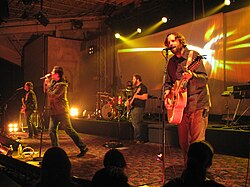
Entering the 2000s, the genre shifted toward greater mainstream exposure. Bands such as Skillet, Switchfoot, P.O.D., Underoath, and Relient K moved beyond church circles to find success on general rock charts. The advent of music streaming further accelerated this global reach, removing the barriers between niche religious markets and the general listening public.
Summary of Christian Rock Evolution
| Era | Primary Characteristics | Key Artists/Labels |
|---|---|---|
| 1950s-60s | Conflict with tradition; early gospel-rock experiments | Isabel Baker, The Crusaders |
| 1970s | Folk-rock influence; emergence of "Jesus Music" | Randy Stonehill, Bob Dylan |
| 1980s | Rise of Christian Metal and CCM integration | Stryper, Petra, Jerusalem |
| 1990s-Present | Alternative rock explosion; mainstream crossover | Tooth & Nail Records, Jars of Clay, Skillet |
Frequently Asked Questions
What is the difference between Christian rock and CCM?
While Christian rock specifically utilizes the instrumentation and energy of rock music, Contemporary Christian Music (CCM) is a broader umbrella term that encompasses various modern styles of Christian music, including pop and worship music.
Who is considered one of the first Christian rock artists?
The Crusaders are often cited as pioneers with their 1966 album Make a Joyful Noise with Drums and Guitars, though Isabel Baker's 1965 release I Like God's Style predates it.
How did Tooth & Nail Records impact the genre?
Tooth & Nail Records helped legitimize Christian rock as a notable subgenre of alternative rock by signing influential acts like MxPx and Underoath, making the sound more accessible to evangelical youth.
Why was rock music initially rejected by the church?
Many conservative Christians viewed the loud rhythms, suggestive dancing (such as Elvis Presley's), and the association with the 1960s counterculture as a threat to traditional ecclesiastical values and morality.
Did Christian rock exist outside the United States?
Yes. For example, the band Žeteoci was formed in Yugoslavia in 1966, performing beat music with religious lyrics in a communist state.