Chopsticks: A Global History of Culinary Tradition and Technique
For millennia, chopsticks have served as the primary dining tool across much of Asia and beyond. More than just simple sticks, these utensils represent a deep intersection of history, craftsmanship, and cultural etiquette. From the bronze implements of ancient dynasties to the specialized tools used in modern professional kitchens, chopsticks have evolved alongside the civilizations that use them.
Key Facts
- Ancient Origins: Archaeological evidence dates bronze chopsticks back to the Shang dynasty (c. 1200 BC).
- Dual Purpose: Chopsticks are used both as eating utensils and as specialized cooking tools like Japanese ryōribashi.
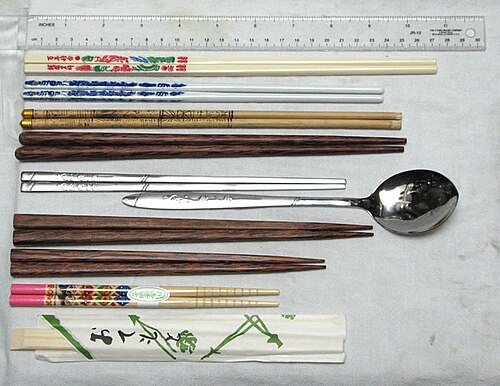
- Regional Diversity: Styles vary significantly, from Korean stainless steel sets to Japanese hand-planed wood.
- Environmental Impact: The massive production of disposable chopsticks consumes millions of trees annually.
Historical Origins and Evolution
The history of chopsticks is deeply rooted in ancient China. While the earliest physical evidence consists of six bronze chopsticks excavated from the Ruins of Yin (dating to approximately 1200 BC), historians suggest they may have been used even earlier during the Xia dynasty or Erlitou culture. These early bronze versions were likely intended for cooking rather than direct consumption.
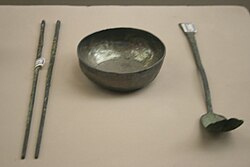
Textual references to chopsticks appear in classical Chinese literature, such as the Han Feizi in the 3rd century BC. By the Warring States period (c. 475–221 BC), the Book of Rites suggests that these utensils were already a common part of daily life. Interestingly, while popular modern attributions link Confucianism to the avoidance of knives at the table, scholars note that the specific phrase regarding "no knives on the table" is a contemporary interpretation rather than a direct ancient quote.
Regional Styles and Cultural Variations
As the use of chopsticks spread through the Sinosphere and beyond, distinct regional styles emerged, shaped by local materials and dining customs.
China and Japan
In China, the primary name is kuàizi. In Japan, they are known as hashi. Japanese craftsmanship is particularly noted for Edo Kibashi—high-grade wooden chopsticks hand-planed by Tokyo artisans since the Taishō period. These often feature unique cross-sections, such as pentagonal or hexagonal shapes, with rounded tips to protect delicate tableware.
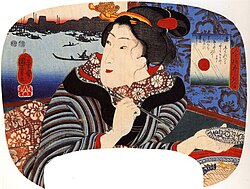
Japanese cuisine also utilizes ryōribashi (cooking chopsticks). These are typically longer (30 cm or more) and made of bamboo to allow for the safe handling of hot food. For deep frying, metal chopsticks with bamboo handles are often preferred to prevent the tips from becoming greasy or discolored.
Korea and Vietnam
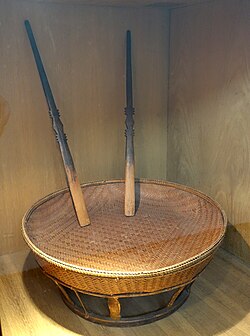
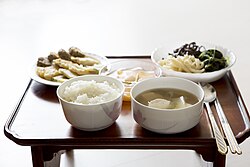
Korean dining often features sujeo, which refers to the combination of chopsticks and a spoon. Historically, bronze sets were common, as seen in artifacts from the tomb of King Muryeong. In Vietnam, the term đũa is used, and specialized tools like the đũa cả are utilized for specific tasks such as scooping rice.
Mongolia and Southeast Asia
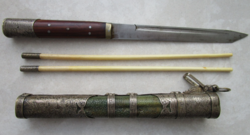
The Mongols adopted chopsticks following their conquest of China in the late 13th century, blending them with traditional nomadic tools like knives. In Southeast Asian nations like Thailand, Cambodia, and Indonesia, chopsticks remain an integral part of the culinary landscape, often used alongside other regional utensils.
Technical Specifications and Usage
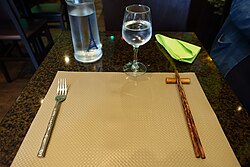
Standard eating chopsticks generally range from 23 to 26 centimeters in length, tapering toward one end for precision. However, specialized cooking versions can reach up to 40 centimeters.
| Type | Primary Material | Typical Length | Primary Use |
|---|---|---|---|
| Eating Chopsticks | Wood, Bamboo, Plastic, Metal | 23–26 cm | General dining |
| Cooking Chopsticks (Ryōribashi) | Bamboo or Metal | 30+ cm | Food preparation/Frying |
| Edo Kibashi | High-grade wood (Ebony, Maple) | Varies | Fine dining/Craftsmanship |
Learning the Grip
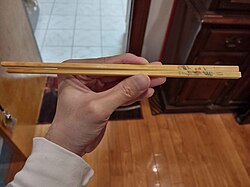
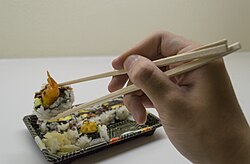
Mastering the standard grip is a skill often aided by modern learning tools. The correct technique involves placing the first chopstick stationary between the thumb and ring finger, while the second chopstick is manipulated using the thumb, index, and middle fingers.
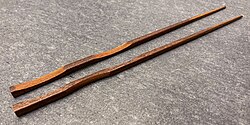
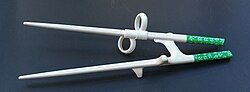
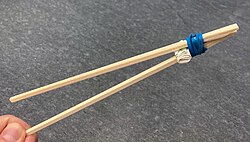
For those struggling with the coordination required, various aids exist, ranging from simple finger placement guides to mechanical exoskeleton learning aids.
Environmental and Health Considerations
The massive scale of disposable chopstick consumption presents significant environmental challenges. In Japan, approximately 24 billion pairs are used annually, while China produces an estimated 45 billion pairs per year. This consumption accounts for the loss of roughly 25 million fully grown trees every year.
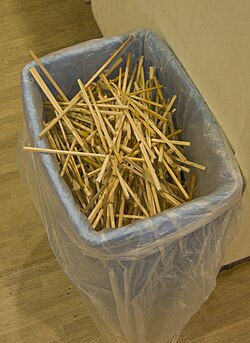
To combat this, China implemented a 5% tax on disposable chopsticks in 2006. Additionally, there has been a growing trend toward hygiene-conscious dining; a 2006 survey in Hong Kong showed an increase in the use of separate serving utensils to prevent cross-contamination from common dishes.
Frequently Asked Questions
What is the difference between eating and cooking chopsticks?
Eating chopsticks are typically shorter (23–26 cm) and designed for precision. Cooking chopsticks, such as Japanese ryōribashi, are much longer (30 cm or more) to protect the hands from heat and allow for stirring or deep frying.
Why are Korean chopsticks often made of metal?
While materials vary, metal chopsticks and spoons (sujeo) are a traditional characteristic of Korean dining, with historical evidence of bronze sets found in ancient royal tombs.
How can I learn to use chopsticks more effectively?
Beginners can use learning aids like finger placement guides or even mechanical exoskeleton aids. Practicing the standard grip—keeping one stick stationary while moving the other—is the key to mastery.
What is the environmental impact of disposable chopsticks?
The production of disposable chopsticks is a major consumer of timber, requiring approximately 25 million trees annually to meet the global demand in China and Japan.
Are there different types of chopstick rests?
Yes, various chopstick rests (hashioki) exist to keep the tips of the utensils off the table, maintaining hygiene and etiquette.