Cholesterol: Chemical Properties, Biological Functions, and Clinical Significance
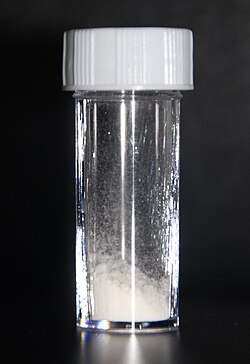
Cholesterol, known systematically as cholest-5-en-3β-ol, is a vital lipid molecule that serves as a fundamental building block in animal cells. While often discussed in the context of cardiovascular health, it is an essential structural component of cell membranes and a precursor to several critical hormones and acids. This white crystalline powder is a sterol—a combination of a steroid and an alcohol—that plays a dual role in maintaining cellular integrity and regulating systemic physiology.

Chemical Properties and Structure
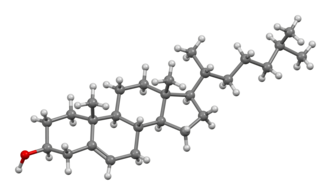
At its core, cholesterol is a hydrocarbon molecule with the chemical formula C27H46O and a molar mass of 386.65 g/mol. Its structure is characterized by a steroid nucleus consisting of four fused rings. Because of its chemical nature, it is hydrophobic, meaning it has very low solubility in water (0.095 mg/L at 30 °C) but dissolves readily in organic solvents such as ethanol, benzene, and chloroform.
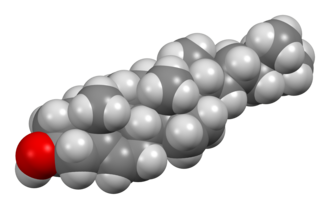
The physical properties of cholesterol include a melting point between 148 and 150 °C and a boiling point of 360 °C, at which point the molecule decomposes. Its unique shape allows it to integrate seamlessly into the lipid bilayer of cells.
Key Facts
- Chemical Formula: C27H46O
- Primary Role: Maintains cell membrane fluidity and stability.
- Precursor: Essential for the synthesis of steroid hormones, bile acids, and Vitamin D.
- Transport: Carried through the blood by lipoproteins (LDL, HDL, VLDL).
- Physical State: White crystalline powder.
Biological Functions and Physiology
Cell Membrane Integrity
Cholesterol is a primary component of animal cell membranes. It modulates the fluidity and permeability of the membrane, ensuring that the cell remains stable across varying temperatures. It often organizes into specialized cholesterol-dependent lipid domains, which are crucial for signaling and protein sequestering.
Chemical Precursor and Steroidogenesis
Beyond structural support, cholesterol acts as the raw material for steroidogenesis—the biological process where steroid hormones are produced. This includes the creation of essential hormones and bile acids, which are necessary for the digestion and absorption of fats in the gut.
Plasma Transport and Logistics
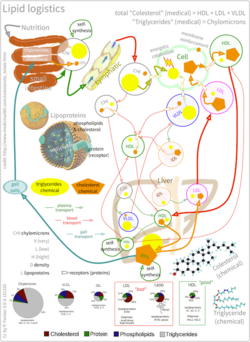
Because cholesterol cannot dissolve in water, it is transported through the bloodstream via lipoproteins. These are complex particles that package lipids for delivery to various tissues. Key lipoproteins include:
- LDL (Low-Density Lipoprotein): Often associated with transporting cholesterol to peripheral tissues.
- HDL (High-Density Lipoprotein): Involved in reverse cholesterol transport, moving excess cholesterol back to the liver.
- VLDL and IDL: Intermediate transporters of triglycerides and cholesterol.
- Chylomicrons: Transport dietary lipids from the intestines.
Metabolism and Regulation

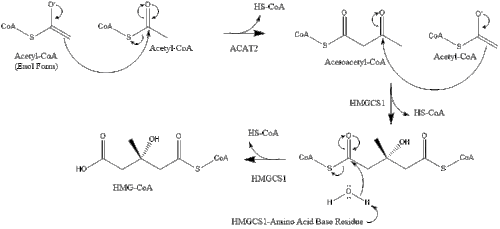
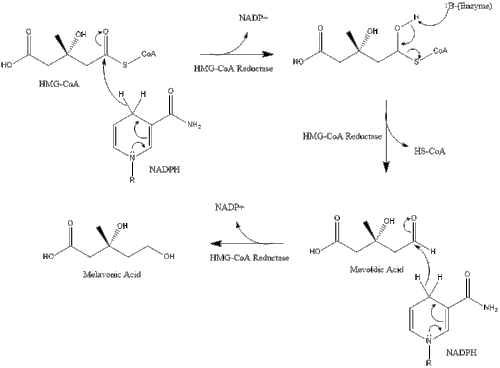
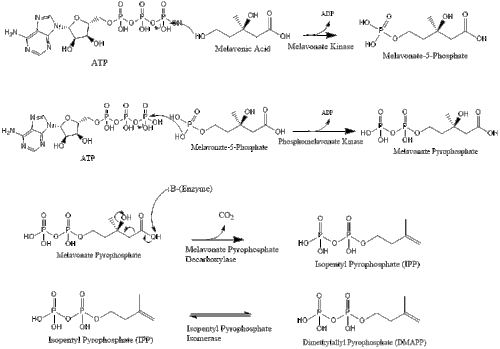
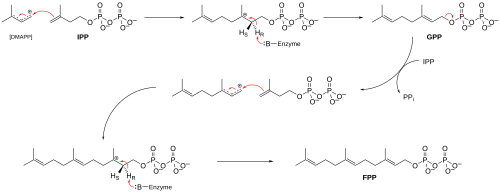
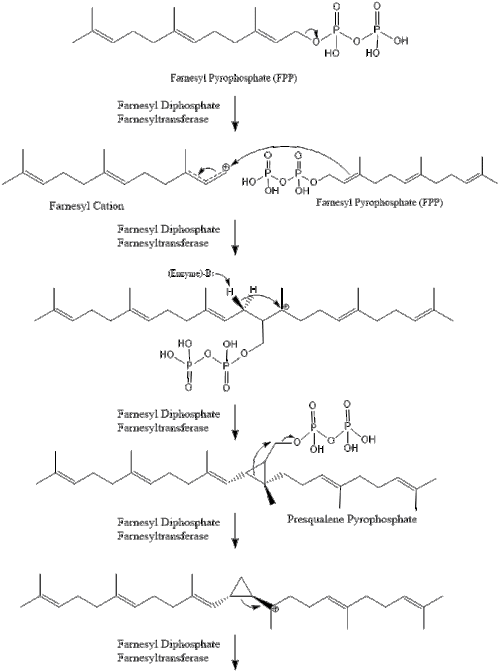
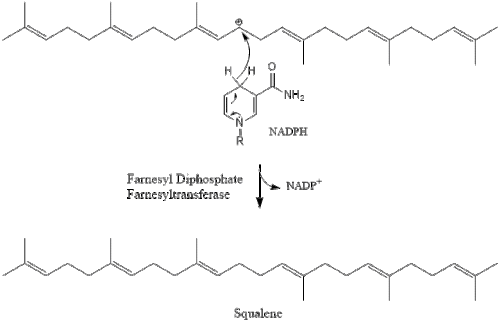
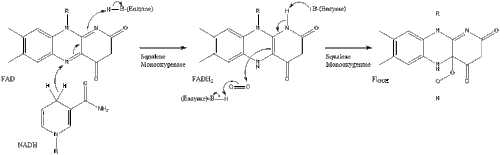
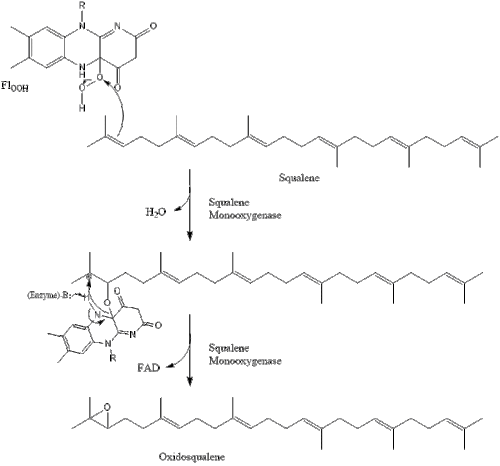
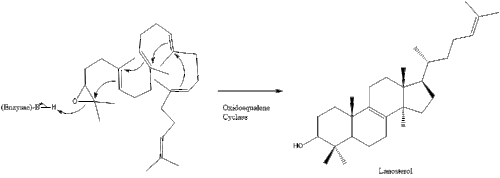
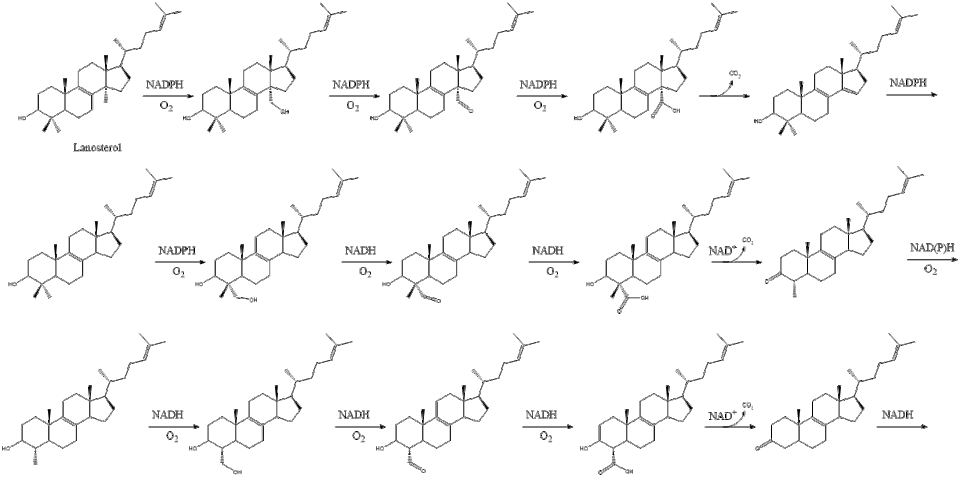
The body maintains cholesterol homeostasis through a balance of internal biosynthesis and dietary absorption. The liver is the primary site of synthesis, a process regulated by complex pathways to ensure the body has enough for cellular function without reaching toxic levels. When levels are too high, the body may utilize the statin pathway to inhibit synthesis.
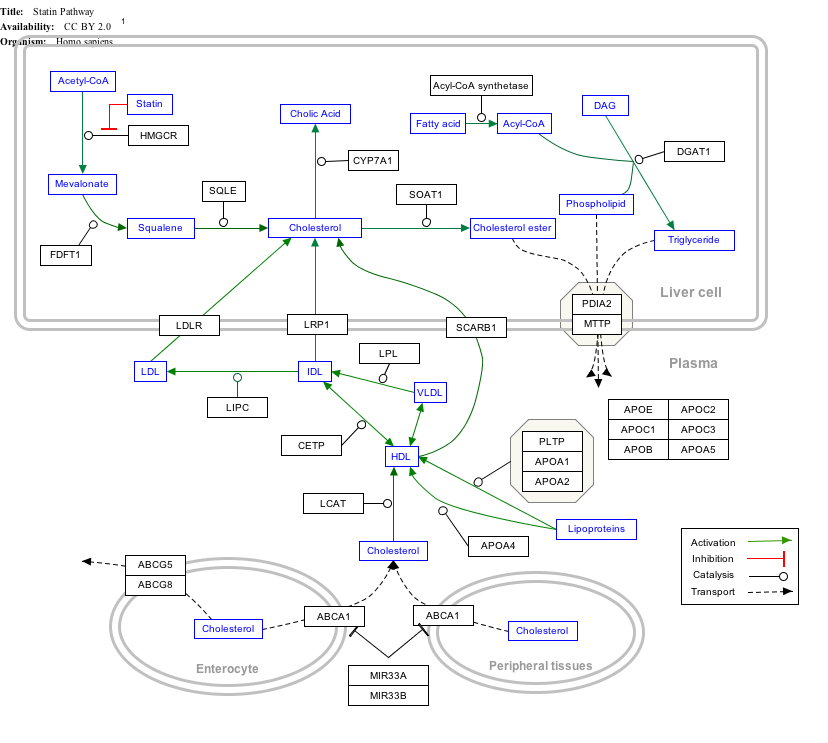
Dietary Sources
Cholesterol is obtained from animal-based foods. While the body can synthesize its own, dietary intake contributes to the total pool of circulating lipids. Some plant sterols and stanols can compete with cholesterol absorption in the intestines, potentially lowering blood levels.
Clinical Significance
The concentration of cholesterol in the blood is a key marker for cardiovascular health. Hypercholesterolemia refers to abnormally high levels of cholesterol, which can lead to the buildup of plaques in the arteries, increasing the risk of heart disease and stroke. Conversely, hypocholesterolemia refers to abnormally low levels.
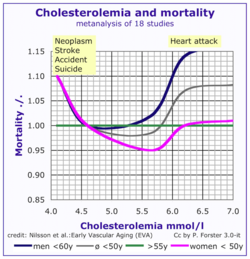
Medical guidelines categorize total cholesterol levels to assess risk:
| Level (mg/dL) | Level (mmol/L) | Interpretation |
|---|---|---|
| < 200 | < 5.2 | Desirable level (lower risk) |
| 200–240 | 5.2–6.2 | Borderline high risk |
| > 240 | > 6.2 | High risk |

Frequently Asked Questions


What is the difference between HDL and LDL?
LDL (Low-Density Lipoprotein) transports cholesterol to the cells and can accumulate in artery walls if levels are too high. HDL (High-Density Lipoprotein) collects excess cholesterol from the tissues and returns it to the liver for excretion, often acting as a protective factor against cardiovascular disease.
Is all cholesterol bad for the body?
No. Cholesterol is essential for life. It is required for the structure of every cell membrane in the body and is the necessary precursor for bile acids and steroid hormones like estrogen and testosterone.
How is cholesterol transported in the blood?
Since cholesterol is a lipid and cannot dissolve in the watery environment of the blood, it is packaged into lipoproteins, such as chylomicrons, VLDL, LDL, and HDL, which allow it to move through the plasma.
What happens when cholesterol levels are too high?
Excessive levels of cholesterol, particularly LDL, can lead to hypercholesterolemia. This may result in the formation of plaques in the arteries (atherosclerosis), which increases the risk of cardiovascular diseases, heart attacks, and strokes.
What is the chemical formula of cholesterol?
The chemical formula for cholesterol is C27H46O, with a molar mass of 386.65 g/mol.