Choctaw People: History, Culture, and the Legacy of the Chahta
The Choctaw, who refer to themselves as the Chahta, are an Indigenous people with a profound history rooted in the Southeastern United States. Known for their diplomatic resilience and rich cultural heritage, the Choctaw have navigated centuries of change—from their ancestral homelands in Mississippi to the establishment of sovereign nations in Oklahoma and Louisiana. Today, they maintain a vibrant presence, blending traditional customs with modern governance.
Historically, the Choctaw were recognized as one of the most numerous Indigenous nations in North America. Their society was built upon a sophisticated tri-division structure and a communal economy, fostering a strong sense of identity and kinship that persists across their various federally and state-recognized bands.
![Nanih Waiya, "leaning mountain", mother mound for the Choctaw people[27]](/images/52/df/52df8e3d7a3dc6c82efed5090f04c7f7a6ffe7d76a59fd9eb54f9742af17d8e7.jpg)
Key Facts
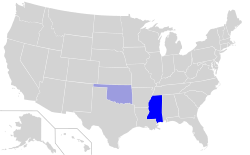
- Total Population: Approximately 214,884 people.
- Primary Regions: Oklahoma, Mississippi, Louisiana, and Alabama.
- Languages: Choctaw (Chahta anumpa), Hand Talk, and English.
- Federally Recognized Tribes: Choctaw Nation of Oklahoma, Mississippi Band of Choctaw Indians, and Jena Band of Choctaw Indians.
- Historical Classification: Categorized by European Americans as one of the "Five Civilized Tribes."
History and Forced Removal
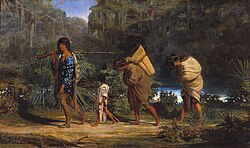
The Choctaw maintained a complex relationship with the United States, often acting as allies during pivotal conflicts including the American Revolution, the War of 1812, and the Red Stick War. Their contribution was particularly notable at the Battle of New Orleans.
Despite these alliances, the Choctaw were subjected to the policy of Indian Removal. Between 1831 and 1833, the majority of the population was forcibly relocated from their southeastern homelands to Indian Territory (modern-day Oklahoma). This migration followed a series of nine treaties, the final three of which required substantial land cessions.
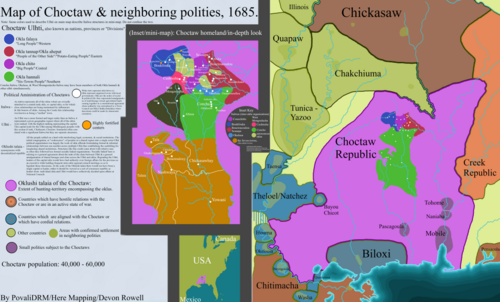
Upon arriving in Indian Territory, the Choctaw government preserved their traditional tri-division structure. They organized into three districts, each led by a chief who served on the Choctaw National Council alongside town chiefs.
Culture and Traditional Life
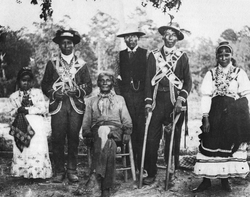
Choctaw culture is characterized by a deep connection to the land and a structured social order. Historically, their spiritual life included an Indigenous religion and the Southeastern Ceremonial Complex, though many now practice Protestantism or Roman Catholicism.
Indigenous Games and Recreation
One of the most distinctive traditional activities was Chunkey. This game involved rolling a disk-shaped stone (1–2 inches in diameter) down a 200-foot corridor at high speed. Players would throw wooden shafts, attempting to strike the disk or block their opponents from doing so.
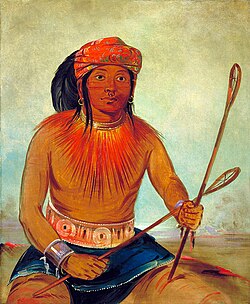
Language and Orthography
The Choctaw language, Chahta anumpa, remains a vital part of their identity. Over time, different systems of writing (orthography) were developed to preserve the language, including the "Speller" alphabet from the 1800s and later linguistic modifications by Cyrus Byington and John Swanton.


Population and Demographics
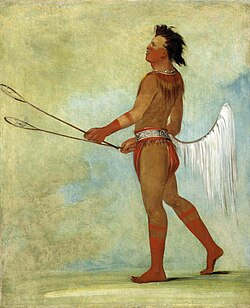
Estimating the historical Choctaw population has varied. In 1718, Le Page du Pratz estimated 25,000 warriors, implying a total population of 125,000. By 1830, just before forced removal, a census reported 19,554 people. Following a period of decline, the population rebounded significantly in the 20th and 21st centuries.
| Tribal Entity | Approximate Population | Year of Data |
|---|---|---|
| Choctaw Nation of Oklahoma | 212,000 | 2023 |
| Mississippi Band of Choctaw Indians | 11,000 | 2020 |
| Jena Band of Choctaw Indians | 284 | 2011 |
Prominent Leaders and Figures
The Choctaw Nation has been led by influential figures who navigated the pressures of colonization and relocation:
- Pushmataha: A chief who negotiated multiple treaties and fought for the U.S. in the War of 1812.
- Peter Pitchlynn: A highly respected leader during the removal era, described by Charles Dickens as a "gentleman of nature's making."
- Phillip Martin: Chief of the Mississippi Band (1979–2007) who drastically reduced reservation unemployment through economic development.
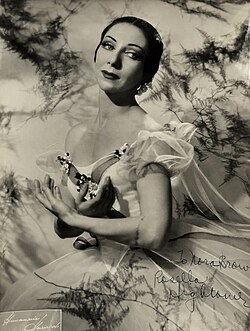
- Rosella Hightower: A renowned prima ballerina who brought international recognition to Choctaw talent.
Frequently Asked Questions
What are the federally recognized Choctaw tribes?
There are three federally recognized tribes: the Choctaw Nation of Oklahoma, the Mississippi Band of Choctaw Indians, and the Jena Band of Choctaw Indians.
What was the "Five Civilized Tribes" designation?
This was a category used by European Americans to describe five Southeastern Indigenous nations, including the Choctaw, who had adopted certain Western political and social structures.
What is the significance of Nanih Waiya?
Nanih Waiya, meaning "leaning mountain," is considered the mother mound for the Choctaw people and holds deep ancestral importance.
How did the Choctaw govern themselves after relocation?
In Indian Territory, they maintained a tri-division structure with three districts, each having its own chief who served on the Choctaw National Council.
What is Chunkey?
Chunkey was a traditional Indigenous game where players rolled a small stone disk and threw wooden shafts to hit it or block opponents.