Chitimacha Tribe of Louisiana: History, Culture, and Language Revival
The Chitimacha are an Indigenous people of the Southeastern Woodlands, residing in the heart of Louisiana. As a federally recognized tribe, the Chitimacha Tribe of Louisiana maintains a profound connection to their ancestral lands, specifically within the Atchafalaya Basin—one of the most productive inland estuaries in North America. Despite centuries of colonial pressure and social disruption, the tribe continues to preserve its unique identity through cultural revitalization and economic resilience.
Today, the Chitimacha operate a reservation in St. Mary Parish near Charenton on Bayou Teche. They hold the distinction of being the only tribe in Louisiana that still controls a portion of its original precontact territory.
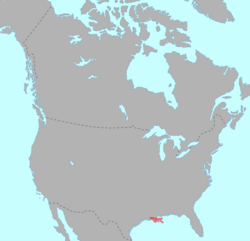
Key Facts
- Population: Approximately 1,300 people.
- Location: St. Mary Parish, Louisiana (Atchafalaya Basin).
- Federal Status: First Native American tribe in Louisiana to receive federal recognition (1917).
- Language: Historically a language isolate; currently undergoing a major revitalization effort.
- Traditional Art: Renowned for highly refined rivercane basketry.
Ancestral Lifeways and Social Structure
Historically, the Chitimacha established large villages averaging 500 inhabitants throughout the swamps and bayous of the Atchafalaya Basin. The natural geography of the region provided a strategic defense, making their settlements nearly impregnable and removing the need for artificial fortifications. Dwellings were crafted from local materials, featuring pole frameworks plastered with mud or palmetto leaves and topped with thatched roofs.
The tribe's relationship with the water was central to their survival. They carved massive dugout canoes from cypress logs, with the largest capable of transporting up to 50 people. To supplement their resources, they traded crops with northern tribes for stone to create tools and arrowheads, and they developed specialized weaponry such as blow guns and cane darts.
Socially, the Chitimacha followed a matrilineal kinship system, meaning property, descent, and clan status passed through the female line. While hereditary male chiefs governed the tribe until the early 20th century, these leaders were chosen from maternal lines and required approval from female elders.
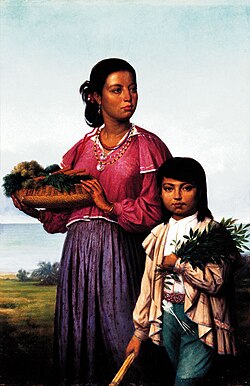
Historical Journey: From Precontact to the 20th Century
Archaeological evidence suggests the Chitimacha and their ancestors have inhabited Louisiana for approximately 6,000 years. Before European contact, the population was divided into four geographically based sub-tribes: the Chawasha, Chitimacha, Washa, and Yagenachito. Historians estimate that at the time of Columbus's arrival, the combined population of these groups was roughly 20,000.
The arrival of Europeans brought devastating Eurasian infectious diseases, including smallpox, measles, and typhoid fever. Because the Chitimacha had no natural immunity, these epidemics caused massive fatalities long before direct colonial contact. By 1700, the population had plummeted, and subsequent conflicts with French colonists between 1706 and 1718 further decimated the eastern Chitimacha.
The 19th and early 20th centuries brought further challenges. The arrival of Acadian refugees (Cajuns) increased pressure on tribal lands. By 1930, the recorded population had fallen to just 51 people. During this era, children were often sent to the Carlisle Indian School in Pennsylvania, a boarding school designed to assimilate Native American children into mainstream U.S. culture, which severely disrupted the transmission of the native language.
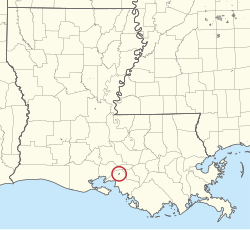
The Path to Federal Recognition
A turning point occurred in 1915 when Sarah Avery McIlhenney, whose family operated the Tabasco factory, purchased the tribe's last 260 acres of land at a sheriff's sale to prevent its loss. She transferred the land back to the tribe, who then ceded it to the federal government to be held in trust. This effort led to the tribe receiving official federal recognition in 1917.
Cultural and Language Revitalization
The Chitimacha language is a language isolate, meaning it has no known relationship to any other language. While the last fluent speakers passed away in the 1930s, the tribe has launched an ambitious effort to bring the language back. This is made possible by the extensive notes and recordings made by linguist Morris Swadesh around 1930.
Since the 1990s, the tribe has utilized gaming revenues to fund education and cultural preservation. Key initiatives include:
- Immersion Classes: Language programs for both children and adults.
- Technological Partnerships: A 2008 collaboration with Rosetta Stone to develop language-learning software for every tribal household.
- Cultural Institutions: The establishment of a tribal museum and a historic preservation office.
- Traditional Arts: Promoting the regrowth of rivercane to support the continuation of traditional basket weaving.
The Art of Basketry
Chitimacha women are world-renowned for weaving refined baskets from rivercane, typically using a palette of yellow, red, and black. This craft has been a vital economic pillar for centuries. Notable artists like Ada Thomas, a National Heritage Fellow, have preserved the complex double-weave technique for future generations.
Tribal Governance and Citizenship
The tribe re-established its government under the Indian Reorganization Act of 1934 and adopted a written constitution in 1971. The current government is a representative system led by a five-member Tribal Council serving two-year terms.
Membership is based on documented ancestry. Prospective members must prove at least one-sixteenth (1/16) degree of Chitimacha Indian ancestry, which is equivalent to having one great-great-grandparent of Chitimacha descent.
| Category | Details |
|---|---|
| Current Population | ~1,300 |
| Reservation Size | 1,000 acres (current) |
| Primary Languages | English, Cajun French, Chitimacha (revitalizing) |
| Government | Elected Tribal Council (5 members) |
| Key Economic Drivers | Gaming, Fish Processing, Basketry |
Frequently Asked Questions
What makes the Chitimacha language unique?
The Chitimacha language is classified as a language isolate, meaning it does not belong to any known language family. Although it became dormant in the 1930s, the tribe is currently reviving it using historical records from linguist Morris Swadesh.
How did the Chitimacha survive the colonial period?
While they suffered immense losses due to European diseases and warfare, the tribe survived by utilizing the natural defenses of the Atchafalaya Basin and eventually securing federal recognition and land trust protections in the early 20th century.
What is the significance of rivercane in Chitimacha culture?
Rivercane is the primary material used by Chitimacha women to weave highly refined, colorful baskets. This art form is not only a cultural treasure but has historically been an important part of the tribe's economy.
Who is eligible for Chitimacha tribal membership?
Eligibility requires documentation of at least one-sixteenth (1/16) Chitimacha Indian ancestry. Children of enrolled members born since 1971 who meet this blood quantum requirement are entitled to membership.