China-North Korea Relations: A History of Diplomacy, Conflict, and Trade
The relationship between China and North Korea is one of the most complex and enduring geopolitical dynamics in East Asia. Defined by shared political ideologies, historical military alliances, and intricate economic dependencies, the bond between these two nations has evolved significantly from the mid-20th century to the present day.
From the battlefield of the Korean War to the modern complexities of international sanctions and trade fluctuations, understanding the connection between Beijing and Pyongyang requires a look at both their shared history and their current economic realities.
Key Facts
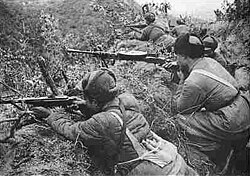
- Military History: China deployed approximately three million soldiers as part of the People's Volunteer Army during the Korean War (1950–53).
- Human Cost: An estimated 180,000 Chinese soldiers were killed during the Korean War conflict.
- Economic Dependency: China remains a primary trading partner for North Korea, though trade volumes fluctuate due to international sanctions.
- Diplomatic Presence: Formal relations are maintained through the Chinese Embassy in Pyongyang and the North Korean Embassy in Beijing.
Historical Foundations and the Korean War
The modern relationship was forged in the crucible of the Korean War. Although China maintained a stance of neutrality, it intervened significantly to support the Korean People's Army against South Korean and UN forces. This intervention saw the mobilization of the People's Volunteer Army, a move that fundamentally shaped the security architecture of the Korean peninsula.
Following the war, the relationship transitioned through various phases of the Cold War, characterized by shifting alliances and the development of a unique, often asymmetric, partnership between the two communist states.
Economic Relations and Trade Dynamics
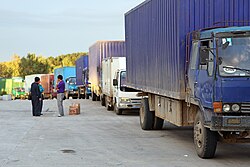
Trade serves as a vital lifeline between the two nations. However, the volume of exchange is heavily influenced by global politics and sanctions—international penalties applied to restrict North Korea's economic activities. While trade saw significant peaks in the mid-2010s, recent years have seen more volatility.
The following table outlines the import and export values between China and North Korea over a twelve-year period (values in unspecified units as per source):
| Year | Imports | Exports |
|---|---|---|
| 2008 | 2033.2 | 754.0 |
| 2009 | 1887.7 | 793.0 |
| 2010 | 2277.8 | 1187.9 |
| 2011 | 3165.2 | 2464.2 |
| 2012 | 3527.8 | 2484.7 |
| 2013 | 3632.9 | 2913.6 |
| 2014 | 4022.5 | 2841.5 |
| 2015 | 3226.5 | 2483.9 |
| 2016 | 3422.0 | 2634.4 |
| 2017 | 3608.0 | 1650.7 |
| 2018 | 2528.2 | 194.6 |
| 2019 | 2883.6 | 215.2 |
| 2020 | 712.8 | 48.0 |
Trade Challenges and Sanctions
International pressure has led to significant shifts in trade, such as the suspension of North Korean coal imports by China. These measures are often aimed at addressing North Korea's nuclear program. Despite these restrictions, economic ties persist through various channels, including the automotive sector and banking, though these are frequently under scrutiny by international regulatory bodies.
Border Dynamics and Migration
The physical border between China and North Korea is a critical zone for both commerce and human movement. The Sino-Korean Friendship Bridge and other crossing points are essential for regional connectivity. However, the border is also a focal point for migration issues, as North Koreans seek routes to reach South Korea via China.
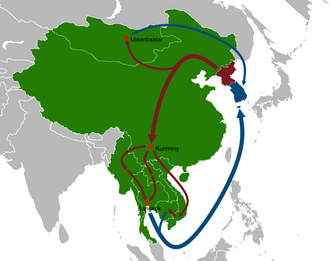
Issues regarding refugees and border security remain sensitive diplomatic topics, often involving complex negotiations between the two governments regarding the status of individuals crossing the frontier.
Modern Diplomacy and Leadership
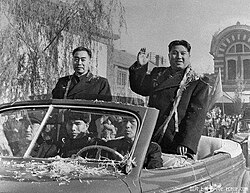
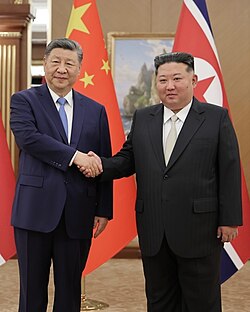
In the 21st century, the relationship has been defined by high-level summits between paramount leaders. Recent years have seen significant interactions between Chinese leader Xi Jinping and North Korean leader Kim Jong Un, signaling a continued, albeit complex, commitment to bilateral ties.
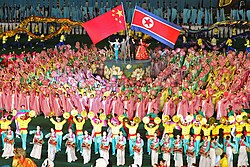
These diplomatic engagements are often accompanied by large-scale public displays of solidarity, such as the Mass Games in Pyongyang, which celebrate the historical ties between the two nations.
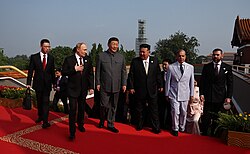
Recent international gatherings have also seen these leaders appearing alongside other global figures, highlighting the strategic importance of the China-North Korea axis in broader regional politics.
Frequently Asked Questions
What was China's role in the Korean War?
China provided significant military support to North Korea through the People's Volunteer Army, involving approximately three million soldiers to fight alongside the Korean People's Army.
How have sanctions affected trade between China and North Korea?
Sanctions have caused significant fluctuations in trade volumes, notably impacting sectors like coal and leading to sharp declines in certain export and import figures during specific years.
Who are the current diplomatic representatives?
Diplomatic relations are managed through official embassies, with Ambassador Wang Yajun representing China in Pyongyang and Ambassador Ri Ryong-nam representing North Korea in Beijing.
What is the significance of the Sino-Korean border?
The border is a vital link for economic trade and transport, but it is also a sensitive area regarding migration and the movement of refugees seeking to reach South Korea.
How is the friendship between the two nations celebrated?
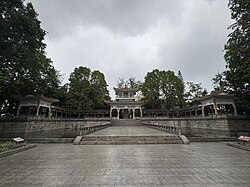
The relationship is often highlighted through cultural events, such as the Mass Games in Pyongyang, and through official state visits and commemorative monuments like the Sino-Korean Friendship Pavilion.