Chile Demographics: Population Trends, Ethnicity, and Social Structure
Chile presents a complex demographic profile characterized by a steady population increase, a significant shift toward an aging society, and a rich tapestry of ethnic influences. From its indigenous roots to waves of European and Asian immigration, the nation's social structure reflects both its colonial history and its modern role as a regional hub in South America.
According to the 2024 Census, the population of Chile stands at 18,480,432. When comparing de jure results (counting people based on their legal place of residence) with the 2017 Census, the National Institute of Statistics notes a population growth of 6.7%.
Key Facts
- Total Population: Approximately 19.49 million (2024 estimate).
- Life Expectancy: 80.3 years on average (83.3 for females, 77.3 for males).
- Fertility Rate: 0.99 children born per woman (2025 estimate), indicating a significant decline.
- Ethnic Composition: Predominantly White and Mestizo, with a notable Indigenous population (11.4%).
- Primary Language: Spanish is the de facto official language, spoken by 99.5% of the population.
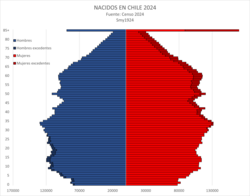
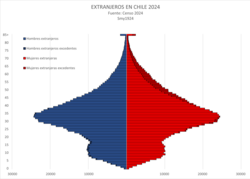
- Immigrant Share: Foreigners make up 7.8% of the population as of 2024.
Population Growth and Age Structure
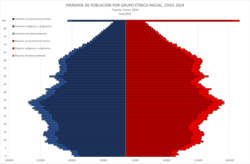
Chile has experienced consistent growth since the mid-19th century. In 1835, the population was roughly 1.1 million; by 1950, it had grown to 6.14 million, and it now nears 20 million. However, the age structure—the distribution of various age groups in a population—has shifted dramatically.
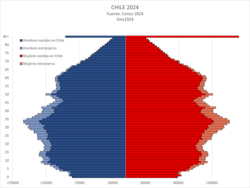
In 1950, children under 15 made up 36.7% of the population, while those 65 and older represented only 4.3%. By 2020, these figures inverted trends: the youth population dropped to 19.2%, and the elderly population rose to 12.2%. This trend points toward an aging population, driven by a falling birth rate and increasing life expectancy.
Current Age Distribution (2024 Estimates)
- 0–14 years: 19.2%
- 15–64 years: 67.3%
- 65 years and over: 13.6%
Ethnicity and Cultural Heritage
Chile's ethnic makeup is a blend of indigenous peoples and immigrants. Historically, colonial records indicated a high percentage of White inhabitants, and by 2002, it was estimated that 89% of the population was White or Mestizo (people of mixed European and Indigenous descent).
Indigenous Communities
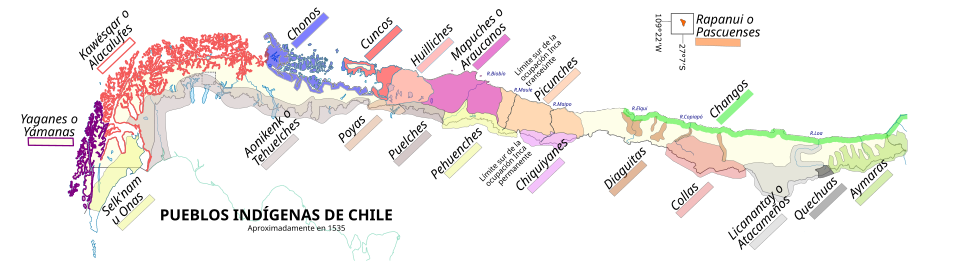
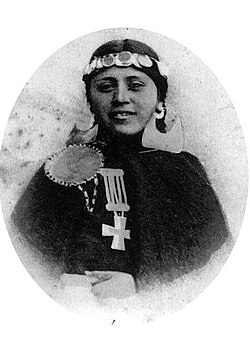
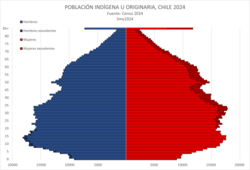
Indigenous peoples make up approximately 11.4% of the population. The Mapuche are the largest group, representing 8.78% of the total population, followed by the Aymara (0.97%) and Diaguita (0.83%).
Immigration and Global Influence
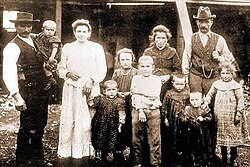
European immigration has left a lasting mark on Chilean society, with significant contributions from Spanish, French, German, and Italian settlers.
Beyond Europe, Chile hosts a substantial Asian immigrant population, estimated at 5% (roughly 800,000 people). This group is primarily composed of descendants from the Middle East, particularly Palestinians, Syrians, and Lebanese. Chile is home to one of the largest Palestinian communities outside the Arab world, with approximately 500,000 descendants. Additionally, there is a Jewish community estimated between 18,000 and 25,000 people.
Vital Statistics and Health
Chile's health indicators show a high standard of living compared to historical norms. Infant mortality has plummeted from 120 deaths per 1,000 live births in the early 1950s to an estimated 6.3 deaths per 1,000 in 2024.
The Total Fertility Rate (TFR)—the average number of children born to a woman over her lifetime—has seen a steep decline. While the TFR was over 6.0 in the early 1900s, it has dropped to 0.99 nationwide by 2025. This decline is most pronounced in the Metropolitan region (0.88) and least pronounced in Tarapacá (1.32).
| Indicator | Value | Note |
|---|---|---|
| Total Population | 19,493,184 | 2024 Estimate |
| Growth Rate | 0.61% | 2024 Estimate |
| Life Expectancy | 80.3 Years | Overall Average |
| Fertility Rate | 0.99 | Children per woman (2025) |
| Infant Mortality | 6.3 | Deaths per 1,000 live births |
| Immigrant Share | 7.8% | 2024 Data |
Language and Religion
Spanish is the dominant language, spoken by 99.5% of the population. English is the most common second language, spoken by 10.2%. Indigenous languages, including Mapudungun, Aymara, Quechua, and Rapa Nui, are spoken by approximately 1% of the population.
In terms of faith, Roman Catholicism remains the largest religion at 42%, followed by those who identify as having no religion (37%) and Evangelicals (14%).
Frequently Asked Questions
What is the current population of Chile?
As of the 2024 Census, the population is 18,480,432, though 2024 estimates place the total population at approximately 19,493,184.
Which indigenous group is the largest in Chile?
The Mapuche are the largest indigenous group, accounting for 8.78% of the population.
Why is Chile's fertility rate concerning?
With a fertility rate of 0.99 children per woman, Chile is well below the replacement level (typically 2.1), which contributes to an aging population and a shrinking proportion of young people.
What is the influence of Arab immigration in Chile?
Chile has a significant population of Middle Eastern descendants, particularly Palestinians. It is estimated that 500,000 people of Palestinian descent live in Chile, making it one of the largest such communities outside the Arab world.
How has life expectancy changed in Chile?
Life expectancy has increased dramatically, rising from approximately 54.9 years in the 1950-1955 period to an estimated 80.3 years in 2024.