The Domestic Chicken: A Comprehensive Guide to Gallus gallus domesticus
The chicken is one of the most widespread and significant domesticated animals in the world. From its origins as a wild jungle bird to its current status as a global staple in agriculture and culture, the chicken has played a vital role in human history. Whether kept as livestock for food or as beloved backyard pets, these birds are a fascinating subject of biological and cultural study.
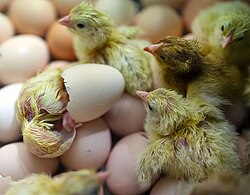
Key Facts
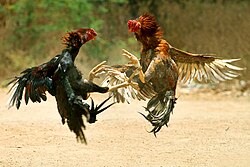
- Scientific Name: Gallus gallus domesticus
- Ancestry: Descended from the Red junglefowl
- Classification: Class Aves, Order Galliformes
- Primary Uses: Meat and egg production, pets, and scientific research
- Global Presence: Found in nearly every corner of the world
Biological Classification and Description
The domestic chicken belongs to the kingdom Animalia and the phylum Chordata. Within the class Aves (birds), it is categorized under the order Galliformes and the family Phasianidae. Its specific scientific name is Gallus gallus domesticus.
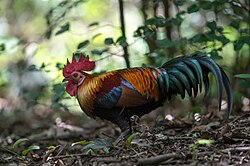
Physically, chickens exhibit sexual dimorphism, meaning males and females often look different. For example, the comb—the fleshy growth on top of the head—is generally smaller in females than in males. The birds are also known for their complex social structures, often referred to as a pecking order, which dictates the hierarchy within a group.
Common Terminology
Depending on the age, sex, and region, chickens are referred to by many different names:
- Chick: A young chicken
- Biddy: A chicken or a newly hatched chicken
- Hen: An adult female chicken
- Cock or Rooster: A fertile adult male chicken
- Cockerel: A young male chicken
- Capon: A castrated or neutered male chicken
- Chook: An informal term used in Australia and New Zealand
- Yardbird: A dialectal term used in the southern United States
Origins and Global Dispersal
The evolutionary journey of the chicken began with the Red junglefowl. Through the process of domestication, these wild birds were integrated into human societies, leading to a massive global dispersal.
![Prehistoric introduction of domesticated chickens into Oceania from the Philippines via Neolithic Austronesian expansion (starting at c. 4000 BP), inferred from genetic markers on ancient and modern chicken DNA (Thomson et al., 2014)[63]](/images/6c/d4/6cd4057749872dcb8d5f724b612ccf6892796fb77eff51fef745f201a9e4f1be.png)
Genetic evidence suggests that the expansion of chickens into Oceania was driven by the Neolithic Austronesian expansion, moving from the Philippines into the Pacific islands approximately 4,000 years ago. Over millennia, chickens have been introduced to Africa, the Americas, and Eurasia, adapting to diverse climates and human needs.
Human Uses and Farming
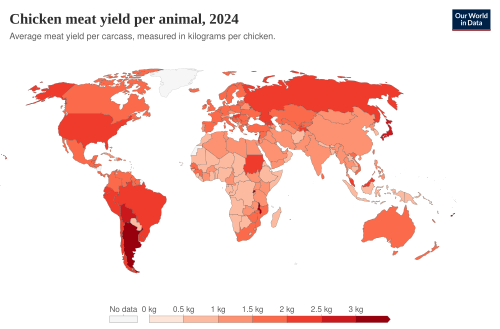
Humans have utilized chickens for thousands of years, primarily for food security. In modern agriculture, chickens are raised in two main ways: for meat and for eggs.
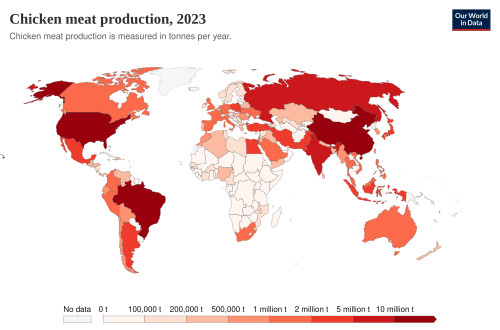
Broilers are chickens specifically bred and raised for meat production. In commercial settings, these birds are often raised in specialized houses to ensure efficient growth. Conversely, layers are kept primarily for egg production. The industry has evolved to manage various aspects of chicken health, including the management of the moult—a natural period where birds shed and regrow feathers.
Chickens as Pets and Cultural Icons
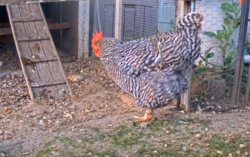
Beyond industrial farming, chickens have entered the domestic sphere as pets. Many people keep backyard flocks for companionship and fresh eggs. Culturally, the chicken holds significant weight in folklore, religion, and art across the globe, appearing in everything from Vietnamese woodcuts to West African tribal statues.
Health and Challenges
As with any domesticated species, chickens are susceptible to various diseases. One significant concern in poultry health is avian influenza, a viral infection that can impact bird populations.
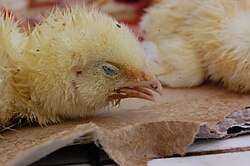
Maintaining high standards of welfare and biosecurity is essential in both commercial and backyard settings to prevent the spread of illness and ensure the well-being of the birds.
Summary of Chicken Characteristics
| Category | Details |
|---|---|
| Scientific Name | Gallus gallus domesticus |
| Order | Galliformes |
| Wild Ancestor | Red junglefowl |
| Primary Uses | Meat, Eggs, Pets, Science |
| Social Structure | Pecking order |
Frequently Asked Questions
What is the difference between a rooster and a cockerel?
A rooster is a fertile adult male chicken, while a cockerel refers specifically to a young male chicken.
What does "pecking order" mean?
The pecking order is a social hierarchy within a group of chickens that determines the dominance and social standing of individual birds.
Are chickens intelligent?
Research into chicken cognition, emotion, and behavior suggests that they possess complex cognitive abilities and are not considered "unintelligent."
What is a capon?
A capon is a male chicken that has been castrated or neutered.
How did chickens reach Oceania?
Genetic markers suggest that chickens were introduced to Oceania from the Philippines via the Neolithic Austronesian expansion, starting around 4,000 years ago.
What is a broiler?
A broiler is a chicken that is raised specifically for meat production.