Chicago Park District: Managing the Emerald Necklace of the Windy City
The Chicago Park District is a massive municipal government agency responsible for the stewardship of one of the largest and oldest park systems in the United States. Operating as an independent taxing authority under Illinois State Statute, the district functions as a "sister" agency to the City of Chicago, ensuring that residents and visitors have access to expansive green spaces, recreational facilities, and cultural landmarks.
From the iconic lakefront vistas to neighborhood field houses, the district manages a diverse portfolio of land designed to improve urban livability. Its strategic placement of parks adjacent to Chicago Public Schools and the integration of Chicago Public Library locations within its facilities highlight a commitment to blending recreation with education.
Key Facts
- Total Parkland: Over 8,800 acres of municipal land.
- Scale: More than 600 parks, 27 beaches, and 78 public pools.
- Major Assets: Operates Soldier Field, 11 museums, and two botanical conservatories.
- Harbor System: The largest municipal harbor system in the U.S. with 10 lakefront boat harbors.
- Annual Budget: Approximately $385 million.
- Global Standing: Home to the world's largest municipal lifeguard force.
Jurisdiction and Infrastructure
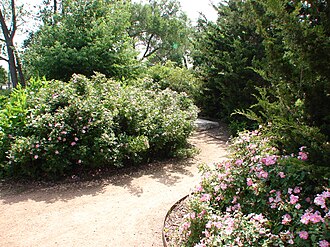
The Chicago Park District oversees a vast array of facilities that serve as the "lungs of the city." This includes 16 historic lagoons, 10 bird and wildlife gardens, and over 230 field houses—community hubs that provide year-round programming for residents.
The district's reach extends to the shores of Lake Michigan, where it manages 27 beaches and a comprehensive harbor system. One of its most significant assets is Soldier Field, the lakefront stadium leased by the Chicago Fire FC and the Chicago Bears.
The Chicago Lifeguard Service
To ensure safety across its aquatic facilities, the district operates the Chicago Lifeguard Service (the Beaches and Pools Unit). This is the largest municipal lifeguard force globally, employing over 1,000 staff during the summer and 300 year-round. They protect patrons across 26 miles of lakefront, 23 Lake Michigan beaches, one inland beach, and 92 total pools (including indoor, outdoor, and school-based facilities).
Notable Parks and Landmarks
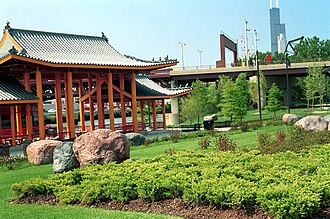
Chicago's park system ranges from massive regional destinations to tiny, specialized installations. Lincoln Park stands as the city's largest, attracting over 20 million visitors annually, making it the second most visited city park in the U.S. after New York's Central Park.
| Park Name | Size (Acres) | Key Feature |
|---|---|---|
| Lincoln Park | 1,200 | Largest city park; spans multiple north side neighborhoods. |
| Burnham Park | 598 | Connects Jackson Park with Grant Park along the lakefront. |
| Jackson Park | 500 | Site of the 1893 World's Columbian Exposition. |
| Washington Park | 372 | Proposed site for the 2016 Summer Olympics Stadium. |
| Grant Park | 319 | Home to Buckingham Fountain and major music festivals. |
| Marquette Park | 300 | Largest park in southwest Chicago; includes a golf course. |
| Millennium Park | 24.5 | Modern marquee park opened in 2004. |
| Park No. 474 | 0.01 | Smallest park in the city/state; consists of a single sculpture. |
Other significant sites include the Bloomingdale Trail Park, the Western Hemisphere's longest greenway project on a former elevated rail line, and Humboldt Park, which features a cultural center for the Puerto Rican community.
Cultural and Educational Assets
The district is not only about green space but also high-culture preservation. It hosts 11 major museums, including the Art Institute of Chicago, the Field Museum of Natural History, and the Adler Planetarium. Additionally, the district manages the free-admission Lincoln Park Zoo and the botanical conservatories at Lincoln Park and Garfield Park.
History and Governance
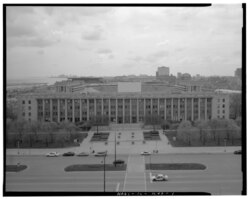
While Chicago had small parks in the 1860s, the modern system began with the creation of Lincoln Park in 1860. Dr. John H. Rauch was instrumental in this movement, advocating for the closure of infectious cemeteries to create "lungs" for the city, drawing inspiration from parks in New York, Baltimore, and Philadelphia.
The current administrative structure was established in 1934 via the Park Consolidation Act, which merged 22 separate park districts into one unified agency. Since then, the district has evolved, co-sponsoring the first Special Olympics at Soldier Field in 1968 and winning the National Gold Medal Award for Excellence in Parks and Recreation in 2014.
The agency is governed by a board of seven non-salaried Commissioners appointed by the Mayor. The executive leadership is headed by the General Superintendent and CEO; as of April 2025, this role is held by Carlos Ramirez-Rosa.
Frequently Asked Questions
What is the largest park in the Chicago Park District?
Lincoln Park is the largest, spanning 1,200 acres and attracting over 20 million visitors per year.
Which professional sports teams use Park District facilities?
The Chicago Bears and Chicago Fire FC lease Soldier Field, which is owned and operated by the Chicago Park District.
How is the Chicago Park District governed?
It is governed by seven non-salaried Commissioners appointed by the Mayor of Chicago with the approval of the City Council.
What makes the Chicago Lifeguard Service unique?
It is the largest municipal lifeguard force in the world, covering more waterfront than any other individual lifeguard force globally.
What is the smallest park in the system?
Park No. 474 is the smallest, measuring only 0.01 acres (54 square feet) and consisting entirely of a sculpture.