Chevron Corporation: A Global Energy Powerhouse
Chevron Corporation is one of the world's largest integrated energy companies, operating across the entire spectrum of the oil and gas industry. Headquartered in Houston, Texas, the company provides essential energy resources and petrochemicals to a worldwide market. From its early roots as a regional oil producer to its current status as a global leader, Chevron has shaped the modern energy landscape through strategic acquisitions and operational expansion.
The company is a major component of the Dow Jones Industrial Average (DJIA), the S&P 100, and the S&P 500, trading on the New York Stock Exchange under the ticker symbol CVX.
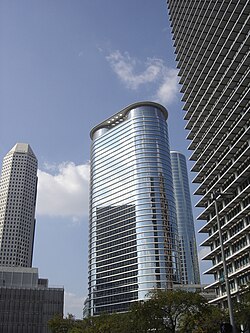
Key Facts
- 2024 Revenue: US$ 202.7 billion.
- Net Income (2024): US$ 17.66 billion.
- Total Assets: US$ 256.9 billion.
- Workforce: 45,298 employees as of 2024.
- Major Brands: Chevron, Texaco, Caltex, Havoline, and Hess.
- Leadership: Mike Wirth serves as the Chairman and CEO.
Corporate Evolution and History
Chevron's history is a narrative of consolidation and growth. The company's lineage traces back to several predecessors, including the California Star Oil Works (1876–1879) and the Pacific Coast Oil Co. (1879–1900). It was later known as the Standard Oil Company (California) from 1906 to 1926, and subsequently as Standard Oil Co. of California (Socal) until 1984.
A pivotal moment in the company's history occurred in 2001 with the merger with Texaco, briefly forming the ChevronTexaco Corporation before reverting to the Chevron name in 2005. More recently, Chevron has continued its expansion through significant deals, including the acquisition of Noble Energy for $5 billion in 2020 and a landmark $53 billion merger with Hess Corp, finalized in early 2025.
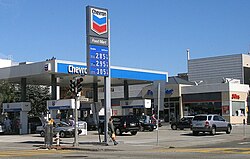
Operational Structure
Chevron operates through a highly integrated business model divided into three primary segments:
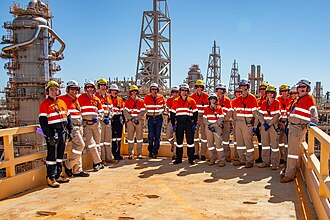
Upstream
The upstream segment focuses on the exploration and production of crude oil and natural gas. This includes high-stakes projects such as the Anchor project in the deepwater U.S. Gulf of Mexico and operations on Barrow Island.
Midstream
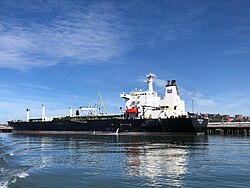
Midstream operations involve the transportation and storage of energy resources. This is facilitated by a massive logistics network, including specialized transport ships like the Mississippi Voyager.
Downstream
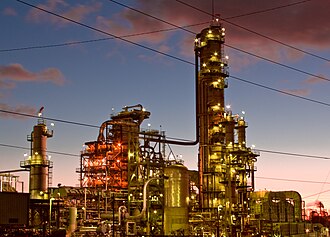
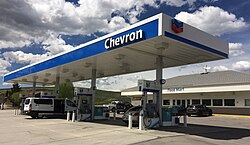
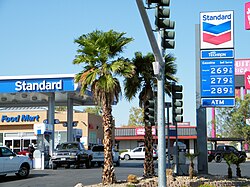
The downstream segment encompasses refining, chemicals, and retail. Chevron operates some of the world's largest refining facilities, such as the El Segundo refinery, and manages a vast network of retail stations under various global brands.
Diversification and Future Energy
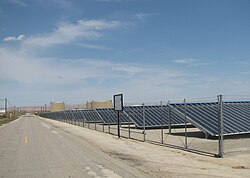
While primarily an oil and gas company, Chevron has invested in alternative energy and technology to diversify its portfolio. This includes the 500kW Solarmine photovoltaic solar project in California and investments in nuclear fusion startups like Zap Energy. The company has also expanded into hydrogen storage, acquiring the world's largest hydrogen storage plant in Utah in 2023.
Environmental Impact and Criticism
As a major energy producer, Chevron faces significant scrutiny regarding its climate impact. In 2024, the company was responsible for 512 Mt of CO2 emissions, representing approximately 1.33% of global CO2 emissions. This has led to various protests and legal challenges, including long-standing disputes regarding environmental impacts in the Lago Agrio region of Ecuador.

Financial Overview
Chevron's financial performance reflects the volatility of the global energy market. While the company saw a dip in net income during 2020 (a loss of $5.5 billion), it rebounded strongly in 2022 with a record net income of $35.4 billion.
| Company | Revenue (USD) | Profit (USD) | Key Brands |
|---|---|---|---|
| ExxonMobil | $286 billion | $23 billion | Mobil, Esso |
| Shell plc | $273 billion | $20 billion | Jiffy Lube, Pennzoil |
| TotalEnergies | $185 billion | $16 billion | Elf Aquitaine |
| Chevron | $163 billion | $16 billion | Texaco, Caltex |
| BP | $164 billion | $7.6 billion | Amoco Aral AG |
Frequently Asked Questions
Who is the current CEO of Chevron?
Mike Wirth has served as the Chairman and CEO of Chevron since February 1, 2018.
What are the primary brands owned by Chevron?
Chevron's primary brands include Chevron, Texaco, Caltex, Havoline, Hess, Techron, RPM, and Delo.
How does Chevron contribute to global CO2 emissions?
In 2024, Chevron was responsible for 512 Mt of CO2 emissions, which accounted for 1.33% of the world's total CO2 emissions.
What is the relationship between Chevron and Berkshire Hathaway?
Berkshire Hathaway is a significant shareholder in Chevron, holding approximately 6.70% of the company.
What alternative energy projects has Chevron pursued?
Chevron has invested in photovoltaic solar projects (such as Solarmine), nuclear fusion research via Zap Energy, and the acquisition of a major hydrogen storage plant in Utah.