Catullus: The Passionate Voice of Roman Lyric Poetry
Gaius Valerius Catullus remains one of the most influential figures in Latin literature, known for bringing a raw, psychological depth to Roman poetry. Writing during the Roman Republic, Catullus shifted away from the rigid formality of his predecessors to embrace a more personal, emotional style. His work captures the volatility of human affection, ranging from sweltering devotion to bitter resentment.
Key Facts
- Identity: A Roman poet born in Verona, Italy, who died in Rome around 54 BC.
- Primary Subject: Much of his work centers on "Lesbia," widely identified as the aristocratic Clodia Metelli.
- Literary Contribution: A pioneer of the Neoteric style, emphasizing brevity, polish, and personal emotion.
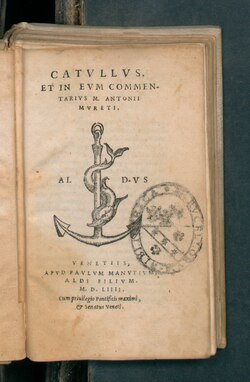
- Preservation: His work survived primarily through a manuscript discovered in Verona in 1305.
- Structure: His collection consists of 116 carmina (poems) divided into polymetra, longer poems, and epigrams.
The Life and Mystery of Catullus
Because no ancient biography of Catullus has survived, historians must piece together his life from his own poems and scattered references in other ancient texts. While the scholar Jerome suggested he was born in 87 BC and died at age 30, other scholars propose dates of 84–54 BC, noting that his poems reference events from 55 BC.
Catullus's personal life was marked by intense emotion. He wrote poignantly about the death of his brother, lamenting that their entire house felt buried with him. However, some historians, such as T. P. Wiseman, suggest that Catullus may have married later in life, potentially continuing the Valerii Catulli lineage.
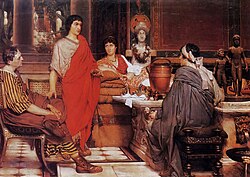
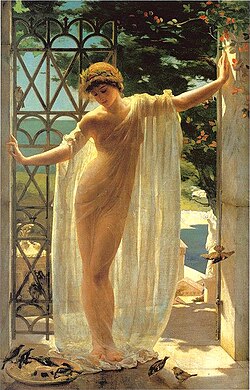
The Enigma of Lesbia
The most famous figure in Catullus's work is "Lesbia," generally identified as Clodia Metelli. Clodia was a sophisticated woman from the patrician Claudii Pulchri family, sister to Publius Clodius Pulcher and wife to the consul Quintus Caecilius Metellus Celer. Their relationship was tumultuous, characterized by initial euphoria, separation, and betrayal.
Catullus's poems reveal a man trapped by his own passion. Despite Clodia's indifference and her numerous other lovers—including Egnatius, Gellius, Quintius, Rufus, and Lesbius—Catullus wavered between devout love and scornful insults regarding her infidelity. This psychological struggle provides the striking depth that defines his lyric work.
Poetic Structure and Organization
The surviving anthology of Catullus contains approximately 116 carmina, which are categorized by their form and length. These were originally organized such that each section would fit onto a single scroll.
| Poem Category | Approximate Count | Approximate Lines | Characteristics |
|---|---|---|---|
| Polymetra | 60 | 860+ | Short poems in varying meters |
| Longer Poems | 9 | 1,136 | Thematic focus on marriage and myth |
| Epigrams | 48 | 330 | Written in elegiac couplets |
The Longer Poems and the Epyllion
The longer works often deviate from Catullus's typical lyrical intimacy. Some serve as traditional marriage hymns promoting Roman ideals. The most notable is Poem 64, an epyllion (a miniature epic) written in dactylic hexameter. This 408-line work weaves together the myths of Ariadne's abandonment and the marriage of Peleus and Thetis.
These works reflect the influence of Hellenistic Alexandria and the poet Callimachus. Furthermore, Poem 68 is credited as the prologue to the Roman Erotic Elegy, a genre later expanded by poets such as Ovid and Propertius.
Intellectual and Artistic Influences
Catullus was deeply influenced by Greek literature, particularly the work of Sappho. He imitated her style and utilized the Sapphic stanza (a specific poetic meter) in poems 11 and 51, a choice that likely influenced the later poet Horace.
Mythology also played a central role in his compositions. His longer poems reference a wide array of classical tales, including the voyage of the Argonauts, the story of Theseus and the Minotaur, and the tragedy of Tereus and Procne.
Legacy in Music and Culture
The emotional resonance of Catullus's poetry has inspired composers across centuries. In 1606, Alfonso Ferrabosco the younger set a translation of Poem 5 to music. In the 20th century, Carl Orff composed the cantata Catulli Carmina (1943), and Mátyás Seiber set Poem 31 for a mixed chorus in 1956.
Modern interpretations continue to emerge, such as David Glaser's 2011 song cycle Catullus Dreams and Jóhann Jóhannsson's vocoder-led setting of Poem 85, Odi Et Amo. From jazz recordings by Reine Rimón to classical arrangements at Carnegie Hall, Catullus's words continue to be translated into sound.
Frequently Asked Questions
Who was the real Lesbia?
Lesbia is widely believed to be Clodia Metelli, a member of the aristocratic Claudii Pulchri family and the wife of Quintus Caecilius Metellus Celer.
How was Catullus's work rediscovered?
After being relatively unknown since the 2nd century CE, his poetry was recovered via a manuscript found in Verona in 1305, which led to copies being preserved in locations like the Bodleian Library.
What is an epyllion?
An epyllion is a miniature epic poem. Catullus's Poem 64 is a prime example, utilizing dactylic hexameter to tell mythological stories within a shorter framework than a traditional epic.
What is the "Sapphic stanza"?
The Sapphic stanza is a poetic meter developed by the Greek poet Sappho. Catullus adopted this form in poems 11 and 51, helping to introduce the style to later Roman poets like Horace.
When did Catullus live?
While dates are debated due to a lack of surviving biographies, he is generally placed between 87–54 BC or 84–54 BC, dying in Rome in his late twenties or early thirties.