Carlos Bilardo: The Tactical Mastermind of Argentine Football
Carlos Salvador Bilardo is a figure of immense influence in the world of football, known not only for his strategic brilliance but for his multifaceted life as a physician and a professional athlete. From his early days as a disciplined midfielder to his tenure as the architect of Argentina's global dominance in the 1980s, Bilardo's journey is one of intellectual rigor and sporting passion.
Beyond the pitch, Bilardo is affectionately known by fans and the media as el narigón ("the big nosed one"). His legacy is defined by a relentless pursuit of victory and a willingness to challenge conventional tactical wisdom.
Key Facts
- World Cup Success: Led Argentina to victory in the 1986 FIFA World Cup and a runner-up finish in 1990.
- Tactical Innovation: Popularized the 3–5–2 formation at the highest level of international football.
- Academic Background: A qualified gynecologist who graduated from the University of Buenos Aires.
- Club Legend: Achieved significant success as both a player and manager with Estudiantes de La Plata.
- Career Span: Played 460 senior matches and managed teams across Argentina, Colombia, Spain, Libya, and Guatemala.
Early Life and Academic Pursuits
Born on March 16, 1938, in the La Paternal neighborhood of Buenos Aires to Italian immigrants, Bilardo balanced a rigorous work ethic with his passion for sport. During school vacations, he worked before dawn hauling produce to the Abasto market. This discipline extended to his education; while rising through the youth ranks of San Lorenzo de Almagro, he pursued a degree at the Faculty of Medicine of the University of Buenos Aires.
His early football career saw him represent the Argentina youth team, winning the 1959 Pan-American title and competing in the 1960 Rome Olympics. In 1961, he joined Deportivo Español, where he transitioned from a top scorer to a defensive midfielder—a role that required the tactical awareness that would later define his coaching career.
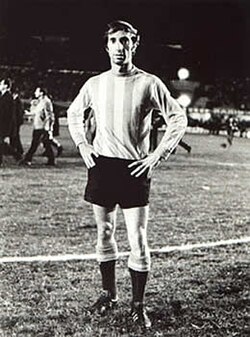
The Estudiantes Era: Player and Tactician
In 1965, Bilardo joined Estudiantes de La Plata. Under manager Osvaldo Zubeldía, Bilardo became the team's on-field tactician. This period marked a golden era for the club, resulting in a Metropolitano title (1967), three consecutive Copa Libertadores titles (1968–1970), and an Intercontinental Cup in 1968 after defeating Manchester United.
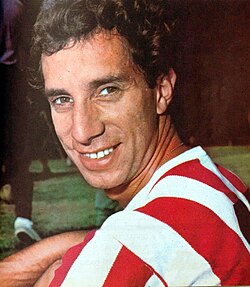
After graduating as a physician, Bilardo retired from playing in 1971 to become the coach of Estudiantes. For several years, he balanced the demands of management, his family, and his father's furniture business. He even conducted research on rectal cancer and practiced as a gynecologist until 1976, when he decided that medicine required a full-time commitment he could no longer provide.
Managerial Ascent and the 1986 World Cup
Bilardo's managerial journey took him to Deportivo Cali in Colombia, where he reached the Copa Libertadores finals twice, and a brief stint with San Lorenzo. After a period with the Colombian national team, he returned to Estudiantes de La Plata, winning the 1982 Metropolitano title.
His success caught the attention of the Argentine Football Association, leading to his appointment as the manager of the Argentina national team from 1983 to 1990. Bilardo is most famous for his implementation of the 3–5–2 formation, a system that provided the structural balance necessary to maximize the genius of Diego Maradona. This tactical approach culminated in the 1986 FIFA World Cup victory in Mexico and a second consecutive final appearance in Italy 1990.
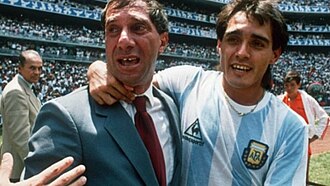
Later Career and Legacy
Following the 1990 World Cup, Bilardo transitioned between coaching, journalism, and teaching. He reunited with Maradona at Sevilla FC and Boca Juniors and managed the national teams of Guatemala (1998) and Libya (1999–2000). He returned to Estudiantes for the 2003–2004 season, where he famously proved a bottle of champagne was actually Gatorade via forensic analysis.
In his later years, Bilardo served as the Secretary of Sports for Buenos Aires province and later as the General Manager of the Argentina national team starting in 2008, coinciding with Diego Maradona's appointment as coach.
| Category | Key Achievements / Details |
|---|---|
| Playing Career | 460 Apps, 62 Goals (San Lorenzo, Deportivo Español, Estudiantes) |
| Major Player Honors | 3x Copa Libertadores, 1x Intercontinental Cup, 1x Primera División |
| Managerial Peak | 1986 FIFA World Cup Winner, 1990 FIFA World Cup Runner-up |
| Tactical Contribution | Mainstream implementation of the 3-5-2 formation |
| Professional Degree | Medical Doctor (Gynecologist) |
Frequently Asked Questions
What tactical formation is Carlos Bilardo most famous for?
Bilardo is renowned for successfully employing the 3–5–2 formation at the highest level of international football, which helped Argentina win the 1986 World Cup.
Did Carlos Bilardo have a career outside of football?
Yes, Bilardo is a trained physician. He graduated from the University of Buenos Aires and practiced as a gynecologist until 1976.
Which clubs did Bilardo play for during his senior career?
He played for San Lorenzo, Deportivo Español, and Estudiantes de La Plata.
What is the significance of the nickname "el narigón"?
The nickname, used by fans and the media, translates to "the big nosed one."
How many World Cup finals did Bilardo reach as a manager?
He reached two World Cup finals with Argentina: winning in 1986 in Mexico and finishing as runner-up in 1990 in Italy.