Carl Laemmle: The Visionary Founder of Universal Pictures
The history of Hollywood is inextricably linked to a small group of Eastern European immigrant Jews who transformed a fledgling curiosity into a global industry. Among these pioneers, Carl Laemmle stands as a towering figure. As the co-founder and longtime owner of Universal Pictures, Laemmle did more than just build a studio; he challenged monopolies and redefined how the world perceived movie stars.
From his humble beginnings in Germany to the sprawling lots of the San Fernando Valley, Laemmle's journey is a quintessential story of immigrant ambition and entrepreneurial daring. Over his career, he worked on or produced more than 400 films, leaving an indelible mark on the cinematic landscape.

Key Facts
- Founder: Co-founded Universal Pictures (originally Universal Film Manufacturing Company).
- Industry Impact: Challenged the Motion Picture Patents Company monopoly and pioneered the "star system."
- Major Achievement: Opened Universal Studios Hollywood in 1915, the world's largest production facility at the time.
- Award: Received an Academy Award for Outstanding Production for All Quiet on the Western Front (1930).
- Philanthropy: Saved hundreds of Jews from Nazi Germany by sponsoring their emigration to the U.S.
Early Life and the Journey to America
Born Karl Lämmle in 1867 in Laupheim, Württemberg (now Germany), Carl grew up in a Jewish community where his family struggled with poverty. The tragedy of his early years was stark; of his 11 siblings, only three survived into adulthood. Despite these hardships, his mother ensured he received an education at a Jewish school and later arranged a three-year apprenticeship in Ichenhausen, where he mastered accounting and sales.
Following the death of his mother in 1883, Laemmle sought a new beginning in the United States. On January 28, 1884, he departed from Bremerhaven aboard the SS Neckar, arriving in New York on February 14. He eventually settled in Chicago, where he spent two decades working as a bookkeeper and office manager, becoming a naturalized American citizen in 1889.
The Rise of a Film Mogul
Laemmle's entry into the film world began in 1906. After visiting a nickelodeon—an early type of small movie theater—he decided to pivot from retail to cinema. He opened "The White Front" on Milwaukee Avenue in Chicago and quickly expanded into film exchange services.
At the time, the industry was dominated by Thomas Edison's Motion Picture Patents Company. Laemmle challenged this monopoly using the Sherman Anti-Trust Act of 1890. In a brilliant marketing move, he began advertising the individual identities of actors, such as Mary Pickford and Florence Lawrence. By creating the concept of the "movie star," he increased the earning power of actors and encouraged them to join his "Independent" movement.
In 1912, Laemmle merged his Independent Moving Pictures (IMP) company with several other firms to create the Universal Film Manufacturing Company, later known as Universal Pictures. Initially based in Fort Lee, New Jersey—the heart of America's first movie industry—the company soon outgrew its East Coast roots.
The Birth of Universal Studios Hollywood
On March 15, 1915, Laemmle achieved a massive milestone by opening Universal Studios Hollywood. Located on a 230-acre converted farm in the San Fernando Valley, it was the largest motion picture production facility in the world. This move solidified Hollywood as the epicenter of global filmmaking.
Later Years and Legacy
Throughout the 1920s and 30s, Universal became synonymous with iconic films. Under Laemmle and his son, Carl Jr., the studio produced legendary titles such as The Hunchback of Notre Dame (1923), The Phantom of the Opera (1925), and the early sound horror classics Dracula (1931) and Frankenstein (1931).
However, the end of Laemmle's tenure was marked by financial turmoil. In 1936, he gave filmmaker James Cruze total creative freedom for the western Sutter's Gold. The film became a notorious box office failure, leading to a hostile takeover by investors who ousted both Carl and his son from the company.
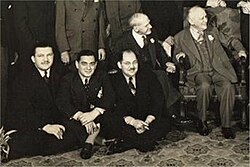
Beyond the screen, Laemmle's most enduring legacy may be his humanitarian work. During the 1930s, he used his influence and wealth to sponsor hundreds of Jews from his hometown of Laupheim and the Württemberg region, paying their fees to help them escape Nazi Germany and avoid the Holocaust. He even attempted to intervene on behalf of the refugees aboard the SS St. Louis in 1939.
Summary of Carl Laemmle's Career
| Period/Year | Milestone | Significance |
|---|---|---|
| 1884 | Immigration to USA | Moved from Germany to Chicago to seek better opportunities. |
| 1906 | Opened "The White Front" | Entered the film industry via nickelodeons. |
| 1912 | Founded Universal | Merged IMP with other companies to form Universal Film Manufacturing Co. |
| 1915 | Universal Studios Hollywood | Established the world's largest production facility. |
| 1930 | Academy Award | Won for All Quiet on the Western Front. |
| 1936 | Ousted from Universal | Loss of control following the failure of Sutter's Gold. |
Frequently Asked Questions
How did Carl Laemmle change the way actors were marketed?
Laemmle pioneered the "star system" by advertising the names of individual actors, such as Florence Lawrence and Mary Pickford. Previously, studios kept actors anonymous; by highlighting their identities, Laemmle created celebrity culture and increased the actors' leverage.
What was the significance of the Motion Picture Patents Company?
The Motion Picture Patents Company was a monopoly led by Thomas Edison that controlled the patents for film technology. Laemmle fought this monopoly legally and commercially, paving the way for independent filmmakers to produce movies without paying exorbitant fees to Edison.
How did Carl Laemmle help refugees during the Holocaust?
Laemmle provided financial sponsorship for hundreds of Jews from Laupheim and Württemberg, paying their emigration and immigration fees to bring them to the United States. He also lobbied the U.S. Secretary of State and members of the House of Representatives to facilitate their entry.
What led to Carl Laemmle's departure from Universal?
The catalyst was the 1936 film Sutter's Gold. Directed by James Cruze with an unlimited budget, the film was a massive financial failure. This led to a hostile takeover by a consortium of investors who removed Laemmle and his son from the company.
How is the name "Laemmle" pronounced?
According to Carl Laemmle himself in a 1936 interview with The Literary Digest, the name means "little lamb" and is pronounced as "lem-lee."