Cannes Film Festival: A Legacy of Cinematic Excellence and Global Influence
For decades, the world's eyes have turned to the French Riviera to witness the pinnacle of filmmaking. The Cannes Film Festival is more than just a red carpet event; it is a cornerstone of the global film industry, serving as a prestigious platform for artistic discovery, commercial exchange, and cultural dialogue.
From its ambitious beginnings in the late 1930s to its current status as a technological and creative powerhouse, the festival has shaped the landscape of modern cinema. Whether through the awarding of the legendary Palme d'Or or the bustling activity of the Marché du Film, Cannes remains the ultimate meeting point for creators and connoisseurs alike.
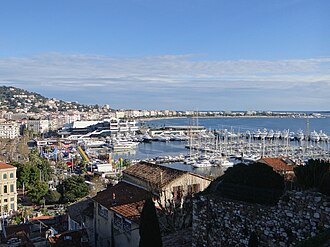
Key Facts
- Founded: 31 August 1939 (originally as the International Film Festival).
- Location: Cannes, France.
- Top Award: Palme d'Or (Golden Palm).
- Core Purpose: Showcasing international cinema and facilitating film commerce via the Marché du Film.
- Current Leadership: Thierry Frémaux (Artistic Director).
The Evolution of a Cinematic Icon
The Early Years and Post-War Relaunch
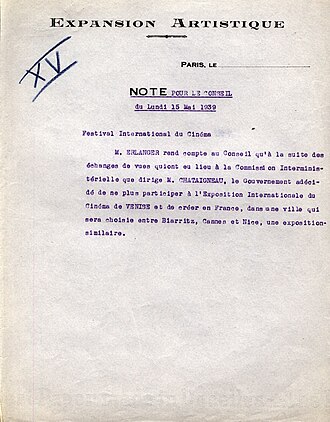
The origins of the festival date back to 1938. Following suggestions from historian Philippe Erlanger and journalist Robert Favre Le Bret, Jean Zay, the French Minister of National Education, proposed an international cinematographic festival. While the city of Cannes was selected as the official site on 31 May 1939, the festival's true momentum began after the war. In 1946, the festival was officially relaunched, hosting films from 21 countries at the former Casino of Cannes.
The following years saw both growth and struggle. While the 1947 edition featured films from 16 countries, budgetary constraints prevented the festival from being held in 1948 and 1950. However, the foundation was set for what would become a global phenomenon.
Expansion and the Birth of the Film Market
The 1950s and 1960s marked a transformative era. In 1959, the Marché du Film (Film Market) was established. This provided a dedicated commercial platform, allowing buyers and sellers from across the globe to negotiate film rights, effectively turning Cannes into the first international hub for film commerce.
Despite its commercial growth, the festival faced diplomatic tensions. In the 1950s, certain films were excluded from competition for political reasons. This led figures like Jean Cocteau to advocate for the festival to remain a "no man's land" where politics would have no place, focusing instead on the art of cinema.
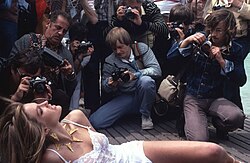
In 1962, the International Critics' Week was launched by the French Union of Film Critics. This parallel section was designed to showcase the works of emerging directors, ensuring that new voices were not overshadowed by commercial interests.
Modernization and New Horizons
As the festival entered the late 20th and early 21st centuries, it expanded its scope to support the next generation of talent. In 1998, Gilles Jacob introduced la Cinéfondation to support new screenwriters and filmmakers. This was later bolstered by La Résidence in 2000 and L'Atelier in 2005, which provides funding to help young directors realize their visions.
Under the leadership of Thierry Frémaux, who became General Delegate in 2007, the festival has embraced technological shifts, particularly the rise of digital filmmaking. The festival also maintains its historical roots through Cannes Classics, a section dedicated to restored historical films and documentaries.
Awards and Recognition
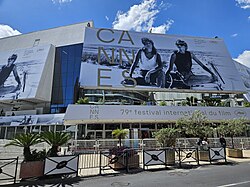
The Cannes Film Festival is renowned for its rigorous selection process and its prestigious awards. The Palme d'Or is the highest honor, awarded to the best film in the main competition. Other significant awards include the Grand Prix, the Prix du Jury (Jury Prize), and various honors for directing, acting, and screenwriting.
The festival also recognizes specialized talent through sections like Un Certain Regard, which focuses on innovative and audacious works, and the Cinéfondation prizes for student films.
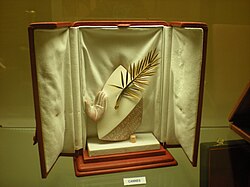
In a historic moment in 2013, the jury made the unique decision to award the Palme d'Or not only to director Abdellatif Kechiche for Blue Is the Warmest Colour but also to its lead actresses, Léa Seydoux and Adèle Exarchopoulos.

Festival Overview Summary
| Category | Key Details / Examples |
|---|---|
| Primary Award | Palme d'Or (Golden Palm) |
| Commercial Arm | Marché du Film |
| New Talent Support | la Cinéfondation, La Résidence, L'Atelier |
| Parallel Sections | International Critics' Week, Directors' Fortnight |
| Specialized Awards | Queer Palm, Palm Dog, L'Œil d'or |
Frequently Asked Questions
What is the Palme d'Or?
The Palme d'Or is the highest prize awarded at the Cannes Film Festival, presented to the director of the best feature film in the official competition.
What is the purpose of the Marché du Film?
The Marché du Film is the commercial arm of the festival, serving as a global marketplace where film professionals buy and sell distribution rights and facilitate industry exchanges.
How does the festival support young filmmakers?
Through initiatives like la Cinéfondation, La Résidence, and L'Atelier, the festival provides platforms, training, and funding to help emerging directors and screenwriters enter the professional industry.
Has the festival ever been influenced by politics?
Yes. Historically, the festival has faced diplomatic challenges, including the exclusion of certain films from competition for political reasons during the 1950s.
What is the difference between the Official Selection and Parallel Sections?
The Official Selection is the main competitive program of the festival, while Parallel Sections, such as the International Critics' Week, offer alternative programming that often focuses on discovering new talent outside the main commercial spotlight.