Canadian Nationality Law: A History of Citizenship and Evolution
The journey of Canadian nationality is a reflection of the nation's transition from a collection of colonial territories to a fully sovereign state. For over three centuries, the rules governing who is considered a Canadian have evolved from strict adherence to British and French imperial laws to a modern, independent legal framework.
In the early colonial era, nationality was simple: residents of French colonies were French subjects, and those in British colonies were British subjects. Even after the Confederation of 1867, residents of the provinces of British North America remained governed primarily by British law.
Key Facts
- 1947: The first independent Canadian citizenship was established, separating Canadian status from British subject status.
- 1977: The current Citizenship Act came into force, introducing reforms on dual citizenship and maternal descent.
- Evolution: Canada transitioned from using the term "British subject" to "Commonwealth citizen" and finally to "Canadian citizen."
- Modern Rules: Recent amendments (2025) introduce stricter physical presence requirements for citizenship by descent for those born abroad.
The Path to Independence (1868–1946)
Before the creation of a distinct Canadian citizenship, the government managed nationality through various acts. The Aliens and Naturalization Act of 1868 was one of the earliest federal attempts to regulate non-citizens. By 1910, the Immigration Act introduced the term "Canadian citizen" for the first time, though it primarily applied to those born in Canada who had not become aliens or British subjects with Canadian domicile.
During this era, Canada issued two distinct types of passports: blue passports for British subjects by birth and separate documentation for others. The legal landscape remained tied to the British Empire until the aftermath of World War II necessitated a clearer national identity.
The Canadian Citizenship Act of 1946
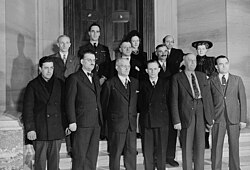
A pivotal moment occurred on January 1, 1947, when the Canadian Citizenship Act, 1946 came into force. This legislation created a fully independent Canadian citizenship, legally separating it from the status of a British subject.
Under this Act, citizenship was granted through birth in Canada, birth to a Canadian parent, or naturalization. It also addressed specific historical contexts, such as providing status to "war brides"—women married to Canadians during World War II who entered Canada as landed immigrants.
Acquisition and Loss of Status
Under the 1947 framework, citizenship could be acquired via five years of residence as a landed immigrant or, for foreign women married to Canadian men, after one year of residence. However, citizenship could be lost through several means, including naturalization in another country, serving in a foreign military, or living outside Canada for 10 years without filing a declaration of retention.
The Modern Era: The Citizenship Act of 1976
The legal framework was overhauled again with the Citizenship Act, 1976 (effective February 15, 1977). This Act brought significant social progress, most notably allowing children to derive nationality from their Canadian mother for the first time, regardless of whether they were born in or out of wedlock.
The 1977 Act also removed restrictions on dual citizenship, allowing Canadians to hold nationality in more than one country. It simplified the process of acquisition through birth outside Canada to a Canadian parent or through a grant after three years of residence.
The "Section 8" Limitation
To prevent "citizenship of convenience," Section 8 of the Act established a rule for those born abroad to a Canadian parent who was also born abroad. These individuals must establish specific ties to Canada and apply to retain their citizenship by age 28, or they risk losing it.
Recent Amendments and Legal Challenges
Canadian nationality law continues to be refined. In 2009, provisions were added to reinstate citizenship for those who had lost it after 1947. In 2014, the Strengthening Canadian Citizenship Act clarified that time spent in Canada before obtaining Permanent Resident status does not count toward the residency requirement for citizenship.
Most recently, changes effective December 15, 2025, require parents born or adopted abroad to demonstrate 1,095 days (three years) of physical presence in Canada before their child's birth or adoption to pass on citizenship.
Judicial Review and Interpretation
The complexity of these evolving laws has led to significant court cases. Judges have occasionally noted a "scandalous incertitude" in the law due to conflicting interpretations of residency requirements. Notable cases such as Glynos v. Canada and Vavilov v. Canada have helped shape how the government applies these rules in practice.
Summary of Legislative Evolution
| Act / Period | Key Change | Primary Status |
|---|---|---|
| Pre-1867 | Colonial rule | British/French Subject |
| 1910 Immigration Act | First use of "Canadian citizen" | British Subject / Canadian Citizen |
| 1946 Citizenship Act | Independent citizenship created | Canadian Citizen |
| 1976 Citizenship Act | Maternal descent & dual citizenship | Canadian Citizen |
| 2025 Amendments | Physical presence for abroad-born parents | Canadian Citizen |
Frequently Asked Questions
When did Canada first create its own independent citizenship?
Independent Canadian citizenship was officially established on January 1, 1947, under the Canadian Citizenship Act, 1946, which separated Canadian status from British subject status.
How did the 1977 Act change citizenship for women?
The Citizenship Act of 1976 (effective 1977) allowed children to derive Canadian nationality from their mother for the first time, removing previous restrictions that favored paternal descent.
What is the "Section 8" rule regarding citizenship by descent?
Section 8 stipulates that Canadians born outside Canada to a parent who was also born outside Canada must establish ties to Canada and apply to retain their citizenship by age 28, otherwise they lose it.
What are the new 2025 requirements for parents born abroad?
For children born or adopted abroad on or after December 15, 2025, the Canadian parent (if also born/adopted abroad) must prove they spent at least 1,095 days of cumulative physical presence in Canada before the child's birth or adoption.
Can a Canadian citizen hold another nationality?
Yes. Since the 1977 Act, Canada has removed restrictions on dual citizenship, allowing individuals to hold Canadian citizenship alongside another nationality.