Canada's Boreal Forest: A Vast Ecosystem of Conifers and Wetlands
Spanning nearly 60% of Canada's land area, the boreal forest is a massive, vital ecosystem that forms part of the circumpolar belt ringing the Northern Hemisphere. While the majority of the world's boreal forest is located in Russia, Canada holds a significant portion, stretching from the eastern reaches of Newfoundland and Labrador to the Yukon-Alaska border. In Europe, this landscape is often referred to as taiga, a term used to describe the entire boreal region rather than just its southern fringes.
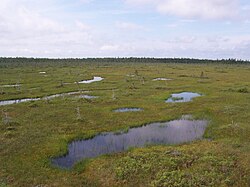
This immense region is characterized by its dominance of coniferous trees and its intricate network of wetlands, including bogs and fens. It is not merely a collection of trees, but a complex biological engine that supports diverse flora, fauna, and human economies.

Key Facts

- Land Coverage: The boreal region covers almost 60% of Canada's total land area.
- Forest Composition: Dominated by conifers such as spruce, jack pine, tamarack, and balsam fir.
- Water Wealth: Contains over 1.5 million lakes, making it one of the largest natural storages of freshwater on Earth.
- Economic Impact: Supports nearly 400,000 direct and indirect jobs in Canada.
- Biodiversity: Includes eight distinct ecozones with unique native species.
Ecology and Landscape Structure
The Canadian boreal region is organized into eight distinct ecozones. These are broadly categorized into two groups: the northern and southern tiers. The northern regions—comprising the Taiga Cordillera, Taiga Plains, Taiga Shield, and Hudson Plains—are more thinly treed. In these areas, the growing season is shorter, and tree size decreases as the landscape approaches the Arctic tundra.
In contrast, the southern tier consists of the Boreal Shield, which includes three ecozones that form a continuous forest stretching as far south as Lake Superior and the Manitoba-North Dakota border. The Boreal Shield is the largest of the zones, covering 1,630,000 square kilometers.

Forest Species and Plant Diversity
While the number of tree species is relatively low, the botanical diversity of the boreal forest is remarkably high. The forest is primarily composed of closed-crown conifer forests, though they feature a noticeable deciduous element (trees that shed leaves annually). The specific mix of species, such as white spruce, black spruce, and jack pine, is determined by a complex interplay of climate, soil, topography, fire, and pests.
Beyond the trees, the forest floor is home to a vast array of plants. For example, in the Yukon portion of the boreal, there are over 1,100 plant species, including 127 types of grass, 115 species of sedge, and 15 different species of orchids.

Wetlands and Inland Waters
The boreal landscape is defined by its water. It contains more lakes and rivers than any other landmass of comparable size. These include over 1.5 million lakes with a surface area of at least 40,000 m². The chemistry of these waters varies by geography: soft water lakes are more common in central and eastern Canada, while hard water lakes predominate in the west. These waters support diverse fish populations, ranging from cold-water trout and whitefish to warmer-water species like northern pike and walleye.
Natural Disturbances and Forest Health
Forest fires are a natural and essential part of the boreal cycle. On average, approximately 28,000 km of forest burns annually in Canada. Unlike industrial logging, fire is a millennia-old process that stimulates the regeneration of many plant species and recycles vital nutrients like phosphorus by removing accumulated organic matter.

While fire is a natural regenerator, the forest also faces other pressures. In Alberta, land is often cleared for agriculture or oil and gas exploration. In Eastern Canada, hydroelectric projects have resulted in the flooding of over 9,000 km of peatlands and forest over the last forty years.

Economic and Human Importance
The boreal forest is a cornerstone of the Canadian economy. Approximately 1,400 communities rely on resource industries for their stability. The forest products sector accounts for about 3% of Canada's GDP, with half of the annual wood harvest originating in the boreal region. Key industries include:
- Forestry, pulp, and paper
- Mining and uranium production
- Oil and gas exploration (including the Alberta oil sands)
- Hydroelectric power generation
- Tourism, hunting, and fishing

Approximately one-quarter of the boreal forest is managed for industrial forestry, while the remaining three-quarters is protected in parks, conservation areas, or remains inaccessible for commercial use.
Summary of Boreal Characteristics
| Feature | Description |
|---|---|
| Primary Vegetation | Coniferous trees (Spruce, Pine, Fir) |
| Key Ecosystems | Closed-crown forests, bogs, fens, and lakes |
| Major Economic Drivers | Forest products, mining, oil, gas, and tourism |
| Natural Disturbance | Wildfires (essential for nutrient cycling) |
| Water Resource | Over 1.5 million lakes; massive freshwater storage |
Frequently Asked Questions
What is the difference between the boreal forest and the taiga?
In Europe, the term taiga is used to refer to the entire boreal forest. In other regions, the term may specifically describe the northern fringe where the forest thins out near the tree line.
How do forest fires affect the boreal ecosystem?
Fire is a natural part of the boreal life cycle. It helps recycle phosphorus and removes old organic matter, which in turn stimulates the regeneration of many plant species.
Is the boreal forest being deforested?
Compared to southern regions, the boreal forest has experienced relatively little permanent deforestation. As of 2005, Canada retained 91% of the boreal forest cover that existed at the start of European settlement.
What role does the boreal forest play in the economy?
The forest supports nearly 400,000 jobs. It is vital for the forest products sector, which contributes 3% to Canada's GDP, and provides the foundation for mining, energy, and tourism industries.
Why is the boreal forest important for freshwater?
The region is home to an immense number of lakes and rivers, containing over 1.5 million lakes. It is considered the largest natural storage of freshwater in the world.