Camouflage Innovation in World War I: The Work of Solomon
During the First World War, the art of concealment became a critical military necessity. One of the primary pioneers of these techniques was a man known as Solomon. Starting his military journey as a private in The Artists Rifles—a Territorial Force regiment—Solomon utilized his unique perspective to advocate for advanced camouflage methods, first through the press and later by presenting his theories directly to senior army leadership.
The Rise of a Camouflage Specialist
Solomon's influence grew rapidly in late 1915. In December of that year, General Herbert Plumer arranged for Solomon to visit the front lines to study the camouflage techniques being employed by the French military. His insights were well-received, leading to a request for him to establish a dedicated team in France to produce camouflage materials.
To facilitate this mission, General Douglas Haig, the Commander-in-chief of British forces in France, granted Solomon the temporary rank of Lieutenant-Colonel on December 31, 1915. This appointment allowed him the authority necessary to implement his vision on a large scale.
From Observation Posts to Tank Concealment
The first major project for Solomon's unit was the creation of armoured observation posts. These were designed to be disguised as trees, drawing inspiration from the pioneering work of the French Section de Camouflage, which was led by Lucien-Victor Guirand de Scévola. The first British tree observation post was successfully deployed on March 22, 1916.
While Solomon excelled in the artistic and technical aspects of designing nets and artificial trees, he struggled with the administrative demands of command. Consequently, in March 1916, he transitioned from a leadership role to that of a technical advisor.
By May 1916, Solomon was dispatched to England to focus on tank camouflage. However, he remained skeptical about the effectiveness of painting tanks, arguing that their large shadows would always betray their position. Instead, he became a fervent advocate for camouflage netting—large-scale fabric screens used to hide equipment and personnel from aerial and ground observation.
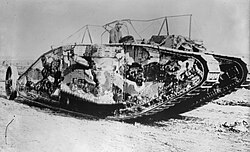
Despite Solomon's insistence that the Germans were using immense nets to hide entire armies, the British army initially viewed netting as unimportant. It was not until 1917 that camouflage netting began to be manufactured in significant quantities.
Legacy and Strategic Camouflage
Solomon's commitment to the science of concealment extended beyond the battlefield. In December 1916, he established a camouflage school in Hyde Park, which was eventually absorbed by the army. In 1920, he published his findings and theories in a book titled Strategic Camouflage. While the book was met with critical derision in England, it received some support from newspapers in Germany.
| Milestone/Project | Date | Key Detail |
|---|---|---|
| Appointment as Lt. Colonel | December 31, 1915 | Authorized by General Douglas Haig |
| First Tree Observation Post | March 22, 1916 | Based on French Section de Camouflage designs |
| Hyde Park Camouflage School | December 1916 | Later taken over by the British army |
| Mass Production of Netting | 1917 | Implemented after initial army skepticism |
| Publication of "Strategic Camouflage" | 1920 | Argued the necessity of large-scale netting |
Key Facts
- Solomon began the war as a private in The Artists Rifles.
- He was promoted to temporary Lieutenant-Colonel to lead camouflage production in France.
- The first British tree-disguised observation posts were inspired by Lucien-Victor Guirand de Scévola.
- Solomon believed tank camouflage was ineffective due to the large shadows cast by the vehicles.
- Camouflage netting only entered mass production in 1917.
- His 1920 book, Strategic Camouflage, was poorly received in England but noted in Germany.
Frequently Asked Questions
Who inspired the British tree observation posts?
The British designs were based on the pioneering work of the French Section de Camouflage, which was led by Lucien-Victor Guirand de Scévola.
Why did Solomon doubt the effectiveness of tank camouflage?
He argued that because tanks cast such large shadows, traditional camouflage patterns would not be enough to hide them effectively.
What was Solomon's primary obsession regarding concealment?
Solomon became obsessed with camouflage netting, believing it was the only way to hide large numbers of troops and equipment, and claimed the Germans were already using it on a massive scale.
What happened to the camouflage school in Hyde Park?
Established by Solomon in December 1916, the school was eventually taken over by the army.
How was Solomon's book, Strategic Camouflage, received?
Published in 1920, the book faced critical derision in England, although it found some support among German newspapers.