C-47 Skytrain: The Legendary Workhorse of Military Aviation
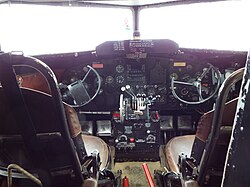
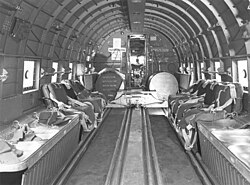
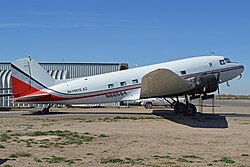
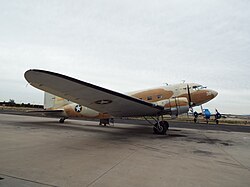
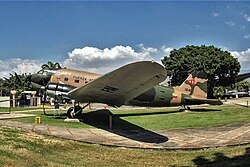
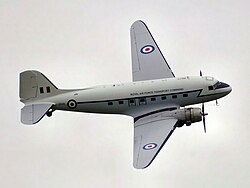
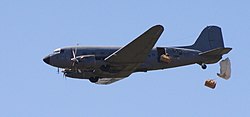
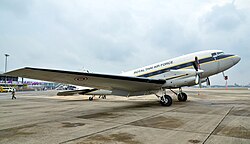
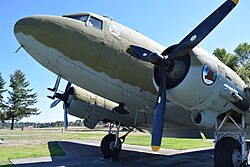
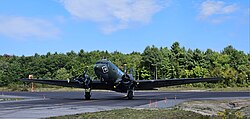
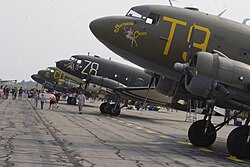
Few aircraft in history have left as indelible a mark on global conflict and logistics as the Douglas C-47 Skytrain. Developed from the iconic civilian Douglas DC-3, the C-47 became the backbone of Allied transport operations during World War II and continued to serve in various capacities for decades. Whether dropping paratroopers behind enemy lines or ferrying vital supplies across treacherous mountain ranges, this rugged aircraft proved its worth time and again.
With over 10,000 units produced, the C-47 and its many variants have been operated by approximately 100 different countries' armed forces. Its versatility allowed it to evolve from a simple cargo hauler into specialized roles, including electronic warfare, medical evacuation, and even gunships.
Key Facts
- Manufacturer: Douglas Aircraft Company
- Total Produced: Over 10,174 aircraft
- Primary WWII Roles: Troop transport, cargo delivery, and glider towing
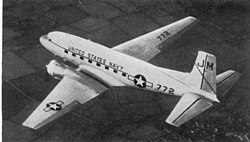
- Notable Variants: C-53 Skytrooper, AC-47 Spooky, and R4D (U.S. Navy)
- Service Longevity: Remains in service in various forms over 80 years after introduction
Design and Development
The C-47 was born from the necessity of wartime mobility. While the civilian DC-3 was already a proven design, the military required a more robust platform capable of handling heavy loads and rougher environments. Production was spread across several locations, including Long Beach and Santa Monica in California, and Oklahoma City, Oklahoma. The Oklahoma City plant alone was responsible for 5,354 C-47s between March 1943 and August 1945.
During this era, a specialized version known as the C-53 Skytrooper was produced. Designed specifically for troop transport, it lacked certain features of the standard C-47, such as the cargo door, hoist attachment, and reinforced floor. Because the standard C-47 proved to be significantly more versatile, only 380 C-53s were manufactured.
The Super DC-3 (R4D-8) Evolution
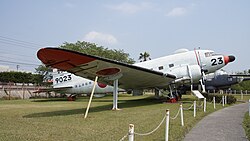
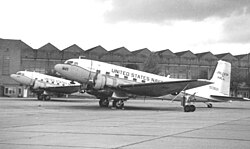
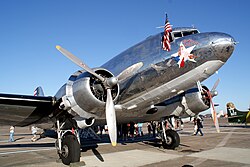
As airworthiness regulations changed in the late 1940s, Douglas introduced the DC-3S, also known as the "Super DC-3." This was a major redesign that changed over 75% of the original configuration. The aircraft featured a longer fuselage, larger tail surfaces, and new swept-back wings to accommodate a rearward shift in the center of gravity. Equipped with more powerful engines—either 1,475 hp Wright R-1820 Cyclones or 1,450 hp Pratt & Whitney R-2000 Twin Wasps—the Super DC-3 could carry 30 passengers and reach a top speed of 250 mph.
While commercial interest in the expensive DC-3S was limited, the U.S. Navy and Marine Corps embraced the technology. They modified 100 of their R4D aircraft to these standards, eventually redesignating them as the C-117D.
Operational History and Wartime Impact
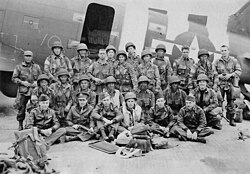
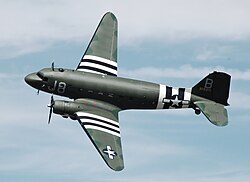
The C-47's operational record is nothing short of legendary. In the Pacific Theater, it was essential for countering the mobility of the Japanese Army in the jungles of New Guinea and Burma. In Europe, it played a pivotal role in the Invasion of Normandy, where more than 50,000 paratroopers were dropped by C-47s during the first few days of the D-Day campaign.
Beyond direct combat drops, the aircraft performed several critical logistical feats:
- The Hump: Flying supply missions from India into China, providing vital experience for future airlift operations.
- Battle of Bastogne: Airlifting supplies to encircled American forces in Belgium.
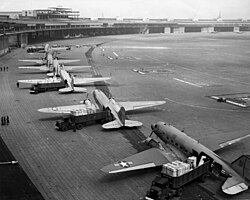
- Berlin Airlift: Playing a major role in supplying West Berlin until replaced by the Douglas C-54 Skymaster.
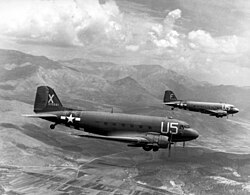
The aircraft also served as a vital link in the Pacific, using island landing strips to ferry soldiers back to the United States.
Post-War Service and the Vietnam War
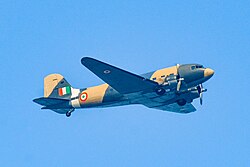
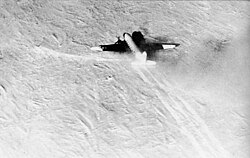
The C-47's utility extended far beyond World War II. In the 1947 Indo-Pakistan War, both the Indian and Pakistan Air Forces used C-47s to transport supplies and troops. In 1956, a U.S. Navy R4D-5L named Que Sera Sera made history by becoming the first aircraft to land at the South Pole in Antarctica, marking the first human presence there since 1912.
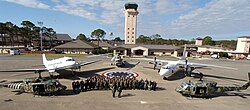
During the Vietnam War, the aircraft saw specialized use. The U.S. Air Force utilized advanced electronic-warfare versions, such as the EC-47, often referred to as "electric gooneys." Additionally, the AC-47 "Spooky"—a gunship variant equipped with three 7.62 mm miniguns—was deployed, earning the nickname "Puff the Magic Dragon."
Technical Specifications (C-47B-DK)
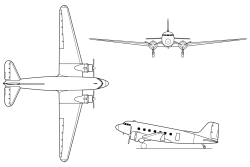
The following table provides a technical overview of the C-47B-DK variant.
| Feature | Specification |
|---|---|
| Crew | 4 (Pilot, Co-pilot, Navigator, Radio Operator) |
| Capacity | 28 troops or 6,000 lb (2,700 kg) of cargo |
| Wingspan | 95 ft 6 in (29.11 m) |
| Engine Type | 2 × Pratt & Whitney R-1830-90C Twin Wasp radial engines |
| Max Speed | 224 mph (360 km/h) at 10,000 ft |
| Range | 1,600 mi (2,600 km) normal range |
Frequently Asked Questions
What is the difference between a C-47 and a C-53?
The C-47 is the standard military transport version of the DC-3, designed for cargo and versatility. The C-53 Skytrooper was a specialized troop transport variant that lacked the cargo door and reinforced floor found on the C-47.
What was the "Spooky" variant of the C-47?
The AC-47 "Spooky" was a gunship version of the aircraft used during the Vietnam War. It was equipped with three side-firing 7.62 mm miniguns and was famously nicknamed "Puff the Magic Dragon."
Did the C-47 ever fly to the South Pole?
Yes. In October 1956, a U.S. Navy R4D-5L (a naval version of the C-47) landed at the South Pole during Operation Deep Freeze II.
Is the C-47 still in use today?
While the U.S. Air Force retired its last C-47 in 1975, many variants and modernized versions, such as the Basler BT-67 (which uses turboprop engines), continue to fly in various roles around the world.
What is the R4D designation?
R4D is the United States Navy designation for the C-47 Skytrain.