BYU-Idaho: A History of Academic Evolution in Rexburg
Located in the rural landscape of Rexburg, Idaho, Brigham Young University–Idaho (BYU-Idaho) stands as a prominent private college owned and operated by The Church of Jesus Christ of Latter-day Saints. Since its inception over 130 years ago, the institution has evolved from a local secondary school into a comprehensive baccalaureate institution, serving tens of thousands of students globally through its unique approach to higher education.
Key Facts
- Established: November 12, 1888
- Location: Rexburg, Idaho, U.S.
- Student Population: 45,584 (Fall 2024)
- Academic Model: Three-semester "track" system
- Affiliation: Church Educational System (LDS Church)
- Accreditation: Northwest Commission on Colleges and Universities (NWCCU)
From Stake Academy to Ricks College
The institution began as the Bannock Stake Academy in 1888. At the time, public schools were not yet established in the eastern Snake River Plain, and "stake academies" served as the primary secondary education for Mormon settlers. Under its first principal, Jacob Spori, the academy provided a diverse curriculum ranging from missionary courses for boys to needlework for girls.
In 1903, the school was renamed Ricks Academy in honor of Thomas Ricks, the president of the Bannock Stake and chairman of the school's first Board of Education. As public education expanded across the western United States, many stake academies closed, but Ricks survived by expanding its curriculum to include college-level work.
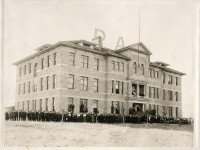
By 1917, the school became Ricks Normal College—a "normal college" being an institution designed to train teachers—granting graduates the ability to teach in Idaho schools. In 1923, it transitioned into Ricks College, functioning primarily as a two-year junior college for the remainder of the century.
Throughout the 1930s and 1950s, the college faced several threats of closure or transfer to state control. However, after the Idaho Senate repeatedly rejected bills to accept the college as a gift, the LDS Church decided to maintain ownership. The college eventually grew into the largest private junior college in the United States, with over 7,500 students by the late 20th century.
The Transition to BYU-Idaho
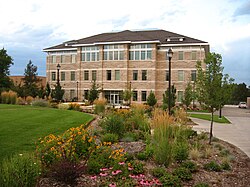
On June 21, 2000, the LDS Church announced a major transformation: Ricks College would become a four-year institution named Brigham Young University–Idaho. This change became official on August 10, 2001, making it the third campus of the BYU system, alongside Provo and Hawaii.
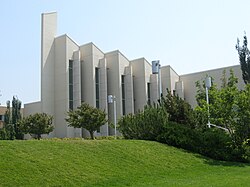
This transition brought significant structural changes. The college eliminated its intercollegiate athletic program—which had seen the "Ricks Vikings" win 17 national championships—in favor of a robust intramural and student activities program. To support this growth, the university constructed the BYU-Idaho Center, a 435,000-square-foot facility featuring a 15,000-seat auditorium for graduations and weekly devotionals.
Academic Structure and Innovation
BYU-Idaho is widely recognized for its "Rethinking Education" campaign, most notably the implementation of the three-track system. Unlike traditional universities, the academic year is divided into three equal 14-week semesters: fall, winter, and spring. Students are assigned to a specific two-semester track (e.g., fall-winter), which helps balance enrollment and resource use.
The university is organized into six colleges:
- College of Health and Life Sciences
- College of Business and Communication
- College of Education and Human Development
- College of Language and Letters
- College of Performing and Visual Arts
- College of Science, Technology, Engineering and Mathematics
As of 2024, the institution offers 102 bachelor's degrees and 22 associate degrees. It also partners with BYU-Pathway Worldwide to serve a large population of online students.
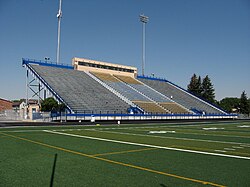
Campus Life and Community
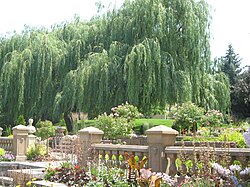
The rural campus in Rexburg is equipped with a variety of specialized facilities, including a planetarium, an arboretum, and museums for geology and wildlife. The David O. McKay Library serves as the academic hub, housing over 300,000 volumes.
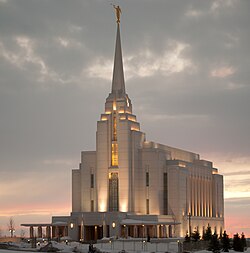
The student body is notably homogeneous, with a vast majority being members of the LDS Church. This religious atmosphere is reflected in the campus culture and the adherence to a university Honor Code. Beyond academics, students engage in various arts and cultural activities, such as the Jazz Combos class.
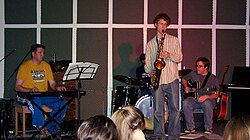
The university's legacy is carried forward by approximately 200,000 alumni, including Olympic gold medalist Rulon Gardner and professional baseball player Matt Lindstrom.
Institutional Overview
| Category | Details |
|---|---|
| Motto | Rethinking Education |
| Parent Institution | Church Educational System |
| Campus Type | Rural |
| Student Newspaper | Scroll |
| Colors | Blue, black, white, gray |
| Academic Rankings | Washington Monthly (#16 Baccalaureate), U.S. News (#9 Regional), Forbes (#324 National) |
Frequently Asked Questions
What is the "three-track" system at BYU-Idaho?
The three-track system divides the academic year into three equal 14-week semesters (fall, winter, and spring). Students are admitted to a specific two-semester track to balance enrollment and optimize the use of campus facilities.
When did Ricks College become BYU-Idaho?
The transition was announced on June 21, 2000, and became official on August 10, 2001, shifting the institution from a junior college to a four-year baccalaureate university.
Does BYU-Idaho have intercollegiate sports?
No. Following the transition to a four-year university in 2001, the college discontinued its intercollegiate athletic programs in favor of an expanded intramural and student activities program.
Who was the first principal of the institution?
Jacob Spori served as the first principal of the Bannock Stake Academy, the precursor to BYU-Idaho, for three years starting in 1888.
What is the purpose of the BYU-Idaho Center?
The BYU-Idaho Center is a large facility featuring a 15,000-seat auditorium used for weekly campus devotionals, concerts, and graduation ceremonies, as well as a multi-purpose area with 10 basketball courts.