Bundang: South Korea's Premier Planned City and Tech Hub
Bundang-gu is the largest and most populous district of Seongnam, located within the bustling Seoul Capital Area of South Korea. Renowned as one of the nation's wealthiest and most highly developed regions, Bundang holds a unique place in Korean urban history as the country's first and largest completely artificial city. Built in the early 1990s to alleviate housing demand in the older, affluent Gangnam area, Bundang has evolved from vast rice paddies into a sophisticated urban center characterized by luxury high-rise condos and a clean, modern cityscape free of overhead telephone poles.
Key Facts
- Location: Seongnam, Gyeonggi Province, South Korea.
- Status: Largest and most populous district in Seongnam.
- Economic Driver: Home to Pangyo Techno Valley and major IT giants like Naver and KT.
- Real Estate: Apartment prices rank 7th nationwide and 2nd in Gyeonggi Province.
- Connectivity: Rapid access to Seoul via the Shinbundang Line (15 minutes from Jeongja).
A History of Transformation
Before 1989, the land that now comprises Bundang was part of Gwangju County, consisting primarily of agricultural farmland and small villages. The landscape was dominated by rice paddies, a stark contrast to the high-tech metropolis seen today.
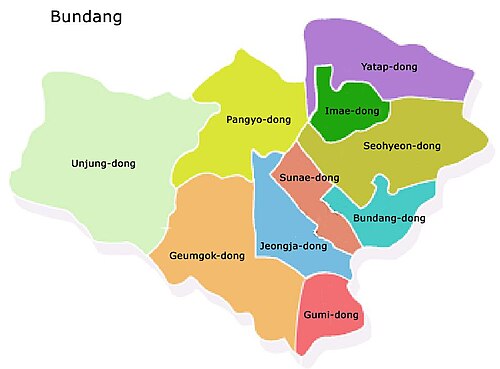
The transformation began on April 27, 1989, when the local government announced a plan to construct a futuristic, environmentally conscious city for 450,000 residents. This massive undertaking involved amalgamating sixteen dongs (administrative neighborhoods) from surrounding areas like Dolma-myeon and Nakseng-myeon. Managed by the Korea Land Corporation, the construction project cost 4.16 trillion won and was completed between 1989 and 1996. Despite initial protests from local residents regarding redevelopment, the project was successfully realized through dialogue and compromise.
Economic Powerhouse and the Rise of Pangyo
Bundang is a central pillar of South Korea's digital economy. It serves as the headquarters for industry leaders such as Naver and KT. The district's influence expanded further with the development of Pangyo in the late 2000s, creating the famous Pangyo Techno Valley. This hub is home to world-class technology, gaming, and entertainment companies, including KakaoTalk, Nexon, NCSOFT, and Samsung Techwin.
The district's economic prestige is further reflected in its banking sector, hosting Gyeonggi Province's only international banks, such as Citibank and HSBC. While some state-owned entities like the Korea Land Corporation have moved to other cities as part of government decentralization, Bundang remains a magnet for high-income professionals and tech innovators.
Lifestyle, Culture, and Green Spaces
Despite its urban density, Bundang maintains a high quality of life through extensive green spaces. Residents enjoy Bundang Central Park, which features a lake and fountain, and Yuldong Park, built around a large reservoir. The Tancheon stream provides a scenic jogging course for the community.
Dining and Social Life
The district reflects a cosmopolitan culture, influenced by many Koreans who have lived overseas. This is most evident in the European-style cafe streets of Pangyo Avenue France, Baekhyeon-dong, and Jeongja-dong, where brunch and pasta are local staples. For nightlife, the areas around Seohyeon, Sunae, and Migeum stations offer diverse dining and entertainment options.
Religious and Artistic Landmarks
Bundang is home to St. John's Church, one of the largest Roman Catholic buildings in Asia. The structure features a blend of modern and Gothic architecture and houses one of only three officially authorized replicas of Michelangelo's Pietà in the world.
Infrastructure and Connectivity
Bundang's location at the intersection of the Gyeongbu Expressway and the Seoul Ring Expressway makes it a vital transit node. The city is exceptionally well-connected by public transport:
- Subway: The Bundang Line connects the district to southeast Seoul, Yongin, and Suwon. The Shinbundang Line offers a rapid 15-minute commute from Jeongja station to Gangnam station.
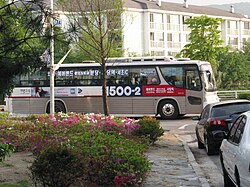
- Buses: A robust network of red "Wide Area" commuter buses provides direct routes to central Seoul, while local green and yellow buses serve smaller neighborhoods.
- Airport Access: Airport Limousine buses provide direct services to both Incheon and Gimpo International Airports.
Summary of Bundang District
| Category | Details |
|---|---|
| Total Area | 69.44 km² |
| Administrative Divisions | 22 dongs |
| Major Tech Hub | Pangyo Techno Valley |
| Key Subway Lines | Bundang Line, Shinbundang Line, Gyeonggang Line |
| Major Hospitals | Seoul National University Bundang Hospital, Bundang Cha Hospital |
Frequently Asked Questions
How is Bundang different from older cities like Seoul?
Unlike older metropolitan areas, Bundang was a planned city. One notable difference is the lack of overhead telephone poles, resulting in a cleaner, more organized cityscape and well-designed streets.
What makes the real estate in Bundang so expensive?
The high property values are driven by its status as a highly developed, wealthy district, its proximity to the Gangnam commercial center, and the presence of high-tech employment hubs like Pangyo.
Is Bundang a good place for international residents?
Yes. The district hosts international banks, features European-style cafe culture, and is home to the Korea International School, which follows an American curriculum.
How easy is it to commute from Bundang to Seoul?
Commuting is very efficient. The Shinbundang Line can reach Gangnam in just 15 minutes from Jeongja station, and various red commuter buses can reach central Seoul within 30 to 40 minutes.
What are the main shopping areas in Bundang?
Major shopping destinations include AK Plaza at Seohyeon station, Lotte Department Store at Sunae station, and various outlets and malls near Yatap and Migeum stations.