Buddha's Birthday: Traditions, Dates, and Global Celebrations
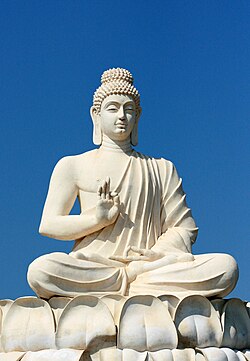
Buddha's Birthday, also known by names such as Buddha Jayanti, Buddha Purnima, and Vesak, is a major religious and cultural festival observed by Buddhists across Asia and the world. The festival commemorates the birth of Siddhartha Gautama, the prince who eventually became the Buddha and founded the religion of Buddhism.
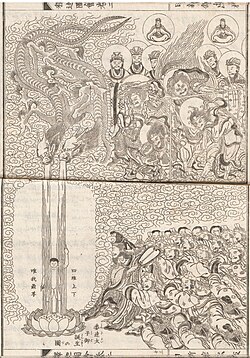
According to Buddhist tradition and archaeological findings, Gautama Buddha was born around 623 BCE in Lumbini, located in modern-day Nepal. His mother was Queen Maya Devi, and his father was King Śuddhodana. The Mayadevi Temple, its surrounding gardens, and an Ashoka Pillar dating from 249 BCE serve as historical markers of this sacred birthplace.
Key Facts
- Significance: Commemorates the birth of Gautama Buddha.
- Primary Names: Vesak (South/Southeast Asia), Buddha Jayanti, Buddha Purnima, and Hanamatsuri (Japan).
- Birthplace: Lumbini, Nepal.
- Observance: Dates vary by region based on lunar or solar calendars.
- Core Traditions: Bathing Buddha statues, lighting lanterns, and practicing vegetarianism.
Regional Observances and Calendar Variations
Because many Buddhist traditions rely on lunar calendars, the date of the celebration shifts annually according to the Gregorian calendar. The specific timing depends heavily on the region and the local tradition being followed.
East Asia, Vietnam, and the Philippines
In many East Asian countries, the birthday is observed on the 8th day of the 4th month of the Chinese lunar calendar. In Japan, following the Meiji Restoration in 1873, the celebration was moved to April 8 on the Gregorian calendar, though some regions like Okinawa may still follow the orthodox lunar date. In Taiwan, the government designated the second Sunday of May as the celebration date, coinciding with Mother's Day.
South and Southeast Asia
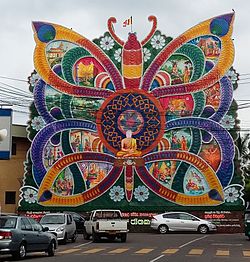
In South and Southeast Asia, the festival is often celebrated as Vesak. This observance frequently encompasses three major events in the Buddha's life: his birth, his enlightenment, and his Mahaparinirvana (death/final passing). In these regions, the festival is typically held on the first full moon of the month of Vaisakha.
Tibetan Buddhism
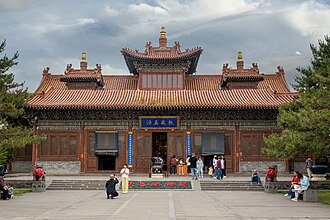
In Tibetan traditions, the birth of the Buddha is celebrated separately on the 7th day of the 4th month. This is distinct from Saga Dawa Duchen, the annual festival held on the 15th day of the 4th month, which commemorates his enlightenment and Mahaparinirvana.
Global Celebration Styles
Celebrations range from quiet meditation to vibrant public festivals involving parades, food, and light.
Rituals and Ceremonies
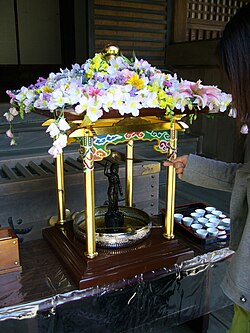
- Bathing the Buddha: A major feature in Hong Kong and Macau. In Macau, the "Lung4 Wa4 Wui5" ritual involves bathing the Buddha with "Ng5 Heung1 Seui2" (Five Scented-Perfumed Water).
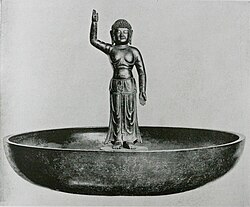
- Hanamatsuri: In Japan, the "flower festival" involves pouring sweet green tea over a statue of a baby Buddha.
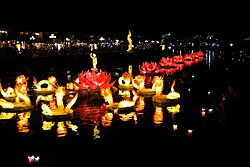
- Lanterns and Lights: In Vietnam and Hong Kong, lanterns are lit to symbolize the Buddha's enlightenment. In Hội An, Vietnam, water lanterns are released onto rivers.
- Devotion in Bhutan: During the Saga Dawa month, followers often observe strict vegetarianism and visit monasteries to light butter lamps.
International Festivals
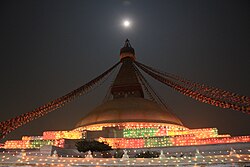
The celebration has spread far beyond Asia. In Australia, cities like Sydney, Brisbane, and Melbourne host multicultural festivals featuring pan-Asian food and performances. In the United States, the state of Hawaii has recognized April 8 as "Buddha Day" since 1963, and the Bay Area of California has long-standing traditions of celebrating the festival through processions and ceremonies.
Summary of Upcoming Dates
| Region/Country | Calendar Basis | 2025 Date | 2026 Date |
|---|---|---|---|
| China, Vietnam, Philippines, East Asia | 8th day, 4th Lunar Month | 5 May | 24 May |
| Cambodia, Singapore, Myanmar, Thailand | Full Moon of Vaisakha | 22 May | 12 May |
| Indonesia | Full Moon of Vaisakha | 23 May | Not Specified |
| Japan | Gregorian Calendar | 8 April | 8 April |
| Taiwan | 2nd Sunday of May | 11 May | 10 May |
Frequently Asked Questions
What is the difference between Buddha's Birthday and Vesak?
While the terms are often used interchangeably, Vesak in South and Southeast Asia typically commemorates three events: the Buddha's birth, enlightenment, and Mahaparinirvana. In some East Asian traditions, these events are observed as separate holidays.
Why is the date of the festival different in different countries?
The variation is due to the use of different calendars. Some countries follow the Chinese lunar calendar, some follow the Tibetan calendar, and others, like Japan, have adopted the Gregorian solar calendar for religious festivities.
What does bathing the Buddha statue symbolize?
The ritual of bathing a statue of the baby Buddha is a significant tradition in many regions, symbolizing purification and paying respect to the Buddha's arrival into the world.
Where was the Buddha born?
Archaeological and traditional evidence points to Lumbini in modern-day Nepal as the birthplace of Siddhartha Gautama.
Is Buddha's Birthday a public holiday?
It is a public holiday in several places, including Hong Kong, Macau, South Korea, and Bhutan. In other countries, such as Vietnam, it is a popular celebration but not an official public holiday.