British Space Programme: A History of Satellites, Rockets, and Agencies
The United Kingdom's journey into the cosmos has been a complex trajectory of ambitious engineering, strategic military investments, and evolving international partnerships. From the early days of homegrown rockets to the modern era of commercial satellite constellations, Britain has consistently sought to maintain its footprint in the final frontier.
Early Satellite and Rocket Programmes (1950–1985)
Britain's initial foray into space began in 1950 with the development of various space rockets and space planes. These efforts were managed by a succession of government bodies, including the Ministry of Supply and the Ministry of Technology, with testing conducted at sites such as the Isle of Wight, RAF Spadeadam, and Woomera in South Australia.
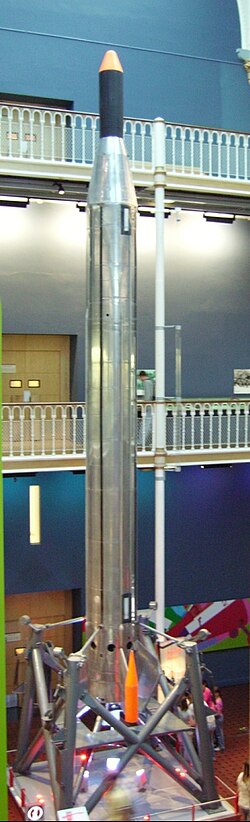
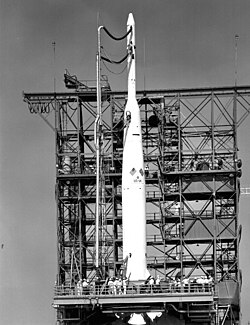
Among the early projects were the Black Knight and Blue Streak rockets. While a major launch vehicle called Black Prince was proposed in 1957, it was cancelled in 1960 due to funding shortages. However, Blue Streak technology lived on as the first stage of the European Europa carrier rocket until 1972.
A landmark achievement occurred in 1971 when the Black Arrow (R3) launched Prospero X-3 from Australia. This remains the only British satellite to be launched using a British rocket. Ground contact with Prospero continued until 1996.
Parallel to these efforts, the Ariel programme developed six satellites between 1962 and 1979, though all were launched by NASA.
The era also saw ambitious but unrealized dreams. In 1960, the British Space Development Company proposed the world's first commercial communication satellite company, but the government rejected the idea. Later, in 1982, the government funded the HOTOL project—a reusable space plane using air-breathing rocket engines—before terminating it and classifying the engine design as top secret.
Military and Intelligence Space Operations
While civil space efforts fluctuated, the UK maintained a robust military presence in space. The Skynet programme, operating for the Ministry of Defence (MoD), provides communication services to the British Armed Forces, NATO, and allied governments. Launched in 1969, the first Skynet satellite was the first military satellite in geostationary orbit (an orbit where the satellite remains fixed over one point on Earth). As of 2020, seven Skynet satellites provide near-global coverage.
Skynet stands as the most expensive British space project. The MoD is currently developing the Skynet 6 architecture to replace the Skynet 5 models, with an estimated cost of £6 billion.
Intelligence efforts also saw a high-profile failure known as the Zircon affair. Zircon was a signals intelligence satellite designed to intercept radio signals from the USSR and Europe. Intended for a NASA Space Shuttle launch under the guise of Skynet IV, the project was cancelled by Chancellor Nigel Lawson in 1987 due to costs.
The Evolution of National Space Governance
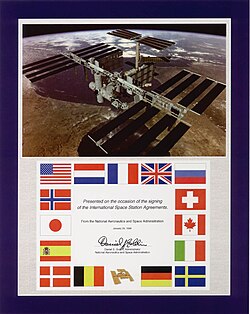
In 1985, the British National Space Centre (BNSC) was formed to coordinate national activities. The BNSC was a major contributor to the European Space Agency (ESA), paying 17.7% of mandatory programme costs in 2005. However, the UK opted out of funding the International Space Station (ISS), citing a lack of value for money.
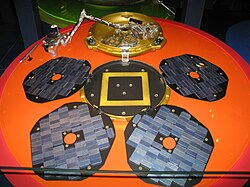
Scientific contributions continued through ESA missions. The Beagle 2 Mars lander, launched in 2003, was initially lost. It was discovered in 2015 by NASA, revealing that while it landed successfully, a failed solar array had blocked its communication antenna.
On 1 April 2010, the UK Space Agency (UKSA) was established to replace the BNSC. The UKSA now manages government policy, budgets, and international negotiations. By 2015, the agency provided 9.9% of the ESA budget.

Modern Initiatives and Commercial Expansion
Recent years have seen a shift toward commercial partnerships and independent infrastructure. In 2020, the UK government and India's Bharti Enterprises purchased the bankrupt OneWeb company. The UK paid £400 million for a 45% stake and a golden share. OneWeb operates a constellation of over 650 low Earth orbit satellites designed to provide global broadband internet.
The UK also explored an independent satellite navigation system (UKGNSS) after withdrawing from the EU and the Galileo system. However, this project was scrapped in 2020 as too expensive, leading the government to explore alternative navigation services.
To support this growth, the Space Industry Act 2018 created a regulatory framework for commercial spaceports. The UK is currently supporting three primary sites:
- SaxaVord Spaceport (Shetland Islands): Associated with Lockheed Martin, ABL Space Systems, and Rocket Factory Augsburg.
- Space Hub Sutherland (Scotland): Associated with Skyrora (Orbex ceased operations in 2026).
- Spaceport Cornwall (England): Associated with Virgin Orbit (ceased operations in 2023).
Additionally, the government partnered with ESA in 2010 to promote Skylon, a single-stage-to-orbit spaceplane developed by Reaction Engines Limited. Despite successful engine tests in 2012, Reaction Engines filed for bankruptcy in 2024.
Key Facts
- Prospero X-3 is the only satellite ever launched by a British rocket (Black Arrow).
- Skynet is the UK's most expensive space project, providing military communications.
- The UK Space Agency was established in 2010 to centralize space policy.
- The UK holds a 45% stake in OneWeb, a low Earth orbit broadband constellation.
- The Space Industry Act 2018 regulates commercial orbital and sub-orbital activities.
| Project | Type | Status/Outcome | Key Detail |
|---|---|---|---|
| Prospero X-3 | Satellite | Completed | Only satellite launched by a UK rocket |
| Skynet | Military Comms | Active | First military satellite in geostationary orbit |
| Zircon | Intelligence | Cancelled | Cancelled in 1987 due to cost |
| Beagle 2 | Mars Probe | Failed | Landed but failed to communicate |
| OneWeb | Broadband | Active | Constellation of 650+ satellites |
| Skylon | Spaceplane | Defunct | Reaction Engines filed for bankruptcy 2024 |
Frequently Asked Questions
What was the significance of the Prospero X-3 satellite?
Prospero X-3 is historically significant because it was the first and only satellite to be placed into orbit using a British-built launch vehicle, the Black Arrow rocket, in 1971.
What is the purpose of the Skynet programme?
Skynet is a military communications programme operated for the Ministry of Defence. It provides secure communication services to the British Armed Forces, NATO, and allied governments globally.
Why was the Zircon satellite project cancelled?
The Zircon signals intelligence satellite was cancelled in 1987 by Chancellor Nigel Lawson primarily due to the high costs associated with the project.
What happened to the Beagle 2 Mars lander?
Beagle 2 landed on Mars successfully in 2003 but failed to respond. It was discovered in 2015, revealing that one of its solar arrays had failed to deploy, which blocked its communication antenna.
Does the UK have its own spaceports?
Yes, the UK is developing several commercial spaceports under the Space Industry Act 2018, including SaxaVord in the Shetland Islands, Space Hub Sutherland in Scotland, and Spaceport Cornwall in England.